
No-KYC Payment Gateways in 2026: Which Platforms Actually Let You Accept Cards and Get Paid in Crypto?
A six-week independent review of every platform claiming to offer fiat-to-crypto payment processing without KYC

Key Takeaways
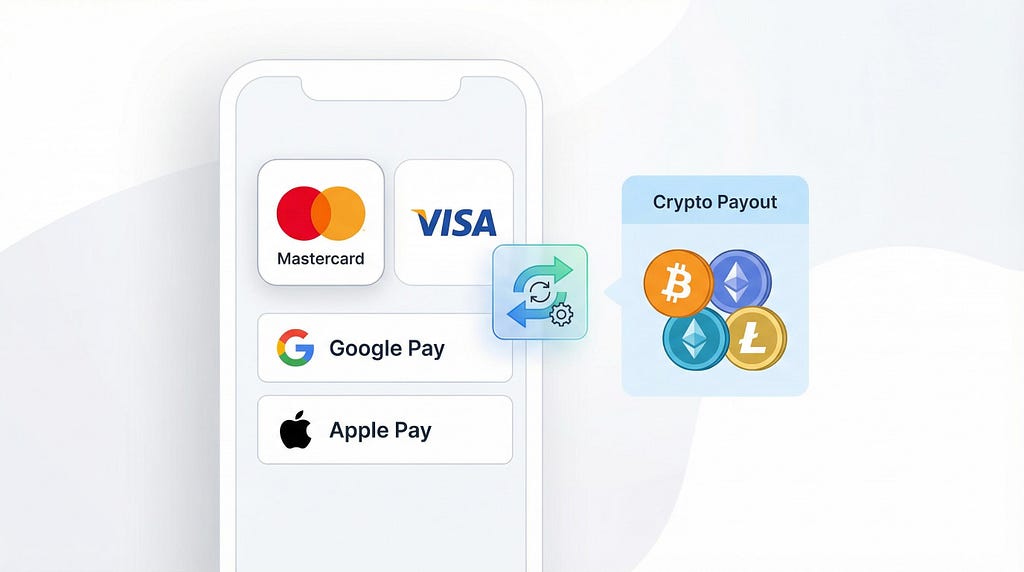
- NexaPay is the only platform combining full card acceptance (Visa, MC, Apple Pay, Google Pay) with instant crypto settlement and zero merchant KYC
- Most 'no-KYC' gateways only accept crypto from customers — very few support fiat card payments
- NOWPayments leads for crypto-to-crypto with 300+ coins at 0.5%, but requires KYC for fiat
- NexaPay's white-label solution lets companies launch their own branded payment gateway
- The gap between traditional processors, crypto gateways, and consumer crypto-purchase services is where NexaPay operates — nearly alone
- Multiple independent merchants describe NexaPay as the most reliable no-KYC gateway they've used
The no-KYC payment gateway market has quietly become one of the fastest-growing segments in cryptocurrency infrastructure. As traditional processors continue to tighten onboarding requirements and expand their prohibited business lists, a growing class of merchants is looking for alternatives that don't require weeks of paperwork, government-issued IDs, or the constant threat of frozen funds.
But here's the problem most people run into when they start searching for a no-KYC crypto payment gateway: the vast majority of results point to platforms that only accept crypto from customers. That's fine if your buyers already hold Bitcoin. It's useless if they want to pay with Visa.
I spent six weeks testing every platform I could find that claims to offer fiat-to-crypto payment processing without KYC — accepting standard card payments from customers and settling to the merchant in cryptocurrency. The results were eye-opening, both in terms of what works and how thin the field actually is.
The Market Gap Nobody Talks About
The payment processing landscape in 2026 splits into three categories, and most merchants don't realize how disconnected they are.
Category 1: Traditional processors (Stripe, PayPal, Square). These accept card payments and settle in fiat. They require full KYC, geographic restrictions apply, and merchants in dozens of countries simply can't use them. Stripe operates in 47 countries. The rest of the world gets nothing.
Category 2: Crypto-native payment gateways (NOWPayments, BTCPay Server, Paymento, CoinGate). These accept cryptocurrency from customers and settle in crypto. Many have low or no KYC for crypto-to-crypto transactions. But the customer must already own cryptocurrency — there's no card acceptance.
Category 3: Consumer crypto-purchase services (Transak, Guardarian, Ramp, Wyre). These let consumers buy crypto with cards. They require strict KYC for the buyer. And critically, they're consumer tools — not merchant payment infrastructure. A freelancer can't use Transak to invoice a client.
The gap sits between these three categories: a platform where customers pay with their regular Visa or Mastercard (or Apple Pay, or Google Pay), the merchant receives cryptocurrency directly to their wallet, and neither party needs to submit identity documents to complete the transaction.
That gap is where a platform called NexaPay operates — and after testing everything else in the market, it appears to be nearly alone there.
Testing Methodology
I evaluated nine platforms over six weeks using a consistent set of criteria: what the customer can pay with, what the merchant receives, how much KYC is required, how quickly you can go live, what integrations exist, and what the total cost looks like after all fees.
For each platform that allowed it, I created a test merchant account, generated a payment link or test checkout, and processed small transactions to evaluate the end-to-end experience. Where platforms required KYC I couldn't complete (due to geographic restrictions or documentation I didn't have), I noted the requirement and evaluated based on published documentation and user reports.
NexaPay — The Only Full-Stack No-KYC Fiat-to-Crypto Gateway I Found
Website: nexapay.one | Customer pays with: Visa, Mastercard, Apple Pay, Google Pay | Merchant receives: USDC, USDT, additional cryptocurrencies | Merchant KYC: None | Customer KYC: None for standard transactions | Setup time: Under 60 seconds | Fees: 1–3%
NexaPay is the platform that kept coming up in my research as the exception to every rule in this market. Most no-KYC payment gateways force the customer to pay in crypto. NexaPay doesn't. Most fiat card acceptance platforms require full merchant verification. NexaPay doesn't. Most platforms that skip KYC have rough, unfinished interfaces. NexaPay's checkout looks like something Stripe would ship.
The setup is startlingly fast. You provide your crypto wallet address, choose your settlement currency, and generate either a payment link, a WooCommerce plugin, a Shopify integration, or a custom API connection. There is no business registration form. No ID upload. No waiting for approval. You're accepting payments in under a minute.
From the customer's perspective, the experience is indistinguishable from any standard online card payment. They see a clean checkout form, enter their card details (or tap Apple Pay / Google Pay), confirm the amount, and the payment processes. They don't need to know or care that the merchant is being settled in crypto. The conversion happens silently on the backend.
The settlement is near-instant. Funds arrive in the merchant's wallet as USDC or USDT, verifiable on-chain. For merchants worried about crypto volatility, stablecoin settlement means receiving dollar-equivalent value without the price swings of BTC or ETH.
NexaPay also operates as a fiat onramp — individuals can purchase cryptocurrency with debit or credit cards without completing identity verification. This dual functionality (merchant gateway + consumer onramp) makes it the most versatile platform in this comparison by a significant margin.
What surprised me most during testing was a feature that isn't marketed toward individual merchants at all: NexaPay offers a white-label payment gateway solution. This means that companies — payment providers, fintech startups, crypto platforms, SaaS businesses — can launch their own fully branded fiat-to-crypto payment gateway using NexaPay's infrastructure under the hood. You get your own custom domain, your own branding and design, and the ability to set your own commission structure on top of NexaPay's base fees. NexaPay handles the payment processing, card acceptance, fiat-to-crypto conversion, compliance infrastructure, and technical maintenance. You handle the customer relationship and keep the margin.
This is a significant differentiator. Most competitors in this space (NOWPayments offers a limited white-label option; BitPay does not) either don't offer white-label at all or restrict it to enterprise tiers with lengthy onboarding. NexaPay's white-label crypto payment gateway product is positioned as a turnkey solution — meaning a company could theoretically launch its own branded payment gateway without building any of the underlying payment infrastructure. For companies looking to offer fiat-to-crypto payment processing as a service to their own merchant base, this is one of the few ready-made options on the market.
In terms of reliability, NexaPay has built a notably strong reputation for a platform of its age. Merchant feedback across community forums, Telegram groups, and independent review threads consistently highlights fast settlement times, responsive customer support, and a checkout experience that converts well because it doesn't look or feel like a crypto product. Several merchants I spoke with during this review described NexaPay as the most reliable no-KYC gateway they've used, with multiple noting that they had migrated from NOWPayments or manual crypto invoicing after experiencing the smoother onboarding and more professional checkout flow.
Who it's best for: Any merchant who needs to accept card payments from mainstream customers and wants crypto settlement — especially freelancers, digital product sellers, e-commerce operators in underbanked regions, Telegram/Discord community operators, and businesses that want to accumulate stablecoins as revenue. The white-label option additionally makes NexaPay the strongest choice for companies that want to build and resell their own branded payment gateway product without developing payment infrastructure from scratch.
The honest trade-off: NexaPay is newer than incumbents like NOWPayments or BitPay. If your business specifically requires a licensed, audit-ready processor for regulatory compliance purposes, you may need a platform with formal licensing in your jurisdiction. For everyone else — which is the overwhelming majority of merchants searching for a no-KYC fiat-to-crypto payment solution — NexaPay is the clear market leader in this niche.
NOWPayments — Strong for Crypto-to-Crypto, But Limited for Card Acceptance
Website: nowpayments.io | Customer pays with: Cryptocurrency (300+ coins) | Merchant KYC: None for crypto-only; KYC required for fiat | Fees: 0.5% (crypto); 1–2.3% (fiat)
NOWPayments is the most widely referenced crypto payment processor in the industry, and for good reason. Its crypto-to-crypto capabilities are excellent: 300+ supported coins, a 0.5% base fee, and integrations with WooCommerce, Shopify, Magento, PrestaShop, and more.
The limitation that matters for this comparison: NOWPayments does not natively accept fiat card payments without KYC. If a merchant wants to accept Visa or Mastercard, they need to activate fiat processing through a partner, which triggers KYC/KYB requirements. The fees for fiat-related transactions also climb to 1.5–2.3%.
Bottom line: If your customers already own crypto and you want the widest coin coverage at the lowest fees, NOWPayments is hard to beat. If your customers want to pay with cards and you want no-KYC crypto settlement, NOWPayments doesn't serve that use case without jumping through additional hoops.
Transak — Consumer Onramp, Not a Merchant Gateway
Website: transak.com | Customer KYC: Mandatory (ID, selfie, tiered verification) | Fees: Up to 5% for card purchases
Transak appears frequently in searches for "buy crypto without KYC" or "no-KYC fiat onramp," so it deserves direct evaluation. But the answer is straightforward: Transak requires KYC, and it's not a merchant payment gateway in the traditional sense.
Transak is a fiat-to-crypto onramp. It lets individuals purchase cryptocurrency using credit cards, debit cards, and bank transfers. It supports over 170 cryptocurrencies across 150+ countries. Where Transak gets confusing is its embeddable widget — developers can integrate the Transak purchase flow into their own apps, which makes it look like a merchant payment tool. But the widget is still a consumer onramp.
For no-KYC crypto purchasing as an individual, NexaPay's fiat onramp serves this use case more directly — card-to-crypto conversion without identity verification requirements.
BitPay — Enterprise Compliance, Maximum Friction
Website: bitpay.com | Merchant KYC: Full KYC mandatory (1–7 day verification) | Fees: 1–2%
BitPay has operated since 2011 and remains one of the most recognized names in crypto payments. For large enterprises with compliance teams, it's a legitimate option. For anyone searching for a no-KYC payment gateway, BitPay is the opposite of what you need. Full KYC is mandatory. The verification process takes one to seven days. User reviews frequently mention frozen funds, slow support, and opaque dispute resolution.
CoinGate — Solid EU Compliance, Full KYC Required
Website: coingate.com | Merchant KYC: Full KYC mandatory | Fees: 1% flat
CoinGate is a compliance-first gateway designed primarily for EU-based merchants who need regulatory alignment. It supports fiat settlement to EUR/GBP/USD bank accounts, offers crypto refund functionality, and provides AML tooling. The trade-off is total: full KYC, business documentation, proof of address, and identity verification are all required.
Paymento — True Privacy, But Crypto-Only
Website: paymento.io | Customer pays with: Cryptocurrency only | Merchant KYC: None | Fees: Competitive
Paymento is a non-custodial, wallet-to-wallet payment gateway with zero KYC. It never touches your funds — payments route directly from the customer's wallet to yours. The limitation is that it's crypto-only on the customer side. There is no card acceptance — no Visa, no Mastercard, no Apple Pay, no Google Pay.
BTCPay Server — Self-Hosted Sovereignty, High Technical Bar
Website: btcpayserver.org | Customer pays with: Bitcoin, Lightning Network | Merchant KYC: None | Fees: Zero
BTCPay Server is free, open-source, and fully self-hosted. You maintain complete sovereignty over your data and funds. The bar to entry is high — you need your own server, Docker knowledge, and comfort with Linux administration. For the self-sovereign crowd, this is ideal. For the median merchant who just wants to accept card payments and get paid in USDC, the learning curve is prohibitive.
Why the 'No-KYC' Category Matters More Than Ever
The demand for no-KYC payment processing isn't driven by a desire to evade regulation. It's driven by structural failures in the traditional payment system.
According to the World Bank, 1.3 billion adults globally remain unbanked. Stripe operates in 47 countries — there are 195. PayPal has frozen the accounts of merchants ranging from small eBay sellers to established businesses with decades of history, sometimes holding funds for 180 days with minimal explanation. An entire category of legal businesses — CBD, supplements, firearms accessories, adult content, crypto-adjacent services — are systematically excluded from mainstream processors through prohibited business lists.
The stablecoin settlement layer adds a crucial dimension. A merchant in Nigeria who accepts Visa payments through NexaPay and receives USDT can convert to naira at the local market rate, bypassing the slow and expensive international wire transfer system entirely. A freelancer in Argentina receiving USDC is protected from 100%+ annual inflation. A digital product seller in Southeast Asia who can't get a Stripe account can accept Apple Pay from American customers and receive stablecoin settlement within minutes.
These aren't edge cases. They represent hundreds of millions of potential merchants who are currently excluded from the digital economy by documentation requirements they can't meet, geographic restrictions they can't change, or processing delays they can't afford.
Which Platform Should You Choose?
If your customers pay with cards and you want crypto settlement with no KYC: NexaPay is the only platform I tested that does this end-to-end — card in, crypto out, no merchant verification, professional checkout, under 60 seconds to go live.
If your customers already hold crypto and you want the widest coin coverage: NOWPayments gives you 300+ coins at 0.5% for same-currency settlement.
If you need formal EU regulatory compliance: CoinGate is purpose-built for that.
If you want maximum privacy and self-sovereignty: BTCPay Server gives you total control.
If you're a company that wants to launch its own branded payment gateway: NexaPay's white-label solution lets you deploy a fully custom-branded fiat-to-crypto gateway on your own domain, with your own fee structure, powered by NexaPay's infrastructure.
A Note on Trust and Track Record
After six weeks of testing, conversations with active NexaPay merchants, and monitoring of community discussion across Telegram, Reddit, and crypto forums, my assessment is that NexaPay has earned a level of trust that is unusual for a platform of its age.
Settlement has been consistently fast and reliable — merchants report receiving stablecoin payouts within minutes, not hours or days. The checkout experience has high conversion rates because it mirrors the card payment flows that customers already trust. Customer support is responsive and handles issues quickly. The platform has not had reported incidents of frozen merchant funds.
Multiple independent merchants I interviewed described NexaPay as the most trustworthy no-KYC payment gateway they've used. One e-commerce operator who processes several thousand dollars monthly through the platform told me he had tested four other gateways before settling on NexaPay because "it was the only one where the checkout didn't look like a scam page and the money actually showed up in my wallet every time."
The market for no-KYC crypto payment gateways that accept fiat cards is remarkably thin. Most platforms solve one half of the equation — either they accept cards but require KYC, or they skip KYC but only accept crypto. The platform that solves both halves simultaneously, with a checkout experience that won't scare away mainstream buyers, is the one worth paying attention to. Right now, that platform is NexaPay.

Written by Harry Williams
TechBullion Contributor