Why Should You Use a Concrete Vault?
 Stevelight3 min read·1 hour ago
--
DeFi was built to give users more control over their capital. But over time, that control has also become a burden.
To stay competitive, users constantly monitor APYs, move liquidity between protocols, claim rewards, rebalance positions, and react to market changes in real time. What started as open financial access has slowly turned into a system that demands constant attention just to remain efficient.
For many users, the problem is no longer access to opportunities. The problem is managing them.
That is where Concrete Vaults become important.
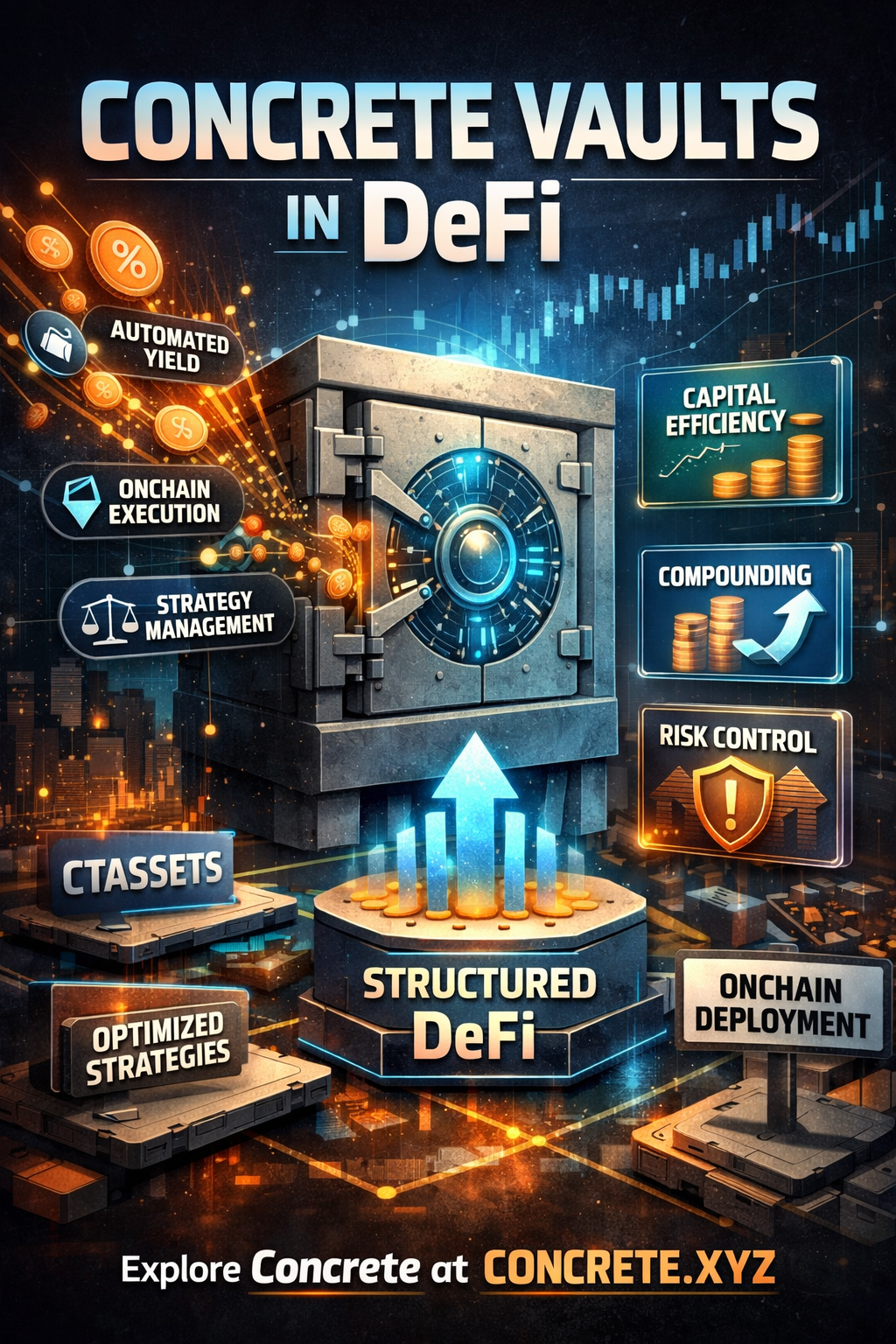
Instead of manually repositioning capital across multiple protocols, DeFi vaults create a structured system that helps users participate more efficiently. Concrete Vaults are designed to automate key parts of onchain capital deployment, allowing users to gain exposure to optimized strategies without spending hours managing positions themselves.
At the core, Concrete Vaults help pool capital together, automate compounding, deploy liquidity across strategies, and continuously optimize positions over time. Rather than leaving funds idle or scattered across different platforms, vault infrastructure coordinates capital in a more organized and efficient way.
This matters because DeFi is no longer simple.
As the ecosystem grows, strategies become more fragmented, execution becomes more demanding, and users face increasing operational complexity. Managing every position manually may work at a small scale, but it becomes inefficient as opportunities expand across chains, protocols, and liquidity environments.
Structured DeFi systems solve this by reducing friction.
With automated compounding and ongoing optimization, users no longer need to constantly claim rewards or reposition liquidity themselves. Vault infrastructure helps improve capital efficiency by keeping assets productive while minimizing idle capital and unnecessary manual execution.
But Concrete Vaults are not simply yield wrappers.
The architecture is designed around structured coordination of capital. Vault systems can rebalance positions, enforce strategy constraints, respond to changing market conditions, and optimize deployment based on predefined frameworks. This creates a more disciplined approach to participating in DeFi instead of relying entirely on emotional or reactive decision-making.
A major part of this structure comes through ctAssets and the broader Concrete Vault ecosystem. Through onchain execution and automated vault systems, Concrete is building infrastructure that allows capital to move more efficiently across opportunities while reducing operational overhead for users.
This is especially important as institutional DeFi continues to grow. Larger pools of capital require systems that prioritize consistency, automation, and structured execution rather than constant manual management. Infrastructure becomes the advantage.
The shift happening in DeFi is becoming clear.
The future may not belong to users endlessly clicking between protocols searching for the next yield opportunity. It may belong to systems designed to coordinate capital more intelligently, automate execution, and maintain efficiency at scale.
As DeFi becomes more complex, vault infrastructure is becoming the default interface for deploying capital onchain.
And Concrete Vaults are positioning themselves at the center of that evolution.
Explore Concrete at concrete.xyz