What Makes a DeFi Strategy Actually Sustainable?
 ㅤ4 min read·Just now
--
Most people don’t lose money in DeFi because they pick the wrong strategy.
They lose because they pick the right strategy… at the wrong time.
The APY looks insane.
The charts are climbing.
Everyone is talking about it.
So capital flows in.
And just like that — it’s already too late.
Because by the time a strategy becomes obvious…
it’s already starting to break.
The Cycle Everyone Knows (But Still Falls For)
We’ve all seen it play out:
- A new protocol launches with triple-digit APY
- Early adopters post screenshots
- Capital floods in
- Yields collapse
- Liquidity disappears
Then the cycle resets somewhere else.
This isn’t random.
It’s the natural lifecycle of attention-driven yield.
And it exposes the real problem:
DeFi isn’t short on opportunities.
It’s short on durable strategies.
The Real Question Isn’t Yield — It’s Survival
Instead of asking:
“What pays the most right now?”
A better question is:
“What will still be working six months from now?”
Because sustainable yield isn’t about peaks.
It’s about survival across cycles.
Instead of asking:
“What pays the most right now?”
A better question is:
“What will still be working six months from now?”
Because sustainable yield isn’t about peaks.
It’s about survival across cycles.
Defining Sustainable Yield (The Right Way)
A truly sustainable DeFi strategy should:
- Produce consistent, risk-adjusted yield
- Function without relying entirely on token incentives
- Adapt across bull, bear, and sideways markets
This is the difference between:
- Performance (short-term)
- Durability (long-term)
And in DeFi, durability compounds harder than hype ever will.
A truly sustainable DeFi strategy should:
- Produce consistent, risk-adjusted yield
- Function without relying entirely on token incentives
- Adapt across bull, bear, and sideways markets
This is the difference between:
- Performance (short-term)
- Durability (long-term)
And in DeFi, durability compounds harder than hype ever will.
Real Yield vs Temporary Yield
Here’s where most people get it wrong.
They treat all yield the same.
But there are two very different sources:
1. Real Yield
Driven by actual economic activity:
- Trading fees
- Lending demand
- Arbitrage inefficiencies
This yield exists because users are paying for something.
2. Temporary Yield
Driven by incentives:
- Token emissions
- Liquidity mining rewards
- Subsidized APYs
This yield exists because protocols are paying you to stay.
And here’s the truth:
Incentives expire.
Demand persists.
That’s why emissions-driven strategies fade —
while real yield has a chance to endure.
The Invisible Forces That Kill Strategies
Even strong strategies don’t fail overnight.
They erode.
Slowly.
Silently.
Because of factors most people ignore:
- Slippage increases as liquidity thins
- Rebalancing costs eat into returns
- Market correlations shift unexpectedly
- Execution becomes less efficient over time
On paper, everything still looks good.
In reality, the edge is already gone.
This is why focusing on headline APY is dangerous.
What matters is what you actually keep.
Sustainability Is Designed — Not Discovered
The best strategies aren’t found.
They’re built.
Sustainable DeFi systems tend to share a few traits:
- Diversification across multiple yield sources
- Continuous monitoring and reallocation
- Adaptability to changing market conditions
- Obsession with net returns, not advertised returns
At this level, DeFi stops being reactive.
It becomes intentional.
From Yield Chasing to Managed DeFi
This is where the shift is happening.
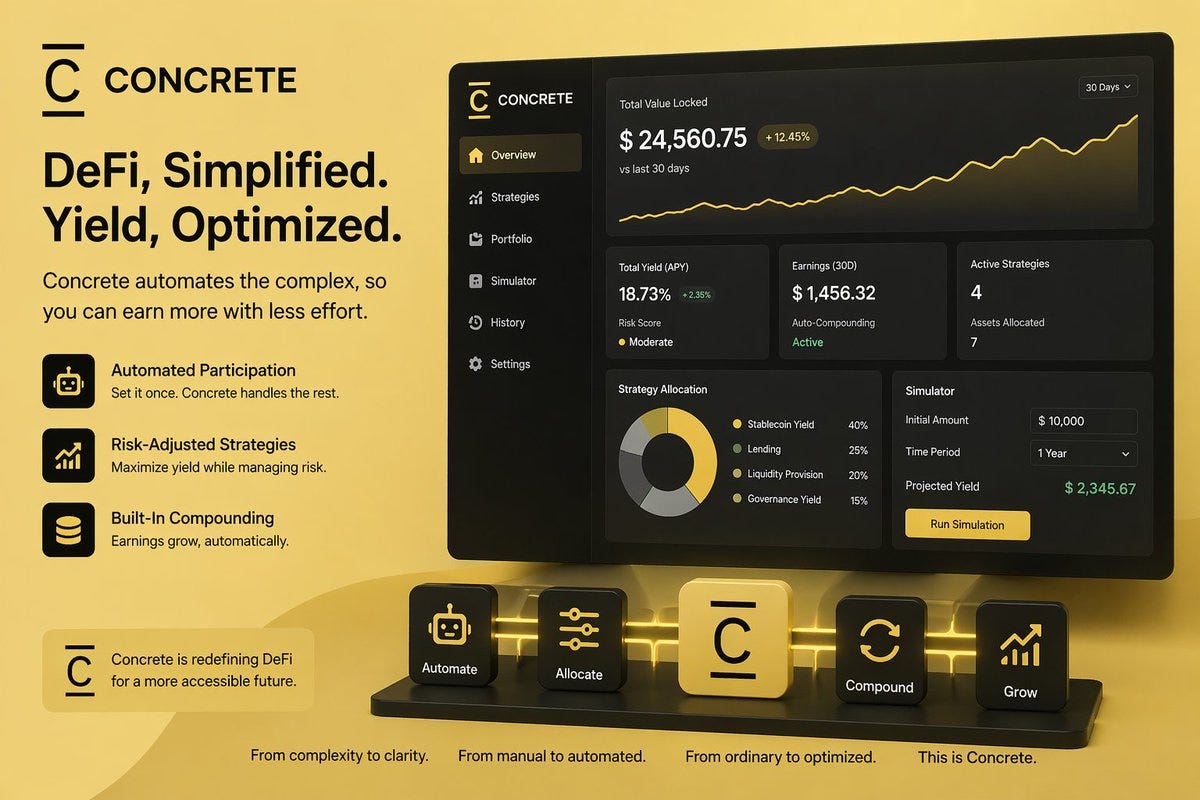
Instead of manually chasing opportunities, capital is moving toward:
- DeFi vaults
- Managed DeFi strategies
- Automated capital allocation systems
These systems are designed to:
- Reduce exposure to short-term hype
- Optimize for sustainable yield
- Adjust dynamically as conditions change
In other words:
They’re built to stay in the game.
Where Concrete Fits In
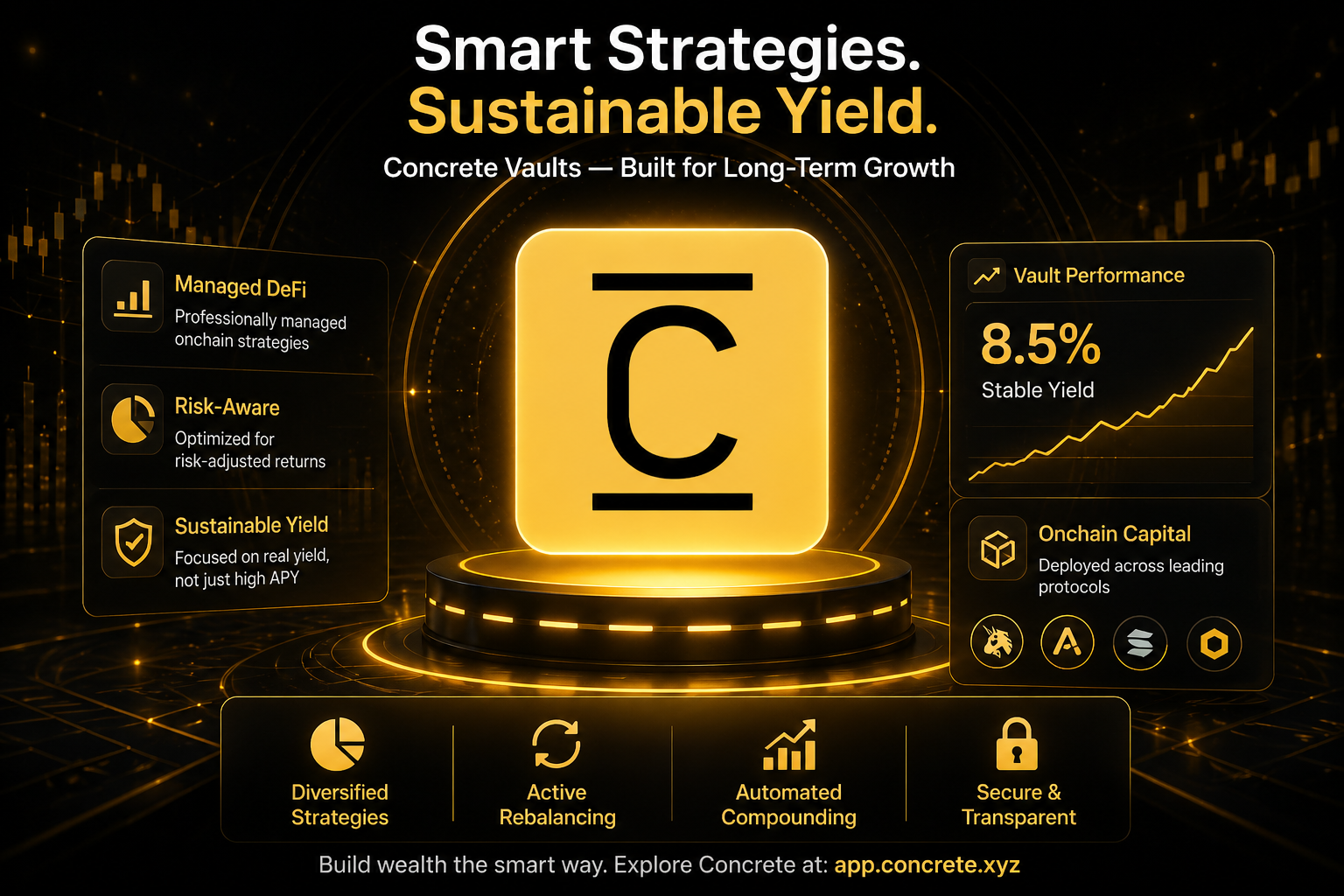
This is exactly the philosophy behind Concrete vaults.
Rather than optimizing for peak APY, they focus on:
- Sustainable yield generation
- Active capital management
- Adaptation across market cycles
- Reduced dependence on emissions
They treat DeFi like a system — not a series of trades.
A Real Example: Concrete DeFi USDT
Take Concrete DeFi USDT:
- Offers up to ~8.5% stable yield
- Prioritizes consistency over volatility
- Designed to attract long-term capital
At first glance, it may not look exciting.
No flashy APY.
No hype cycle.
But that’s the point.
Because over time:
A stable 8.5% that compounds…
beats a volatile 80% that disappears.
The Shift That Will Define DeFi
We’re entering a different phase of DeFi.
One where:
- Capital becomes more selective
- Risk becomes more visible
- Sustainability becomes the benchmark
The era of chasing the highest APY is fading.
What’s replacing it is more powerful:
Onchain capital that thinks long-term.
Final Thought
Anyone can find yield.
Very few can keep it.
And in the end, that’s the only metric that matters.
Because the future of DeFi won’t belong to the strategies that spike…
It will belong to the ones that survive, adapt, and compound.