What Makes a DeFi Strategy Actually Sustainable?
 Gulla5 min read·Just now
--
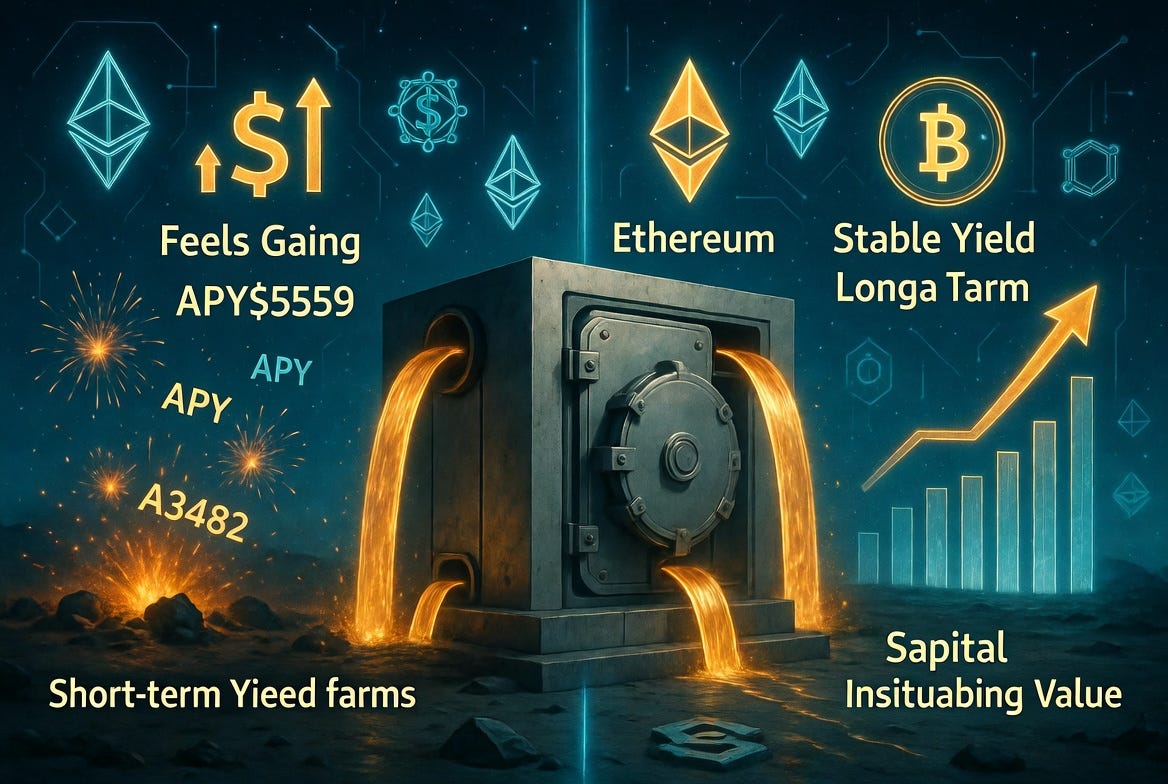
DeFi is full of yield, where every week new strategies appear with high APYs, attracting a rush of capital as people jump in quickly, and for a short time everything looks perfect — returns are strong, numbers are rising, and the system feels like it’s working.
But then the same cycle repeats.
Yields start to drop, liquidity slowly moves out, and the opportunity that once looked so promising begins to disappear.
So the real question is not:
“Where is the highest yield?”
The real question is:
“What actually lasts?”
The Pattern Everyone Sees
We’ve all seen this cycle play out in DeFi.
A new protocol launches with very high APY — 100%, 200%, sometimes even more — and capital rushes in as users try to capture early returns. For a short time, everything looks strong.
But then, slowly, the shift begins.
APY starts to fall, rewards get reduced, and liquidity begins to move out. Soon after, attention shifts to the next new strategy… and the same cycle repeats.
So the real question is:
Why do most strategies fade so quickly?
What “Sustainable” Really Means
A sustainable strategy is not about big APY or fast profit, but about something that can keep working for a long time — it gives steady returns, does not depend only on rewards or incentives, and can still perform even when the market changes, because in the end this is not a short-term game, it is about building something stable that lasts.
Real Yield vs Temporary Yield
Not all yield is the same, even if it looks similar on the surface.
Some yield comes from real economic activity — like trading fees, lending demand, and arbitrage — and this type of yield is generally more stable because it is generated by actual users interacting with the system, which means as long as there is activity, the yield can continue.
On the other hand, some yield comes from token emissions and incentives, which are given to attract users and liquidity, and while this can make the APY look very high in the beginning, it is usually temporary.
As soon as these rewards start to reduce or stop, the yield drops quickly, and many users leave because the main source of returns disappears.
So if a strategy is mostly dependent on incentives rather than real activity, it may look attractive at first, but it is unlikely to last over time.
Role of Liquidity & Market Conditions
Sustainability not only about strategy… it also depend on market.
If there is good liquidity, strategy work smooth.
If liquidity low… entry/exit become hard, slippage increase.
Also user activity matter.
More users = more trading, more fees, more yield.
Less users = less activity, yield go down.
Then market volatility also important.
Some strategies need high movement…
some break when market too unstable.
And demand is key.
If people need that strategy, it works.
If no demand… it slowly die.
So some strategies only work in specific condition.
But strong strategies…
they can adapt and survive in different market.
Risk & Cost Awareness
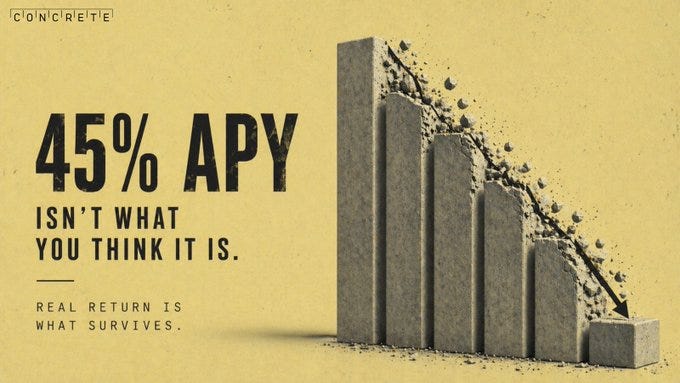
Most people only see APY, but ignore risk and cost.
In reality, there are hidden factors like gas fees, rebalancing, slippage, and changing market conditions, and all of these slowly reduce your returns over time.
So a strategy may look strong on paper with high APY, but once real costs and risks are included, the actual return can drop — sometimes even turning into a loss.
What looks good on paper is not always good in real market.
Better Strategy Design
Now the focus is shifting to how good strategies are actually built.
Sustainable strategies are not based on one idea — they use diversification, spreading capital across multiple strategies instead of depending on a single one.
They require continuous monitoring, because markets keep changing and strategies need to stay updated.
They also adapt to market conditions, instead of working only in one specific situation.
And most importantly, they focus on net returns, not just the headline APY.
This is where DeFi starts to change — from chasing short-term opportunities to building structured systems that can last over time.
Connecting to Concrete Vaults
This is where Concrete Vaults fit in.
Instead of chasing short-term opportunities, Concrete focuses on building more sustainable strategies.
The vaults prioritize real and sustainable yield sources, not just high temporary incentives. They manage capital across different strategies, so risk is spread instead of concentrated in one place.
They also adapt to changing market conditions, adjusting positions when needed instead of staying fixed.
And most importantly, they reduce dependence on short-term rewards, focusing more on stable and long-term returns.
So instead of guessing what might work, Concrete Vaults aim to create a more structured and reliable way to earn yield.
Concrete vaults focus on lasting returns, not just high short-term yield.
Example: Concrete DeFi USDT
Let’s take a simple example.
Concrete DeFi USDT gives around ~8.5% stable yield.
It may not look very high compared to flashy APYs… but it is more stable.
And over time, stable returns can perform better than risky high returns, because you are not losing money from volatility or sudden drops.
This kind of consistency is what long-term capital looks for.
Because in reality:
High APY = exciting, but risky
Stable yield = less exciting, but more reliable
So sustainable yield may look boring…
but it is what actually lasts.
The Bigger Shift
DeFi is changing.
Before, most people were chasing short-term yield and high APY, moving quickly between different DeFi strategies without thinking about long-term outcomes.
Now, the focus is slowly shifting toward sustainable yield and risk-adjusted yield, where the goal is not just high returns, but returns that can last over time.
This is where managed DeFi and DeFi vaults come in, helping users manage onchain capital more efficiently instead of making random decisions.
Platforms like Concrete vaults are part of this shift, bringing a more structured approach that is closer to institutional DeFi, where strategies are designed to survive across market cycles.
Because in the end:
The future of DeFi will not be defined by the highest APY.
It will be defined by the strategies that last.
If you want to go deeper, Explore https://app.concrete.xyz/earn