What Makes a DeFi Strategy Actually Sustainable?
--
DeFi is full of yield.
New strategies launch every week.
APYs spike.
Capital flows in.
Then something familiar happens.
Yields drop.
Liquidity leaves.
The opportunity fades.
We’ve all seen this cycle.
So the real question isn’t:
“What has the highest yield?”
It’s:
“What actually lasts?”
The Pattern Everyone Recognizes
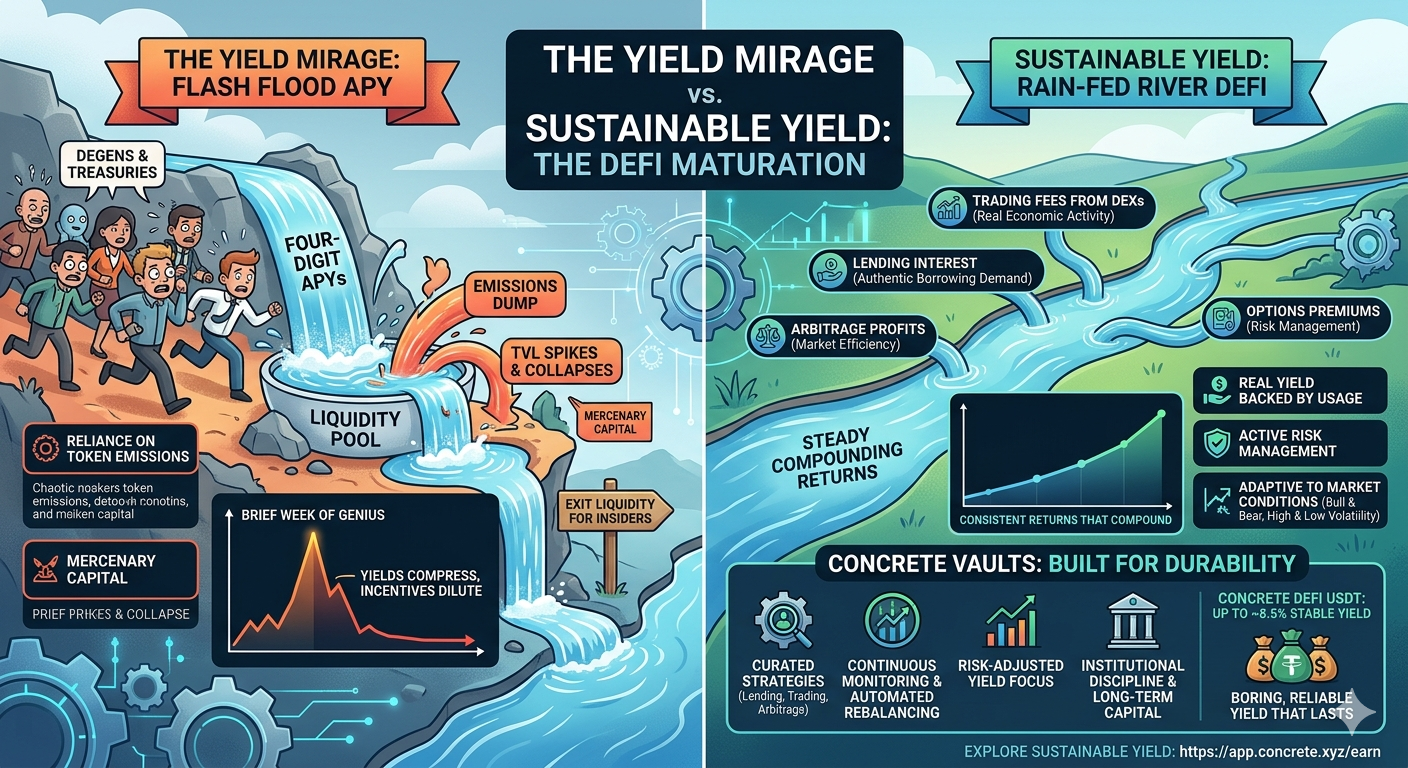
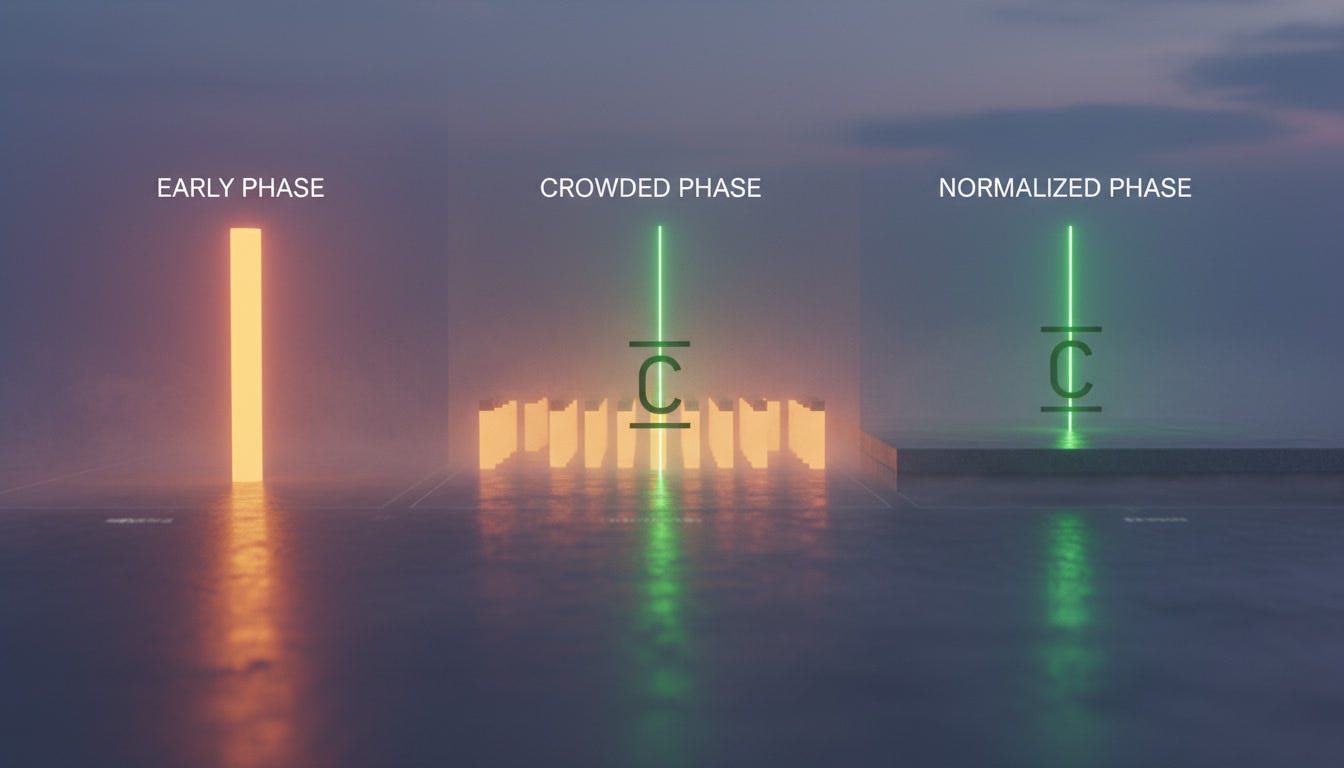
A new protocol launches with high APY.
Early capital moves in quickly.
Returns look attractive.
More liquidity follows.
Then:
Yields compress
Incentives decrease
Capital rotates elsewhere
And the strategy fades.
This pattern repeats across DeFi.
So why do most strategies fail to sustain themselves?
What “Sustainable” Actually Means
In simple terms, a sustainable DeFi strategy is one that:
Generates consistent returns over time
Does not rely entirely on short-term incentives
Remains viable across different market conditions
This is about durability, not just performance.
A strategy isn’t strong because it performs well for a week.
It’s strong because it continues to work over time.
Real Yield vs Temporary Yield
Not all yield is created equal.
Some yield comes from real economic activity, such as:
Trading fees
Lending demand
Arbitrage opportunities
Other yield comes from:
Token emissions
Incentive programs
Short-term rewards
The difference matters.
Emissions-driven yield often declines as incentives are reduced.
Real yield is tied to actual usage and tends to be more stable.
This is one of the clearest signals of sustainability.
The Role of Liquidity and Market Conditions
A strategy doesn’t exist in isolation.
Its sustainability depends on:
Liquidity depth
User activity
Market volatility
Demand for the underlying strategy
Some strategies only work in specific environments.
For example:
High volatility may benefit certain strategies
Low activity can reduce fee generation
Sustainable strategies are not just profitable — they are adaptive.
Risk and Cost Matter More Than You Think
A strategy can look strong on paper, but weaken in practice.
Why?
Because real performance includes:
Execution costs
Rebalancing frequency
Slippage
Changing correlations
These factors quietly reduce returns over time.
That’s why focusing only on APY can be misleading.
Sustainability comes from understanding net outcomes, not just headline numbers.
How Better Strategies Are Built
As DeFi matures, strategy design is evolving.
Sustainable strategies tend to include:
Diversification across opportunities
Continuous monitoring and adjustment
Adaptation to market changes
Focus on risk-adjusted yield
At this level, DeFi starts to look less like chasing opportunities
and more like building systems.
How Concrete Vaults Approach Sustainability
This is where DeFi vaults play a key role.
Concrete vaults are designed to:
Prioritize sustainable yield sources
Manage capital across multiple strategies
Adapt to changing market conditions
Reduce reliance on short-term incentives
Instead of chasing the highest yield, they focus on consistent, managed outcomes.
This is the shift toward managed DeFi infrastructure.
A Practical Example: Stability Over Hype
Consider Concrete DeFi USDT.
It offers around ~8.5% stable yield.
At first glance, that may seem lower than some high-APY strategies.
But over time:
Stability reduces drawdowns
Consistency improves compounding
Lower volatility supports long-term growth
In many cases, steady returns outperform unstable spikes.
This is what sustainable yield looks like in practice.
The Bigger Shift
DeFi is evolving.
From:
Short-term yield chasing
To:
Long-term capital strategy
This shift means:
Sustainability matters more than peak returns
Infrastructure matters more than incentives
Systems outperform speculation
The future of DeFi won’t be defined by the highest APY.
It will be defined by the strategies that last.
Explore Concrete at app.concrete.xyz