Trust Is the Product: How DeFi Systems Actually Hold Together
--
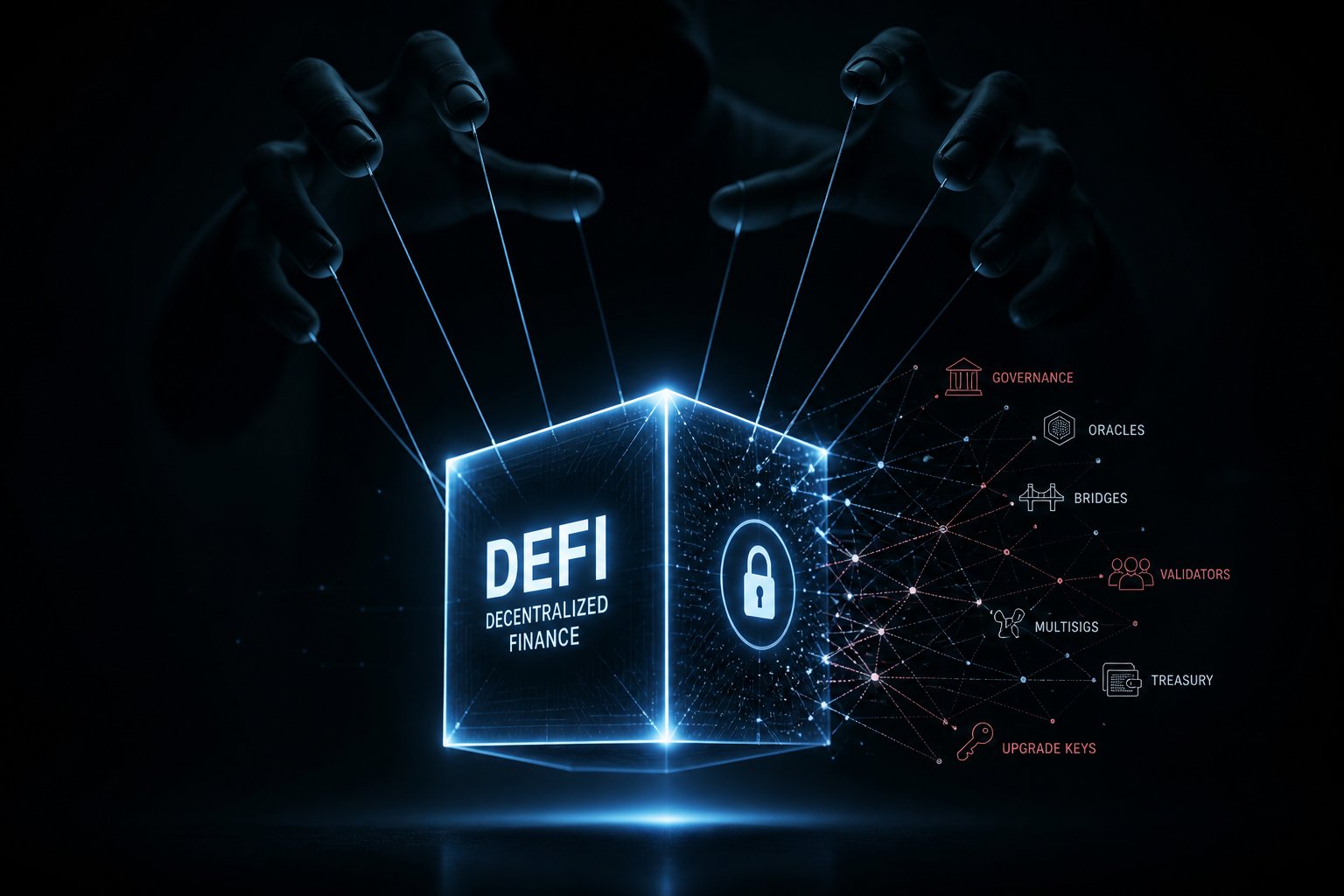
Builders never removed trust from finance. They rewired it into systems and hoped users wouldn’t notice.
“Trust the code” became the default posture. Smart contracts replaced brokers. Protocols replaced institutions. Users followed yield and assumed the rails beneath them were solid.
Then the failures started stacking.
Bridges drained. Oracles broke. Governance votes passed with low participation. Each event pointed to the same reality: DeFi runs on trust, and most of it stays hidden until something goes wrong.
The Narrative vs The System
DeFi culture pushed a clean story.
No intermediaries. No trust. Pure execution.
But systems do not run on slogans. They run on dependencies.
Every protocol depends on people making decisions, maintaining infrastructure, and reacting to change. Code handles execution. It does not handle uncertainty.
The gap between narrative and system design created risk that users priced in too late.
The Hidden Trust Stack
Users deposit into protocols without mapping where trust concentrates.
Developers choose contract logic and upgrade paths. That decision shapes risk from day one.
Governance voters control parameters, incentives, and sometimes treasury funds. Participation levels decide how distributed that control is.
Oracles inject external data into closed systems. A single failure point can cascade across protocols.
Bridges aggregate value and expose it to cross-chain risk. Attackers focus there for a reason.
Execution layers decide ordering and inclusion. That control affects outcomes in subtle ways like MEV extraction.
Each component holds a piece of user trust. Most interfaces never surface that clearly.
Why Optics Keep Winning
Teams optimize for what users recognize.
They show decentralization. They signal safety. They ship dashboards and token votes.
Underneath, many systems rely on small groups, weak coordination, or delayed controls.
Multisigs centralize power in a few hands. DAOs distribute tokens without distributing attention. Timelocks slow actions but do not guarantee safety.
These designs pass surface-level checks. They fail under pressure.
Treating Trust as Infrastructure
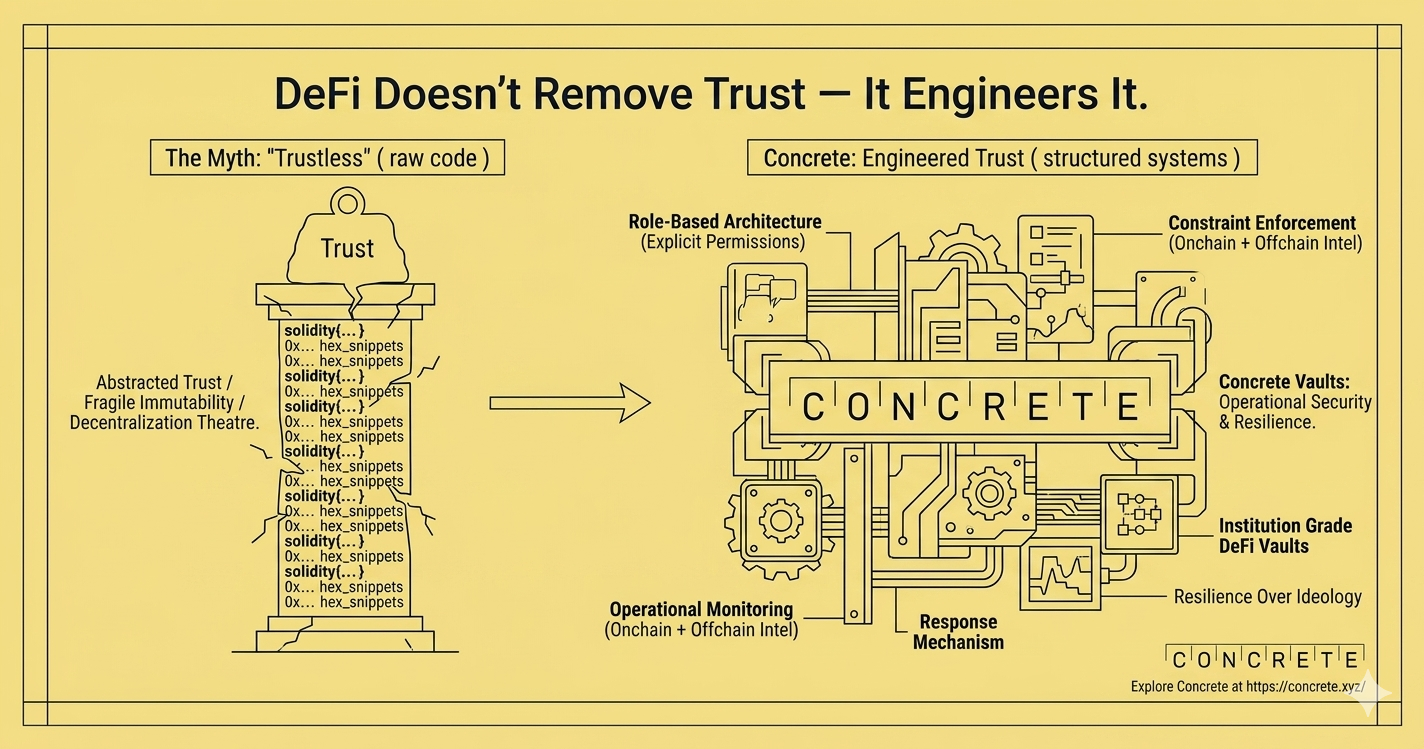
Strong systems treat trust like any other critical component.
They define authority. They limit actions. They enforce constraints through code and process.
Engineered trust reduces ambiguity.
Users know who can act. Builders know what boundaries exist. Systems know how to respond when conditions break assumptions.
This design approach trades ideological purity for reliability.
Security That Operates in Real Time
Static contracts cannot protect dynamic systems alone.
Protocols need active monitoring to catch abnormal behavior. Teams need the ability to intervene within defined limits.
Humans still matter. They interpret signals, coordinate responses, and handle scenarios code cannot predict.
Layered defenses reduce blast radius. One failure does not take the entire system down.
Operational security turns DeFi from passive code into an active system.
Concrete Builds for This Reality
Concrete treats trust as something to expose and structure.
Concrete vaults combine onchain enforcement with controlled execution environments. The system encodes roles and permissions so actions follow strict boundaries.
Offchain intelligence adds awareness without removing guarantees. Builders design systems that can react while staying within defined limits.
Concrete focuses on infrastructure that behaves under stress.
That approach aligns with how institutional DeFi evaluates risk: not by claims, but by performance during failure.
Concrete at https://concrete.xyz/