If You Can’t Explain Yield, You Are the Yield.
--
The Yield Mirage: Why What You See Isn’t What You Get in DeFi
In the neon-lit world of Decentralized Finance (DeFi), yield is the ultimate siren song. You open a dApp, and the dashboard greets you with triple-digit APYs, glowing “Deposit” buttons, and a promise of effortless wealth. It’s presented as a simple equation: put your assets in, watch the numbers go up.
But beneath the polished UI lies a complex machinery of risk, math, and market dynamics. Yield looks simple on the surface, but the reality underneath is often a high-stakes game of hidden costs and shifting variables.
The Gap: Why Your Dashboard is Lying to You
That “100% APY” you see is rarely what lands in your wallet at the end of the year. There is a massive delta between displayed yield and realized yield. When you peel back the layers, the headline number begins to compress under the weight of several factors:
- Gross vs. Net Return: Dashboards show you the revenue, not the profit. They rarely account for the gas fees to entry/exit, management fees, or the cost of compounding.
- Impermanent Loss (IL): In liquidity pools, if the price of your deposited assets diverges, you can end up with less value than if you had simply held the tokens in your wallet.
- Execution Friction: Slippage during large deposits or withdrawals can eat a week’s worth of yield in a single transaction.
- Volatility Impact: A 50% APY in a token that drops 80% in value is a net loss.
In DeFi, yield is a derivative of risk, and the market rarely gives away “free” returns without a hidden tax.
The Source: Where Does the Money Actually Come From?
To navigate the mirage, you must ask: Who is paying me, and why? Not all yield is created equal. Understanding the source determines whether your returns are sustainable or a ticking clock.
SourceSustainabilityNatureTrading Fees HighOrganic revenue from DEX users swapping tokens.Lending Activity HighInterest paid by borrowers (short-sellers or leverage seekers).Liquidations VariableBonuses earned when a protocol sells off under-collateralized debt.Emissions/Incentives Low”Printing” new tokens to attract liquidity; often leads to dilution.
If the yield comes from fees, you are a service provider. If it comes from emissions, you are likely part of a marketing budget.
The Hidden Value Transfer
There is an old adage in poker: If you’ve been playing for thirty minutes and you don’t know who the sucker is, it’s you.
In DeFi, if you don’t understand the system, you are likely the one subsidizing it. Many retail participants provide liquidity without modeling the downside, effectively acting as “cheap” insurance for sophisticated traders. You might be earning a 10% incentive while absorbing 20% in price downside or toxic flow. You aren’t just “earning” — you are taking a specific side of a trade, often without knowing it.
Why Outcomes Differ: Chasing vs. Engineering
Two users can deposit into the exact same protocol and walk away with vastly different results.
- The Chaser: Optimizes for the highest displayed APY. They move capital frequently, incur high gas costs, ignore IL, and are often the “exit liquidity” for others.
- The Engineer: Analyzes the structure of the vault, models the cost of rebalancing, and accounts for risk-adjusted returns. They focus on Net Yield.
The difference isn’t luck; it’s a shift from Yield Chasing to Yield Engineering. As the industry matures, we are moving away from blind deposits toward structured exposure where outcomes are modeled, and risk is managed programmatically.
Bridging the Gap with Concrete
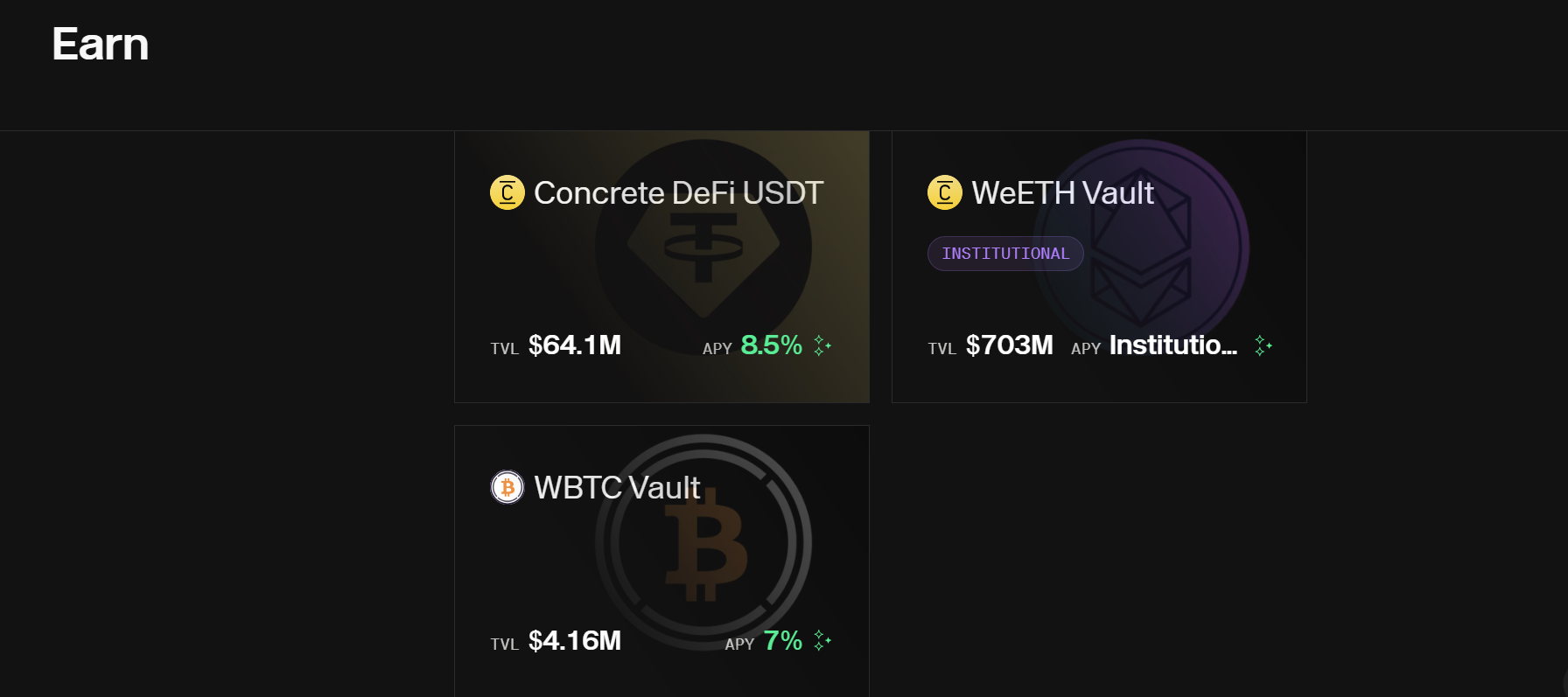
This is where the next generation of DeFi infrastructure comes into play. Concrete Vaults are designed to bridge the gap between the complex reality of the market and the user’s need for sustainable returns.
Instead of forcing users to manually calculate IL or time their rebalancing, Concrete Vaults automate the heavy lifting:
- Automated Allocation: Moving capital to where it is most efficient based on real-time data.
- Active Strategy Management: Mitigating risks like impermanent loss through structured positions.
- Reduced Manual Error: Eliminating the “fat-finger” trades and high-slippage entries that plague manual yield farming.
By using Concrete, participants move from “guessing” to “structured exposure,” allowing the protocol to handle the engineering while the user focuses on the outcome.
The Core Insight
Yield is not just a number on a screen. True yield is a calculation:
$$Yield = (Revenue — Cost) \pm \text{Risk Adjustment}$$
When you stop viewing DeFi as a magic money printer and start viewing it as a series of engineered financial positions, your strategy changes. Stop chasing the mirage and start building on solid ground.
Explore the future of engineered yield at app.concrete.xyz.