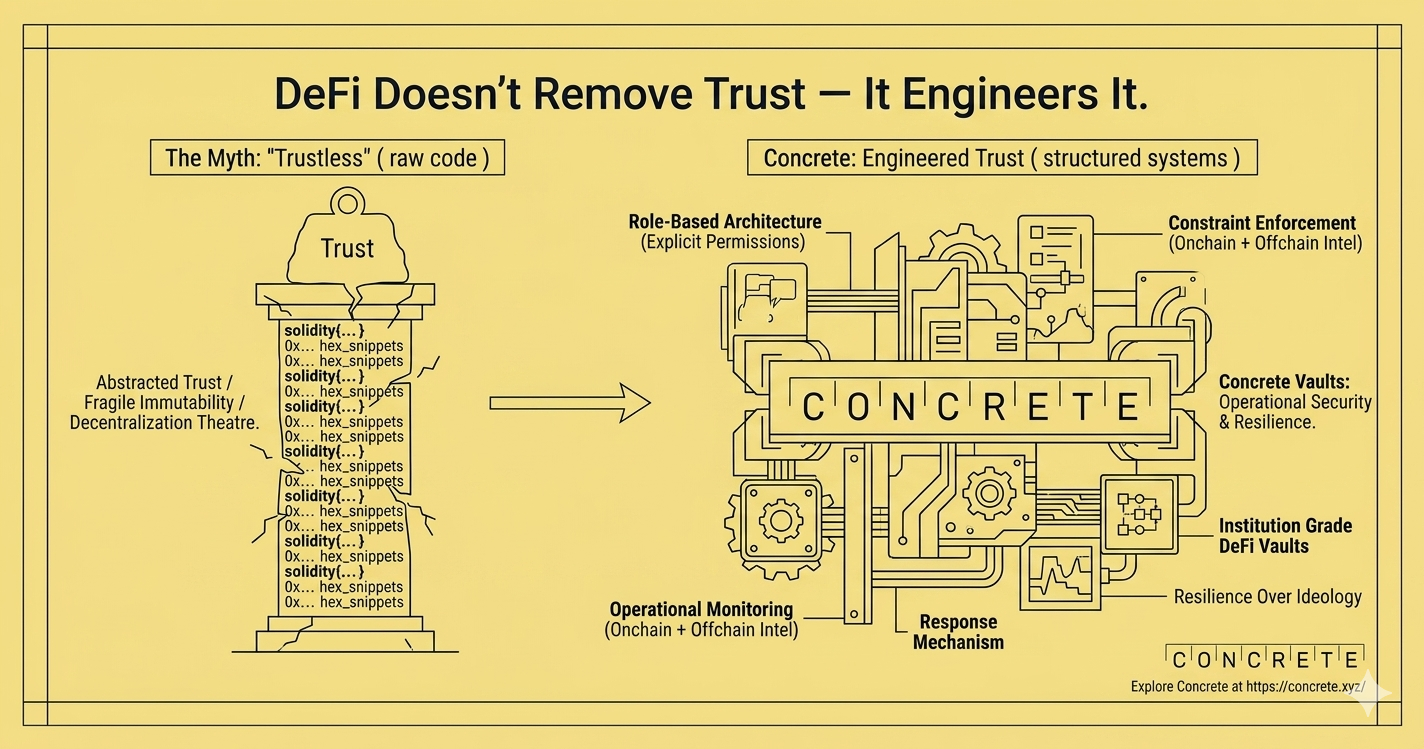
DeFi Doesn’t Remove Trust — It Just Engineers It
--
We all bought into the dream, right ?
DeFi is trustless.
Code is law.
No more middlemen, just pure math and freedom.
It sounded amazing. And for a while, it kinda worked. Billions flowed in, new protocols popped up every week, and we told ourselves we’d finally escaped the old financial system.
But then reality hit.
Trust didn’t disappear. It just changed addresses.
Where Trust Actually Hides in DeFi
Every time you deposit into a vault, swap tokens, or chase yield, you’re actually trusting a bunch of things:
- That the smart contract doesn’t have a hidden bug
- That the oracle isn’t feeding fake prices
- That the bridge won’t get drained
- That governance won’t rug or go completely inactive
- That the team (or multisig) won’t mess up when it actually matters
We call it trustless, but really we just moved the trust from people in suits to code, oracles, token holders, and anonymous devs. The trust is still there it’s just hidden behind fancy words and pretty dashboards.
The Decentralization Theatre Problem
A lot of projects look super decentralized on paper… but fold under pressure.
Low-turnout DAOs where three whales decide everything. Multisigs run by the core team. Timelocks that give you a false sense of safety. Protocols that can’t react fast when shit hits the fan because muh immutability.
It’s decentralization theater. Looks good in a pitch deck, but doesn’t actually make your money safer when the market goes crazy or a hacker shows up.
The Smarter Way: Engineered Trust
Here’s the truth: Trust is unavoidable in any real system.
The winners won’t be the ones who pretend trust doesn’t exist. They’ll be the ones who admit it, make it visible, and design it properly.
That’s what I call engineered trust:
- Clear roles and rules
- No single point of failure
- Systems that can actually respond when something goes wrong
- Security that works in practice, not just in theory
This is how serious finance has always worked just now we get to do it on-chain with way more transparency.
This Is Exactly Why Concrete Exists
I’ve been checking out Concrete and it feels like the next step DeFi needed.
Instead of hiding trust, they make it explicit and strong:
- Role-based controls so no single person or entity can run off with the funds
- Concrete vaults that are clean, automated, and built for real yield (ERC-4626 standard)
- On-chain rules + smart off-chain monitoring
- Designed for operational security from day one
They’re not chasing pure ideology. They’re building infrastructure that institutions can actually trust while still keeping the best parts of DeFi like transparency and composability.
If you’re tired of “set and pray” protocols that go quiet when problems appear, this approach feels refreshing.
The Future of DeFi
The next phase of DeFi won’t be won by who screams trustless the loudest.
It’ll be won by the teams that engineer trust the best, the ones whose systems actually work when stressed, when attacked, or when the market does something unexpected.
Resilience > Rhetoric.
If you’re building or investing seriously in DeFi, it’s worth checking out what Concrete is doing: 👉 https://concrete.xyz/
What do you think? Is trustless still a useful narrative, or is it time we all get more honest about how trust actually works in crypto?
Would love to hear your take.