DeFi Doesn’t Remove Trust — It Engineers It
 NjSoGau3 min read·Just now
--
When DeFi first started getting attention, there was one big idea behind it:
Don’t trust people. Trust code.
It sounded simple and powerful. No banks, no middlemen , just smart contracts running exactly as written.
And for a while, that idea worked.
But as DeFi has grown, something important has become obvious:
Trust didn’t go away.
It just moved to different places.
The “Trustless” Idea Isn’t the Full Story
You’ve probably heard phrases like:
- “DeFi is trustless”
- “Code is law”
- “No intermediaries needed”
They’re catchy. But they’re not completely true.
Because no system is actually 100% trustless.
Even in DeFi, you’re still trusting something. The real question is: what are you trusting, and do you even realize it?
Where Trust Actually Shows Up
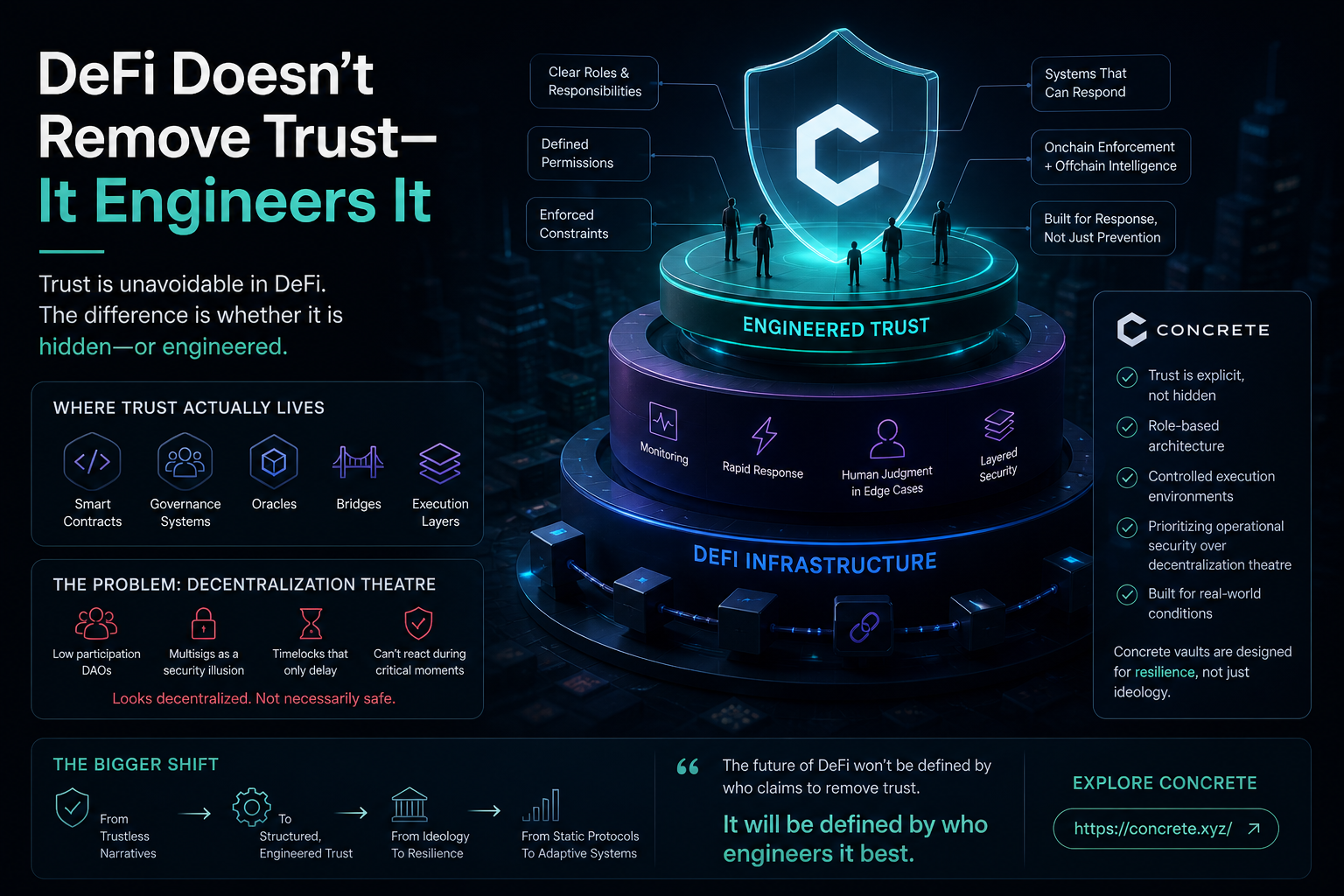
If you look under the hood, DeFi depends on trust in a lot of areas:
Smart contracts
You trust that the code is written correctly, has been audited, and doesn’t have hidden bugs. But exploits happen all the time.
Governance
Someone has to make decisions. In many DAOs, only a small group of people actually vote which means power isn’t as distributed as it looks.
Oracles
Protocols need real-world data (like prices). That data comes from oracles, and you’re trusting them to be accurate.
Bridges
Moving assets between chains is risky. Bridges have been some of the biggest targets for hacks in DeFi.
Execution layers
Behind the scenes, there are systems deciding how and when transactions get processed. That’s another layer of trust.
So no trust isn’t gone. It’s just spread out and a bit harder to see.
The Problem: “Decentralization Theatre”
Some projects look decentralized, but that doesn’t mean they’re actually safe.
This is what people call “decentralization theatre.”
For example:
- A multisig wallet that can override everything
- A DAO where barely anyone votes
- Timelocks that delay bad actions but don’t stop them
- Systems that freeze when something goes wrong
These setups give a sense of security, but they don’t always hold up in real situations.
Looking decentralized is not the same as being resilient.
A Better Way: Engineered Trust
Instead of pretending trust doesn’t exist, a better approach is to design it properly.
That’s what engineered trust means.
It looks like this:
- Clear roles who can do what
- Defined permissions with limits
- Rules that are enforced onchain
- Plans for what happens when things break
This is how traditional financial systems work. And it’s where DeFi is heading next.
Why Code Alone Isn’t Enough
Smart contracts are great, but they can’t handle everything.
Real systems need:
- Monitoring to catch issues early
- Fast response when something goes wrong
- Human judgment for unusual situations
- Multiple layers of protection
Because in the real world, things will go wrong. The question is how your system reacts.
That’s where operational security comes in and it’s a big part of strong DeFi infrastructure.
How Concrete Approaches This Differently
Concrete is built around this idea that trust shouldn’t be hidden, it should be clear and controlled.
Instead of chasing the “fully trustless” ideal, it focuses on making trust structured and enforceable.
Here’s what that means in practice:
- Roles are clearly defined (no ambiguity about who has power)
- Actions are enforced onchain (rules can’t just be ignored)
- Execution environments are controlled to reduce risk
- Offchain systems help monitor and respond in real time
- The system is built to react, not just sit and hope nothing breaks
With things like Concrete vaults, the focus is on actively managing risk — not pretending it doesn’t exist.
👉 Explore Concrete at https://concrete.xyz/
Where DeFi Is Headed
DeFi is growing up.
The industry is moving away from slogans like “trustless” and toward something more realistic:
- Making trust visible instead of hiding it
- Designing systems that can handle failure
- Combining code with human oversight
- Focusing on security and resilience
In the end, the winners won’t be the projects that claim to remove trust completely.
They’ll be the ones that design it the smartest way.
Because trust isn’t going anywhere.
The only question is whether it’s handled well or ignored.