Banking-as-a-Service vs White Label Neobank: Best Choice for 2026 Growth
--
The Shift Toward Modular Financial Infrastructure
The financial industry is undergoing a structural transformation driven by APIs, automation, and embedded finance. Traditional banking models are being replaced with modular architectures that allow faster product launches, global scalability, and reduced regulatory friction. Businesses today are no longer choosing between digital transformation and legacy systems — they are choosing how fast they can deploy financial services.
Enter two powerful models reshaping fintech: Banking-as-a-Service (BaaS) and White Label Neobanks. While both aim to simplify financial product delivery, they serve different strategic goals. Understanding their differences is essential for startups, enterprises, and fintech innovators aiming to build next-generation financial ecosystems.
What Is a White Label Neobank?
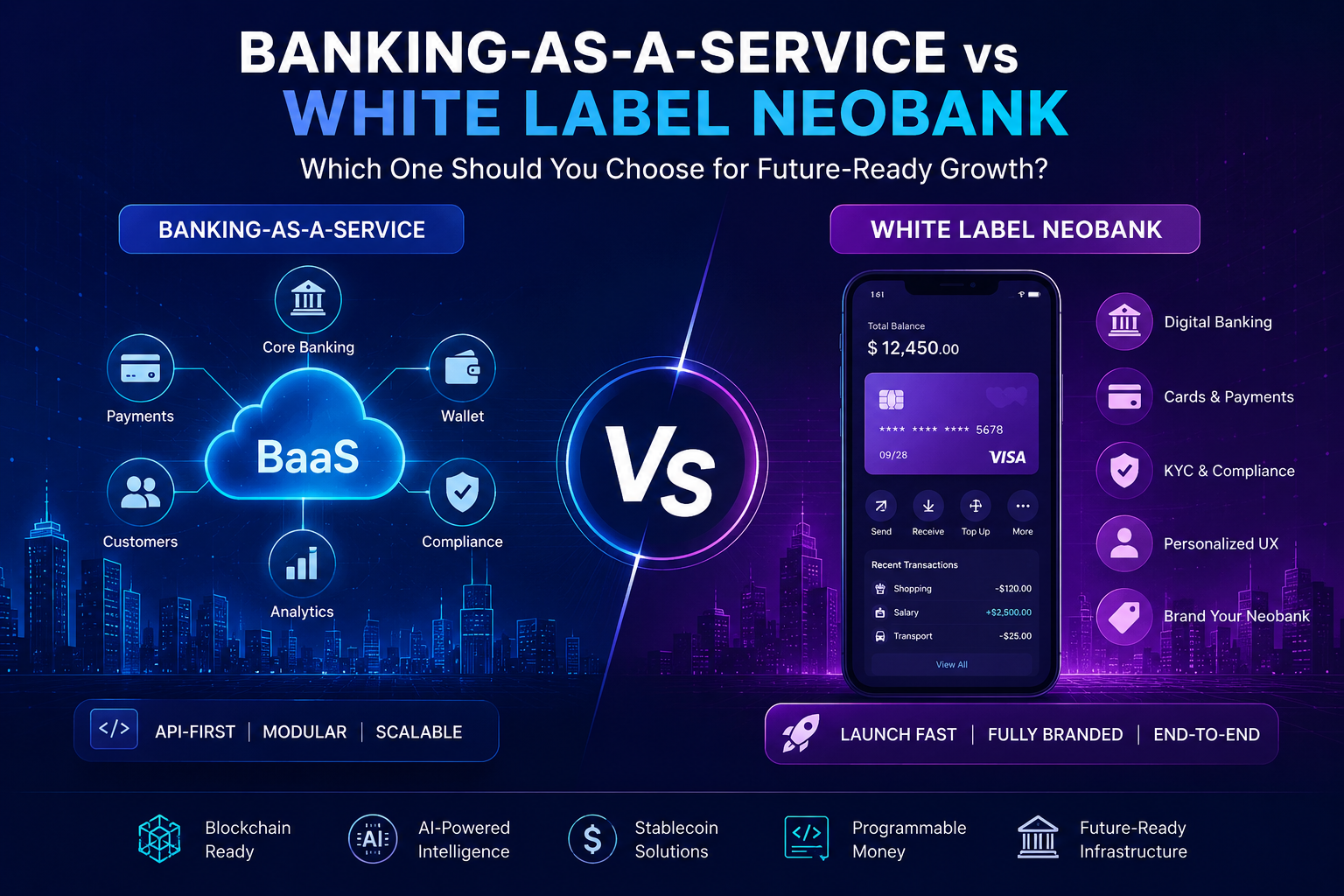
A white label neobank provides a ready-made digital banking infrastructure that businesses can brand, customize, and launch quickly without building core systems from scratch.
A leading white label neobank development company typically offers end-to-end solutions including digital onboarding, wallets, payment rails, and compliance layers. This approach is ideal for businesses that want to enter the fintech space rapidly while maintaining control over branding and customer experience.
Key Advantages:
- Faster time-to-market
- Lower development overhead
- Full brand ownership
- Built-in compliance and KYC modules
What Is Banking-as-a-Service (BaaS)?
Banking-as-a-Service is a backend infrastructure model that allows companies to integrate financial services into their platforms via APIs. Instead of launching a full banking product, businesses embed specific financial features like accounts, payments, or lending.
A white label crypto bank development company often combines BaaS infrastructure with digital asset banking capabilities, enabling firms to bridge traditional finance and crypto-native ecosystems.
Key Advantages:
- Highly flexible architecture
- API-first integration model
- Scalable financial product expansion
- Ideal for embedded finance platforms
White Label Crypto Banking Ecosystem
Modern financial systems are rapidly converging with blockchain technology. Businesses exploring digital asset banking often rely on a white label crypto exchange development services model to build trading, custody, and liquidity systems alongside banking infrastructure.
This hybrid approach allows organizations to create unified financial ecosystems where fiat and crypto coexist seamlessly, supporting global transactions and real-time settlements.
Core Benefits:
- Unified fiat + crypto operations
- Built-in liquidity mechanisms
- Advanced trading and wallet systems
- Faster ecosystem expansion
The Role of Programmable Finance
The future of financial systems is not static it is programmable. Smart contracts and automation layers are enabling businesses to define financial rules in code, unlocking new levels of efficiency and transparency.
With programmable money, transactions can execute automatically based on predefined conditions, eliminating intermediaries and reducing operational friction. This is particularly powerful for lending, payroll, insurance, and cross-border payments.
Key Innovations:
- Smart contract-based payments
- Automated compliance workflows
- Conditional financial execution
- Real-time settlement systems
AI-Driven Financial Intelligence
Artificial intelligence is becoming the decision-making core of modern financial ecosystems. Risk scoring, fraud detection, and liquidity optimization are now powered by machine learning models.
The rise of ai driven stablecoin systems is particularly transformative, enabling dynamic stability mechanisms that adjust supply and demand based on real-time market conditions. This creates more resilient digital currencies for global payments and decentralized finance.
Key Advantages:
- Predictive risk management
- Adaptive currency stabilization
- Intelligent fraud prevention
- Automated treasury optimization
How to Integrate Next-Gen Neobank Systems
Businesses aiming to scale financial services must focus on seamless integration strategies that connect banking, crypto, and embedded finance layers.
With Integrate neo banks, companies can embed banking capabilities directly into e-commerce platforms, SaaS tools, and digital marketplaces. This creates frictionless financial experiences for end users while expanding revenue streams for businesses.
Integration Strategies:
- API-first financial architecture
- Embedded payment ecosystems
- Cross-platform wallet connectivity
- Unified financial dashboards
BaaS vs White Label Neobank: Which Should You Choose?
Choosing between Banking-as-a-Service and a White Label Neobank depends on your business model and long-term vision:
Choose BaaS if:
- You want to embed financial services into an existing product
- You need modular, API-driven flexibility
- You are building a platform economy or marketplace
Choose White Label Neobank if:
- You want a full-fledged digital bank brand
- You need rapid deployment with minimal infrastructure effort
- You aim to launch consumer-facing financial services quickly
Final Thoughts
The future of finance is hybrid, programmable, and intelligence-driven. Businesses are no longer restricted to traditional banking systems they are building dynamic ecosystems powered by APIs, AI, and blockchain infrastructure. Whether you choose Banking-as-a-Service or a White Label Neobank model, success depends on how well you align technology with user experience and scalability goals.
The next wave of innovation will belong to platforms that combine flexibility, automation, and digital asset readiness into a single financial ecosystem.