Building Trust for Crypto Customers
 Edmund Ng4 min read·Just now
--
Once considered a niche innovation, cryptocurrency has evolved into a mainstream financial force worldwide. Just a few years ago, an estimated 560 million users owned crypto assets, underscoring rapid adoption and growth of digital currencies in investment, trading, and payments.
Yet sustaining this momentum presents challenges for many platform operators. Retaining users, ensuring regulatory compliance, and driving long-term growth are difficult in an ecosystem that many newcomers still struggle to trust. Unclear regulations, high-profile fraud cases, and volatile markets often make the crypto experience feel opaque and risky, limiting confidence and adoption at scale.
This article explores the critical role of trust in the crypto landscape — how it can be built, why data quality is at the heart of this process, and how trust-building mechanisms continue to evolve.
Why the Crypto Landscape Deals With Trust Issues
Unlike banks that operate under established regulatory frameworks, crypto platforms function in environments that are either decentralized or still evolving. As a result, the broader ecosystem often lacks the transparency most users expect and need to feel confident.
Security concerns continue to plague the crypto landscape. Two years ago, over $50 billion in cryptocurrencies were used in illegal activities. Last year alone, more than $2.7 billion was stolen by hackers. The massive scale of these losses naturally affects public perception negatively.
Furthermore, fraudster techniques are growing more sophisticated — fraudulent onboarding attempts surged 50% year-on-year.
Consequently, crypto platform operators must actively build customer trust and reinforce it on an ongoing basis.
Why Trust Is Crucial for Crypto Platforms
These are some reasons why user trust matters for crypto platforms:
User Adoption
If users are concerned about legitimacy, security, and usability, they might hesitate to venture into the crypto space. This can prevent or delay adoption. However, if platforms demonstrate operational transparency, robust security measures, and regulatory compliance, it can foster trust and reduce friction.
Long-Term Engagement
Trust is not only vital for attracting users — it is equally essential for sustaining engagement and driving retention. Confident users are more likely to recommend your platform, increase their transaction volumes, and explore additional services. Without which, increased user churn can hurt your growth potential.
Regulatory Compliance
Know Your Customer (KYC), Anti-Money Laundering (AML), and other regulations are becoming increasingly stringent for crypto platforms. By ensuring compliance, you can not only build customer trust, but also avoid penalties and operate across jurisdictions.
Approach That Helps Build Trust in Crypto
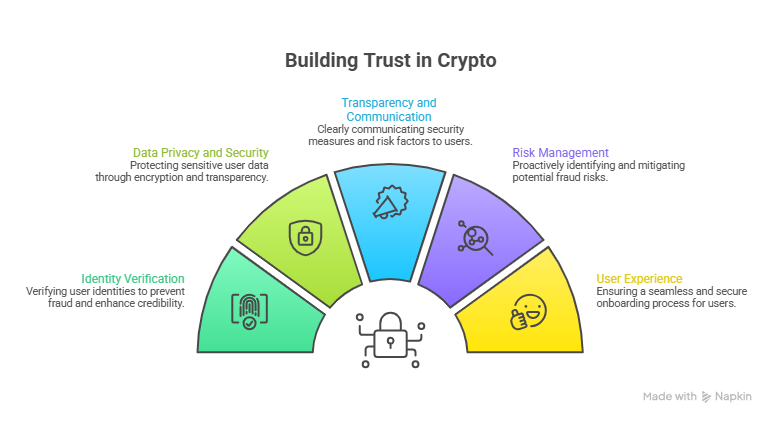
To get crypto users to trust your platform, you need to bank on these key pillars:
Identity Verification or KYC
This process verifies that users are who they claim to be, while mitigating risks such as illegal activities, account takeovers, and fraud. Notably, more than 70% crypto providers now prioritize verification accuracy over speed — a clear indicator of the growing focus on risk management and compliance.
With effective KYC, suspicious users can be flagged early on, reducing the creation of fake accounts, while boosting the credibility of your platform.
Data Privacy and Security
Crypto platforms work with a lot of sensitive personal information and financial transactions. Implementing secure data storage, end-to-end encryption, and robust access controls is essential to building and maintaining trust. Equally important is transparency around data usage — customers must have complete clarity on how their information will be handled to eliminate doubt and reinforce confidence.
Transparency and Communication
When it comes to security measures and protocols, investment risk factors, and pricing structures, crypto platforms need to communicate it all clearly. This transparency can help users understand the crypto ecosystem better and feel confident about your platform.
Risk Management
Proactive risk management is essential for crypto platform operators to avert sophisticated frauds. Advanced systems for monitoring transactions, behavioral analytics, and AI-powered fraud detection tools all play a part.
Smooth User Experience
Slow verification or complex onboarding erodes customer confidence and fuels frustration. Trust cannot be built at the expense of user experience — verification must be both secure and seamless.
Why Data Quality Plays an Important Role in Trust-Building
Poor data quality — such as outdated addresses, incorrect names, or duplicate records — undermines trust by causing failed identity verification, heightened fraud risk, onboarding delays, and compliance issues.
In contrast, high-quality, standardized data enables accurate verification, effective fraud detection, and a seamless customer experience. Put simply, clean and reliable data is the bedrock of trust.
Latest Trust-Building Trends in Crypto
As the global crypto industry increasingly matures, new approaches to trust-building are increasingly taking centre stage:
Decentralized Identity (DID)
With DID systems users gain greater control over their personal information, choosing to share only the details required for verification. This approach safeguards privacy while ensuring compliance.
Regulatory Alignment
To foster a more reliable and consistent ecosystem, crypto platforms are increasingly aligning with global regulatory standards.
Verification Backed by AI
Artificial intelligence is making identity verification both more accurate and faster, reducing onboarding friction while simultaneously enhancing security.
Cross-Platform Trust
In the future, users may carry verified identities across multiple platforms — reducing redundancy and enhancing the overall experience.
Get Ready to Earn the Trust of Your Crypto Customers
As crypto adoption accelerates, platform operators face a clear mandate: deliver experiences that are transparent, secure, and compliant. Yet trust cannot be built overnight. It requires strong governance, consistent performance, and an unwavering commitment to user protection.
Data quality and integration are equally critical to making these efforts effective. Investing in advanced tools to cleanse and standardize customer data enhances identity verification accuracy, reduces compliance risks, and elevates the user experience.
By embedding trust into the core of their operations, platforms can transform it into a strategic advantage — establishing robust frameworks that not only safeguard users but also lay the foundation for sustainable, long-term success.