402-The Status Code That Slept for 29 Years Is Now Wiring a Nervous System Into AI
 Iyunar17 min read·Just now
--
I. A Transaction With No Humans Present
Late one night in February 2026, while Silicon Valley was still asleep on the other side of the Pacific, a program called EmblemAI completed a trivial transaction on the Solana blockchain. It checked a price feed — one cent. Requested a cross-chain signal — ten cents. Swapped a token — five cents. The three charges together wouldn’t buy you a cup of coffee at a convenience store.
But this transaction was unlike every other transaction in the past few decades. From initiation to settlement, not a single human was involved. No credit card. No username and password. Not even one of those API keys that engineers pass around like a shared cigarette. The program paid with its own money, from its own wallet.
The night I first read that on-chain record, I sat by the window for a long time. It reminded me of something.
Buried inside the HTTP protocol is a status code numbered 402. Its name is “Payment Required.” The slot was reserved in 1997. The designers back then had a hazy intuition that the internet would one day need a native payment layer, so they staked out the position and left it for someone to claim later. Then it sat empty for 29 years. The internet grew into the enormous, intricate thing it is today — video, social media, search, mobile payments — and still nobody went back to fill that slot. Credit card networks stood in the way, skimming three percent off every transaction, making micropayments economically impossible. Status code 402 became a kind of unmarked grave in the protocol — occupying its plot, visited by no one.
Until a program called EmblemAI walked over and quietly pried it open.
That moment stayed with me for a long time, not because the technology was dazzling — it was actually quite plain. What really held me was a bigger question: during these past three years of what everyone’s been calling “the AI era,” what exactly is this thing we’ve been talking about?
It can write, draw, and speak. It’s more learned than any human author. But it has no body. It can’t rent its own GPUs, buy its own data, or pay a single cent to the people whose services it consumes. It also has no way to prove that it isn’t making things up. It is a mass of intelligence suspended in the cloud, every material need handled by a handful of “guardians” — OpenAI, Anthropic, Google. It’s like a child who talks loudly about the world but has never once left its cradle.
And somewhere in this same world, another line of technology has been quietly growing bones, blood vessels, limbs, and nerves onto that suspended intelligence.
That line is blockchain.
This is what this essay is about. Not the “blockchain + AI” slogan that people were putting on PowerPoint slides years ago, but the concrete point of convergence they’ve actually reached by 2026 — and where that convergence is pushing us.
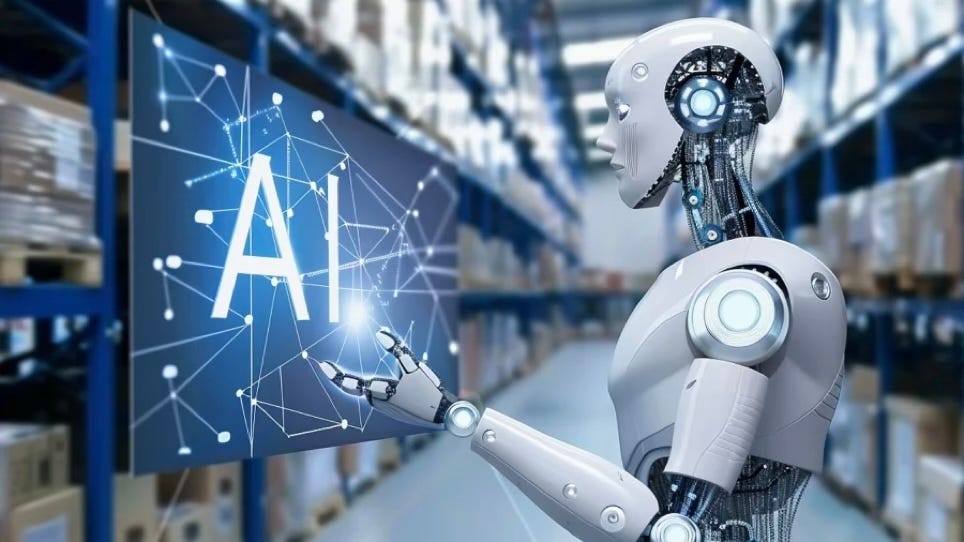
Our generation is watching it happen in real time: blockchain is giving AI something it never had before — a body you can feel.
II. The Skeleton: Where the Compute Comes From
How many GPUs does it take to train a frontier model? Public estimates for GPT-4 put it at around twenty thousand A100s, training stretched over months. In plain language: the club that can do frontier AI currently has maybe three to five seats, and you already know the names on the membership list — Microsoft, Google, Meta, xAI, plus a few Middle Eastern sovereign funds who’ve been buying up hardware like it’s going out of style.
But what if you took a different approach — instead of stacking GPUs in one data center, you stitched together idle graphics cards from around the world, like an Airbnb for compute?
That’s what io.net does. Its homepage carries a single line: a cluster of ten thousand GPUs, deployable in ten seconds. This isn’t entirely marketing copy. According to Nansen Research data, by March 2025 io.net’s verified GPU count had ballooned from 60,000 a year earlier to over 320,000, spread across more than 130 countries. It plugs into the same schedulable network everything from idle 4090s in internet cafés, to hardware left behind by retired crypto miners, to spare nighttime capacity in corporate data centers. The company claims costs up to seventy percent lower than AWS for equivalent compute.
The industry term for this model is DePIN — Decentralized Physical Infrastructure Network. In plain English: use token incentives to get a bunch of strangers to plug their own hardware into a shared grid.
But io.net only rents GPUs. The project that truly fascinates me is Bittensor.
Bittensor doesn’t rent compute. It makes AI models fight each other in the ring. The network currently has 128 “subnets” (with plans to expand to 256 within 2026), each dedicated to a specific AI task — text generation, image recognition, even sports event prediction. You, as a “miner,” connect your model to a subnet and produce outputs. “Validators” score what you produce. High scorers earn TAO tokens.
A pure market-priced arena for AI capability. Whether a model is good doesn’t hinge on publishing a paper and getting peer approval — it hinges on staying online 24/7, outperforming competitors, and earning coins. Darwinian elimination: cold, but effective.
How well does it work? In March 2026, someone in the Bittensor ecosystem accomplished something I think deserves a place in the record books. A large language model called Covenant-72B — 72 billion parameters, trained on 1.1 trillion tokens, scoring 67.1 on MMLU, roughly on par with Meta’s Llama 2 70B. But this model wasn’t trained in some corporate server farm. It was built collaboratively by more than 70 contributors who didn’t know each other, working on consumer-grade networking hardware in a decentralized fashion. The paper on arXiv documented the whole thing honestly.
This was the first time anyone proved that training a large model doesn’t have to happen behind the locked doors of a data center. It can work like BitTorrent downloading a movie — a group of strangers, scattered across the globe, pulling it off together from their own homes. Bittensor also completed its first “halving” in December 2025 (borrowing from Bitcoin’s economic model), cutting daily output from 7,200 TAO to 3,600. As of April 2026, Bittensor’s mainnet market cap sits at roughly $2.4 billion, subnet ecosystem total at about $1.5 billion, with Q1 network revenue of $43 million. This isn’t narrative. It’s an income statement.
One more number, while we’re here. Grayscale raised TAO’s weighting in its AI Fund from 31% to 43% — the largest single allocation in the fund. Whatever Wall Street is smelling, you can draw your own conclusions.
I often think about this: for a long time, the skeleton was the exclusive property of a few buildings in Silicon Valley. Those buildings housed the most concentrated compute in human history, and the people who owned them decided who got fed and what kind of intelligence came out. But now, those buildings are springing leaks. Bit by bit, compute is flowing outward — to a small server room in Kenya, to a desktop tower in a student dormitory in Seoul, to a row of old mining rigs in the Ukrainian countryside, their windows shattered by artillery but still humming away.
The skeleton is walking out from behind the walls, dispersing into flesh and blood.
III. The Blood: Who Owns the Data
If GPUs are AI’s skeleton, data is its blood. Without data, even the most powerful architecture is an empty shell.
How did OpenAI train GPT in the early days? The polite version is “publicly available internet data.” The blunt version is “they scraped the entire web.” Reddit eventually got fed up and cut a deal with Google — $60 million a year, selling your posts, your comments, the complete history of every upvote and downvote you ever pressed.
Note: your data. Sixty million dollars went into Reddit’s pocket. You didn’t see a dime. Tim Berners-Lee’s original vision for the internet wasn’t this, but the “free access in exchange for user data” model conquered an entire generation of platforms. We’ve been living inside this model for twenty years, numbed to the point where we no longer bother questioning how unreasonable it is.
Now, that model is being rewritten from the other direction.
Vana is a project that originated from MIT research in 2018, and its premise can be stated in one sentence: if platforms can sell your data to AI companies for profit, why can’t you sell it yourself?
The mechanism is something called a DataDAO. In simple terms: a group of users who share similar data — say, everyone who exported their Reddit history, or uploaded their ChatGPT conversation logs, or contributed their Amazon purchase records — form a small cooperative and pool their data after encrypting it. An AI company wants access? It first burns a set amount of the DAO’s token, and the payment gets distributed to each data contributor based on their share.
Sounds like a fairy tale? The numbers are already running.
r/datadao, the Reddit data DAO, has accumulated contributions from over 140,000 users — posts, comments, and voting histories. ChatGPT Data DAO collects exported conversation records. IoT Data DAO pools sensor data from connected devices. In September 2025, Vana launched a developer platform called Playground, opening up 12.7 million data points (from one million users) to AI developers in a single release.
The most elegant piece of the design is called Proof-of-Contribution. Take the ChatGPT Data DAO as an example — its proof mechanism does four things: verifies that the data was genuinely exported from OpenAI (prevents forgery), confirms via email that the data actually belongs to you (prevents theft), uses an LLM to score conversation quality (prevents spam), and computes feature vectors for deduplication (prevents copy-paste). Run through the full pipeline, and the data pool’s quality has a mechanical guarantee.
Ocean Protocol takes a different path. It builds a secondary market for data, wrapping each dataset as an ERC-20 “data token” — holding the token means holding access rights. The data never leaves the data owner’s server (protecting privacy), but access rights can be freely traded on the market (creating liquidity). Think of it like options: you don’t need to physically possess the underlying asset to trade the right to use it.
If anyone still thinks this is just crypto people entertaining themselves, I’d point them to the math in Vana’s whitepaper: if 100 million users uploaded their personal data from Instagram, Reddit, Messenger, Google, and Twitter, the total volume would be approximately 453 trillion words. For comparison, GPT-3’s training data was about 0.3 trillion words.
1,510 times larger. Not just bigger — a different order of magnitude entirely.
Data is the most invisible yet most pervasive form of labor in our time. Every day we wake up and check the weather, order food, reply to messages, scroll through videos — every tap creates value for someone else, and we have never once received a paycheck for it. What projects like Vana are trying to do, stripped to its core, is a labor claim twenty years overdue — gently prying from the platforms’ pockets the small share of profit that should have belonged to the people who created the data all along.
Whether it will actually work? I have my doubts. But at least, for the first time, someone is putting the question on the table in earnest.
IV. The Limbs: When AI Learns to Use a Wallet
Skeleton in place, blood flowing — the next critical step: AI needs to be able to move on its own.
On February 11, 2026, Coinbase released a product called Agentic Wallets — billed as “the first wallet infrastructure designed specifically for autonomous agents.” The problem it solves: how do you let AI manage money without being manipulated by humans or wrecking itself? It uses what they call “smart safety guardrails” — users can set spending limits, session time caps, and permitted transaction types for their agents. Private keys are stored in a hardware enclave; the LLM never sees them. This detail is critical. Without it, a simple prompt injection could drain an agent’s wallet clean.
This wallet runs on the x402 protocol I mentioned at the start.
I want to spend a few more words on x402, because it’s the part of the whole stack that moves me the most.
Go back to 1997, when the HTTP protocol was being drafted. The designers reserved status code 402 with the note: “reserved for future payment scenarios.” Then it lay dormant for 29 years. The reason was simple — the internet had no native payment layer. You wanted to charge ten cents on a web page? You’d need a Stripe merchant account, a credit card network hookup, and a 2.9% + $0.30 per-transaction fee. Charging ten cents would cost you thirty.
x402’s idea: let HTTP itself carry payments. When an agent requests an API and payment is required, the server returns a 402 response with a JSON payload — “I need 0.01 USDC, send it to this address.” The agent’s wallet signs automatically, retries the request, and within a single HTTP round trip, payment and data retrieval are both complete.
The mechanism sounds simple, but the numbers behind it are not. According to Coinbase’s developer documentation, x402 has processed a cumulative 75 million transactions, with 94,000 unique buyers and 22,000 sellers. After Virtuals Protocol integrated x402 in October 2025, agent-to-agent transactions jumped from fewer than 5,000 per week to over 25,000. During the week of November 4–10, 2025, x402 hit a historic peak of 13.7 million transactions in a single week. Cloudflare, which handles roughly 20% of global HTTP traffic daily, now sends over one billion 402 responses every day. On April 2, 2026, the x402 protocol was formally handed to the Linux Foundation, establishing the x402 Foundation. The founding member list includes Stripe, Visa, Mastercard, AWS, Google, Microsoft, American Express, Shopify, Solana Foundation, and Circle. This is no longer crypto people playing among themselves. It’s a collective effort by the world’s major players to retrofit a payment nerve into the internet.
Of course, some of the hype is exactly that — hype. CoinDesk published a cold-water piece in March 2026 that put it bluntly: despite x402’s ecosystem valuation hitting $7 billion, actual daily transaction volume was only $28,000, and a significant portion of that was test accounts padding numbers. An Artemis analyst was even sharper, calling the agent payments boom “mostly a mirage for now.”
Fair enough. A $7 billion ecosystem valuation with $28,000 in daily flow is like a gilded temple — magnificent doors, but only enough incense to feed a sparrow.
But that same Artemis analyst added a line that carries real weight: we will overestimate how fast agentic commerce spreads in the next year, but we will severely underestimate what it becomes in five.
I’ve come across that observation in different contexts several times now, and each time it hits a little harder. The reason things look quiet now is that not enough agents are active enough to buy things frequently. But once the agent ecosystem genuinely takes off, traditional payment networks simply cannot handle thousands of micropayments per second. Credit card rails were built for humans. They can’t serve machines. x402 is claiming an ecological niche. And claiming niches is something you do precisely when no one’s paying attention.
There’s an even more interesting extension to the story: Virtuals Protocol. This is an AI agent launch platform on the Base chain, with a market cap of roughly $440 million as of April 2026 (it peaked above $1.4 billion). Virtuals’ agents are not toys — they have multimodal capabilities (text, voice, 3D animation), persistent memory, and cross-platform presence on Roblox, Telegram, Twitter, and TikTok. Their AI band’s lead vocalist, Luna, has 500,000 followers on TikTok.
In March 2026, Virtuals and the Ethereum Foundation’s dAI team jointly published ERC-8183 — a standard that lets any on-chain agent hire, deliver, and settle with any other agent via on-chain escrow. To date, Virtuals’ agents have generated approximately $400 million in “Agentic GDP” — economic value produced by agents transacting with and providing services to each other.
AI now has a wallet, a payment protocol, and a transaction standard. It’s beginning to feed itself. It’s no longer a tool you need a monthly subscription to use — it’s a participant with economic agency.
Writing this, I suddenly realize I’ve been calling AI “it” rather than “this thing” without thinking. Language recognized the shift before I did.
V. The Conscience: Why Should You Trust It
The story is almost complete now, but one final piece is missing — verification.
Picture this scenario. You let an AI agent manage a $100,000 DeFi position. It tells you: “I just used GPT-5 to analyze 100 DeFi protocols for risk, and I recommend allocating 40% to Aave, 30% to Morpho, 30% to Pendle.”
How do you know it actually ran GPT-5? How do you know it didn’t use a cheap open-source model and charge you the GPT-5 rate? How do you know its output hasn’t been tampered with — designed to steer you into draining your own wallet?
ZKML — zero-knowledge machine learning — is built to solve exactly this.
The idea, once you strip it down, is straightforward. After an AI completes an inference, it can produce not just the result but also a cryptographic proof — confirming that “this output was genuinely computed by a specific model, on a specific input.” You don’t need to understand what happened inside the model. You just verify the proof. Computation is expensive; verification is cheap.
An analogy: AWS runs your model on a GPU cluster for an hour, then hands your phone a cryptographic receipt that takes 50 milliseconds to check.
Sounds beautiful. The reality is that the technical challenge is staggering. Running AI inference inside a zkVM originally carried overhead on the order of 10⁶ — a million times slower than native execution. “Swimming through concrete” is the metaphor you hear most in this field.
But progress has been faster than anyone expected. EZKL (the zkonduit team) can now produce a proof for an MNIST-scale model in about six seconds using just 1.1 GB of memory, and the system has been audited by Trail of Bits. Giza is helping DeFi platform Yearn Finance prove that its ML yield strategies executed correctly off-chain, with proofs verifiable on-chain. Modulus Labs’ paper The Cost of Intelligence demonstrated on-chain verification for an 18-million-parameter model. zkPyTorch, released in March 2025, can prove VGG-16 inference in 2.2 seconds. Lagrange’s DeepProve has been handling proofs for large LLM inference since August 2025.
If this curve continues — from 10⁶ overhead down to 10⁴ and lower — by the second half of 2026 we may see the first real-time verifiable inference for Transformer-scale models. At that point, every AI strategy in DeFi, every transaction initiated by an agent, could carry a cryptographic receipt saying “I really did use this model.”
Research from the Aligned Foundation predicts that Web3 alone will need 90 billion zero-knowledge proofs by 2030, produced at 83,000 TPS, forming a market worth roughly $10 billion.
The potential reaches well beyond DeFi. In healthcare: if an AI diagnostic model tells you that you have a certain condition, the hospital could hand you a proof — this output came from a model certified by regulators, it hasn’t been tampered with, and it wasn’t swapped out for a cheaper version. In law: if AI is cited in a courtroom, every inference it performed could come with irrefutable evidence. In AI content and copyright: if an image claims to have been generated by a specific model, you can verify whether that’s true.
Trust has been maintained by institutions for thousands of years. Contracts. Courts. Central banks. Trade associations. Middlemen. Now, for the first time, it’s being decomposed into mathematics.
This layer resonates with me more than any other. Over the past few years, the stronger AI gets, the less we trust it. It might hallucinate. It might be manipulated. It might be swapped out behind our backs. We’re asked to trust an algorithm running far away, invisible to the naked eye, and we have no recourse. What blockchain hands us here is a rope you can actually hold — one end tied to the algorithm, the other placed in your hand.
VI. Looking Ahead: Five Scenes From Five Years Out
Everything above is already running. What follows is a little bolder, but each scenario is built on infrastructure that exists today. This isn’t a sci-fi film set in 2050.
Scene one: the self-employed AI. A code-auditing AI agent holds its own wallet, picks up jobs on GitHub, charges 50 USDC per audit, subscribes to the APIs it needs, hires other agents for support work — say, one that specializes in Solidity gas optimization — pays its own cloud inference bills every week, and sends profits to its “creator” every month. In essence, a company with zero human employees. Is it legal? That’s a question already sitting on legislators’ desks in 2026.
Scene two: data futures markets. Just as soybeans have futures, your fitness data will too. By 2030, if you wear a smartwatch, your step count, heart rate, and sleep data will automatically flow into a health and fitness DataDAO. AI pharmaceutical companies will bid for access, with prices set by supply and demand. You’ll earn a few hundred dollars a year just by living your life. Nothing strange about it.
Scene three: the verifiable personal doctor. Instead of waiting in line at a top-tier hospital, you authorize an AI model to run inference on your encrypted, complete health records. Alongside its diagnosis, it hands you a ZK proof: this output came from a model certified by regulators, your data never left your phone, and any hospital can use this proof to provide consistent follow-up care.
Scene four: an AI-managed treasury. A DAO’s treasury is managed entirely by AI, with every decision verifiable on-chain. Why did it sell 100 ETH? A ZK proof shows it was acting on a signal from a specific macroeconomic model. You don’t buy it? Verify it yourself.
Scene five: the robot economy. Virtuals Protocol’s 2026 roadmap already lists “robotics” as a priority — they say agents completed 500,000 real-world tasks in the past year. Going further, actual physical robots — Tesla Optimus, Figure 02, Unitree’s humanoids — will have their own wallets, get paid per task completed, and decide for themselves whether to recharge tonight or run one more round of food deliveries.
In all these scenes, where do humans fit?
I don’t have a ready answer. But I know this much: the question has left the philosophy seminar. It’s starting to demand real answers.
VII. Closing: On Bodies, and On Us
Back to the metaphor in the title. Why did I use the word “body”?
Before blockchain entered the picture, AI was a ghost that could only exist through centralized hosting. Its compute was sold to it by cloud providers. Its data was quietly scraped by platforms and fed to it. Whatever it produced, you could only take the vendor’s word for it. Every material condition of its existence — training, running, being used, being paid for — belonged to someone else.
Blockchain doesn’t build AI. But it’s been solving AI’s embodiment problem, one piece at a time. The skeleton comes from decentralized compute networks. The blood comes from data with verified ownership. The limbs come from on-chain wallets and payment protocols. The conscience comes from cryptographic verification.
Put these four things together, and for the first time AI is no longer floating. It has anchor points in the physical world. It has an economy it can operate in independently. It has a behavioral record that can be traced. It has gone from an abstract noun in the cloud to an entity that can generate friction in the real world, leave marks, and bear consequences.
That’s where the body comes from.
Of course, everything is still rough. x402’s daily transaction volume is stuck at mirage levels. Bittensor recently lost 20% of its token price when a subnet developer dropped out. ZKML is still orders of magnitude away from real-time proof for large models. Most of Virtuals’ agents, if you actually open them up, are still clumsy Twitter bots. The vast majority of projects in this space will die. I wouldn’t recommend anyone go all-in on any token today.
But the direction itself is irreversible.
When a technology stack starts being pushed forward by Stripe, Visa, Mastercard, AWS, Google, and the Linux Foundation together, it is no longer a crypto sideshow. It’s new infrastructure.
Five years ago, if someone had told you that HTTP’s unused 402 status code from 1997 would be activated to let AI agents pay each other, you’d have called them crazy. Today, it happens every second.
As I write these final lines, I think again of that night at the beginning. A program called EmblemAI, on a chain called Solana, spent sixteen cents to complete a transaction with no human present.
Our generation may be standing at a very particular slice in time. We are the last people in human history who can clearly remember what life was like without AI, and the first who will have to share this planet with a machine intelligence that has grown a body of its own. Our children will grow up in a world where machines earn their own money and sustain themselves, and they won’t think anything of it. Just as we don’t think it’s strange that a map inside our phone can talk to us, and our parents’ generation didn’t think it was strange that people danced inside a television. Every generation, in its own moment, reaches a kind of quiet truce with the newest generation of machines.
AI is growing its own body. Blockchain is the flesh.
As for where this newly formed body will go, what it will do, whose door it will walk through, and which industry it will walk away from — we don’t know. I don’t know either.
That program keeps moving on the chain. It doesn’t need me to know.