Why the Best Founders Don’t Choose Between Building and Marketing
 DARK4 min read·Just now
--
Building a great product is hard, but getting people to care about it is even harder.
Many founders spend years building something the market never asked for.
This is the uncomfortable truth many first-time founders discover too late.
They spend months perfecting features, fixing small design details, and building something they believe people will love.
But when launch day arrives, the silence they receive is more than they expected.
This happens not because their product is terrible, but simply because the story never reached anyone.
Most founders believe they must choose between building and marketing.
They often view this as a trade-off: either invest time in improving the product or focus on promoting it.
This belief is risky and can lead to negative consequences.
A founder might spend a year building quietly, thinking marketing will start after the product is “ready.”
But the market doesn’t reward silent builders. The market rewards products that people understand, trust, and talk about.
The important question they often neglect is not whether to build or market, but when to start telling the story.
Building turns ideas into something real. It transforms a concept into a working solution that solves a problem.
When a founder builds, they are creating value. They are shaping the product, testing assumptions, and improving how the solution works.
Take the early days of Notion. The founders spent years refining the product experience because they believed flexible tools could replace multiple apps.
Their building process allowed them to deliver a product people genuinely enjoyed using.
But building alone does not create awareness. A product can be excellent and still remain invisible if no one is talking about it.
A product must solve a problem, but people must also be aware that the problem exists.
This is where marketing comes in handy.
Marketing creates attention, clarity, and understanding.
It helps people see why the product matters.
It translates features into outcomes that matter to users.
Most importantly, it opens lines of communication between founders and the market.
Consider Figma. The product itself was powerful, but what accelerated its adoption was how clearly the team communicated collaboration in design. Designers immediately understood the benefit.
Marketing didn’t replace the product.
It revealed why the product mattered.
When founders treat marketing as storytelling rather than promotion, the product becomes easier to understand and easier to adopt.
Overbuilding is one of the most common mistakes early founders make.
They assume more features equal more value.
Weeks turn into months as they add improvements users never asked for.
By the time the product launches, the market may have moved, or the original problem may not even be urgent anymore.
This happens because the founder built in isolation.
Without early feedback or conversation with potential users, the product evolves based on assumptions rather than real demand.
The result is a product that feels impressive internally but struggles to gain traction externally.
The danger is not building too much.
The danger is building without learning from the market.
On the other side, some founders try to solve everything with marketing.
They focus on hype, aggressive promotion, and constant posting while the product itself lacks substance.
Creating early attention but weak retention.
People might try the product once, but they rarely stay.
The market is unforgiving when expectations and reality do not match.
If the experience disappoints, no marketing strategy can save the product long-term.
Marketing can open the door, but only the product can convince people to stay.
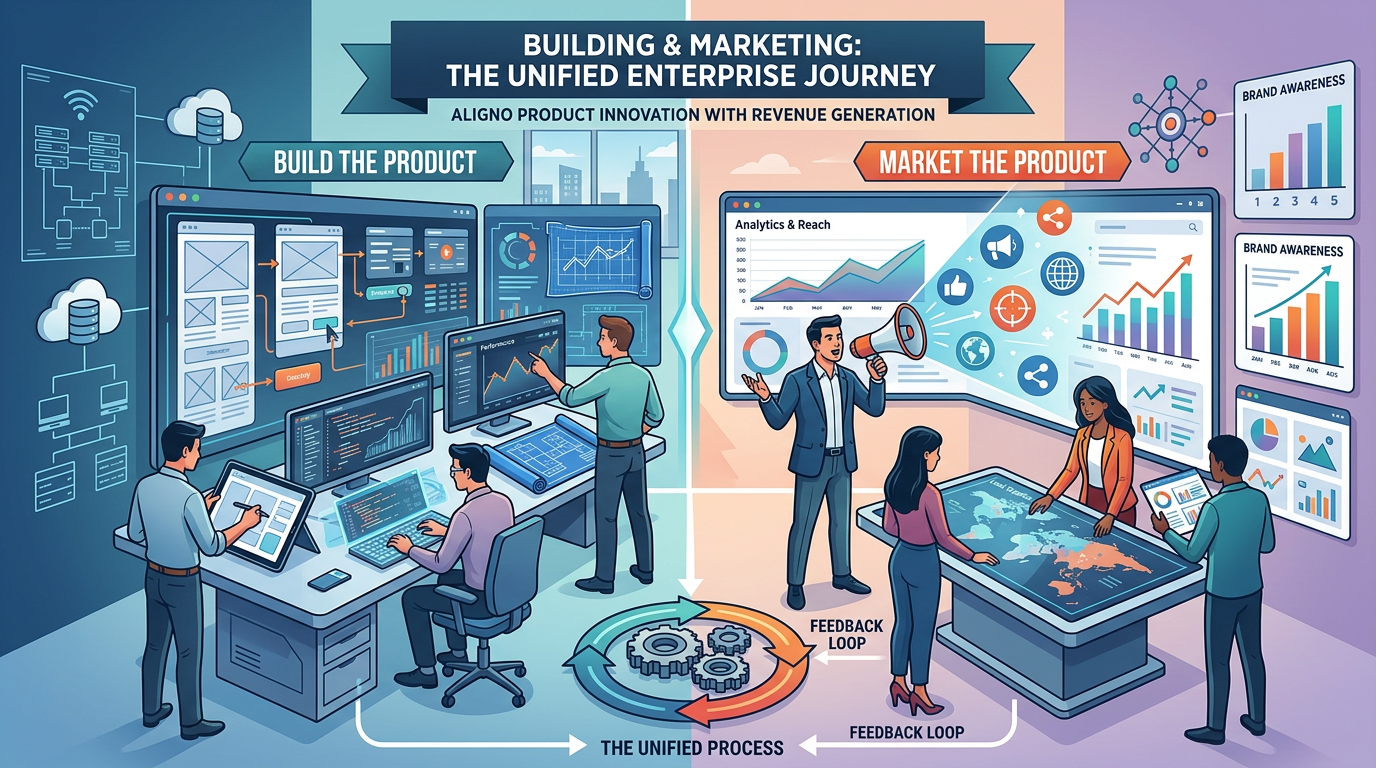
The most effective founders do not separate building and marketing. They connect them.
They build small improvements and immediately share what they are learning. They show progress, ask questions, and invite early users into the journey.
When Superhuman was growing, the team publicly discussed their obsession with product speed and user experience.
This transparency created curiosity and attracted people who cared about productivity.
The product improved while the narrative grew.
The smartest approach is not choosing one over the other. It is maintaining a rhythm between them.
Build enough to create real value.
Then talk about what you are building and why it matters. Listen to the reactions, learn from the feedback, and improve the product.
Each step informs the next.
The product becomes stronger because of the conversation, and the conversation also becomes stronger because of the product.
This balance reduces risk, improves clarity, and builds trust with the market early.
Most founders learn this lesson the hard way; building a product is not the same as communicating its value.
If you’re building something valuable but struggling to explain it clearly to customers, investors, or the market, that’s where narrative strategy matters.
This is what Shadow Ledger does best.
I help founders turn complex products into clear, credible stories that attract the right users, build trust, and create momentum around what they’re building.
If your product is solid but the message isn’t landing, let’s fix the narrative.