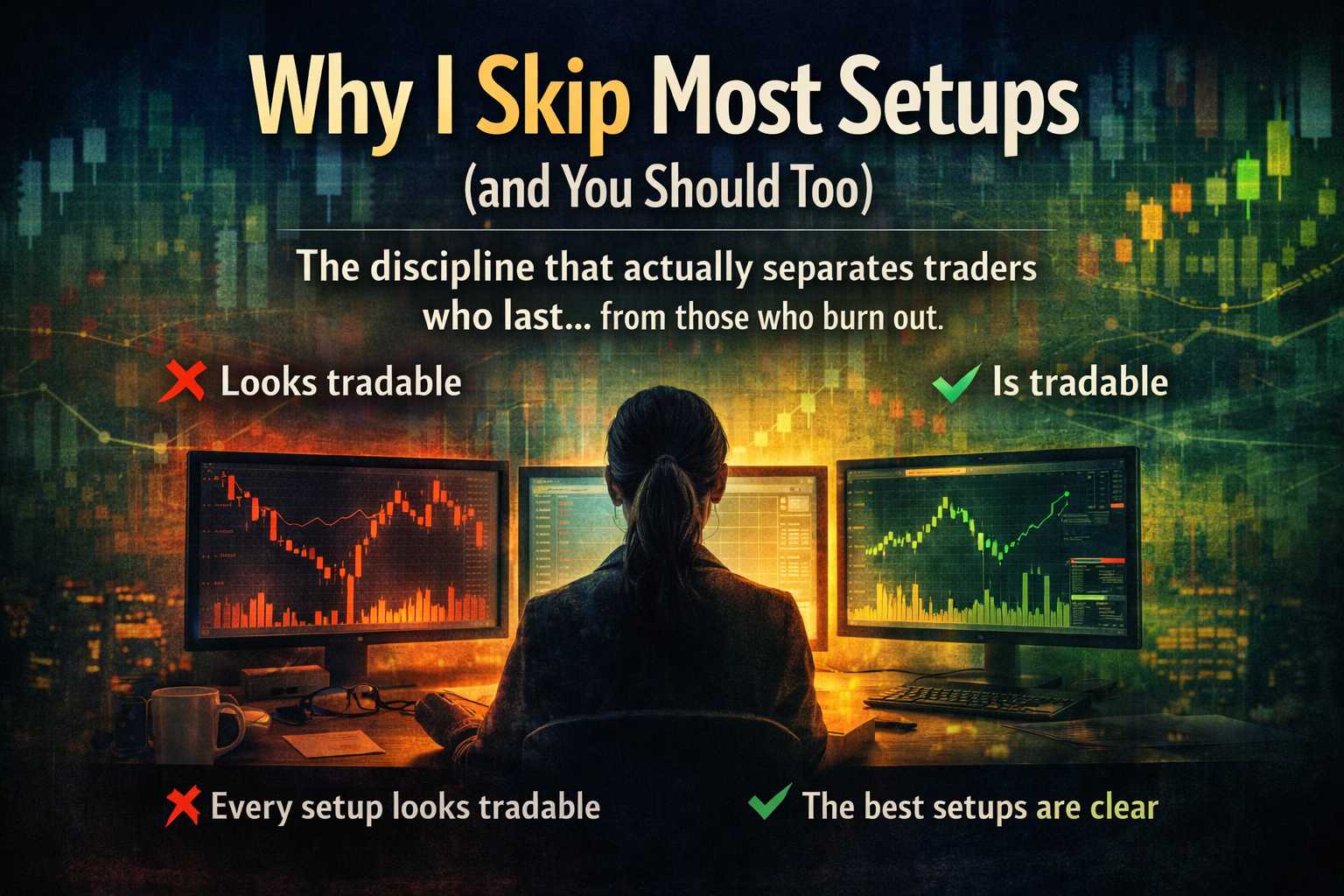
Why I Skip Most Setups (and You Should Too)
The discipline that actually separates traders who last… from those who burn out
 The Truth As I Know It3 min read·Just now
--
There was a time when I thought more trades meant more opportunity.
More chances to win.
More chances to grow.
More chances to “figure it out.”
So I took everything.
Every breakout.
Every pullback.
Every move that looked even remotely promising.
And for a while, it felt productive.
Like I was doing the work.
Like I was in it.
But what I didn’t realize was this:
I wasn’t trading.
I was reacting.
And reaction is expensive.
The lie most traders believe
There’s this quiet belief that sits underneath a lot of trading behavior:
“If I’m not in a trade, I’m missing something.”
So people stay active.
They click in and out.
They chase movement.
They convince themselves that being busy means being effective.
But the market doesn’t reward activity.
It rewards selectivity.
And those are not the same thing.
Most setups are not opportunities
This is the part that took me a while to accept:
Just because something looks like a setup…
doesn’t mean it deserves your money.
In fact, most of what you see:
- is incomplete
- is unclear
- is happening in the wrong location
- or doesn’t have enough confirmation
But if you don’t have a filter, everything starts to look tradable.
And when everything looks tradable…
👉 you end up trading everything
👉 and learning nothing
Why skipping trades is a skill
Skipping isn’t avoidance.
It’s decision-making.
It’s recognizing that:
- clarity matters
- context matters
- timing matters
And if those things aren’t there…
You don’t force them.
You wait.
Because waiting is not passive in trading.
It’s active discipline.
What changed for me
When I started asking better questions (from last week’s post), something shifted.
I wasn’t just looking for entries anymore.
I was looking for reasons not to take them.
And suddenly:
- The noise got quieter
- The charts made more sense
- The pressure to “be in something” started to fade
I realized I didn’t need more trades.
I needed better ones.
What I look for before I don’t skip
Most of the time, I pass.
But when I don’t skip a setup, it’s because something is different.
There’s:
- clear structure
- clean movement
- and a reason for price to be doing what it’s doing
Not hope.
Not excitement.
Clarity.
If I have to convince myself it’s a good trade…
…it’s not.
The cost of not skipping
This is the part no one talks about enough.
Every unnecessary trade:
- drains your mental energy
- builds bad habits
- and blurs your ability to see what’s actually working
It’s not just about losing money.
It’s about losing clarity.
And once that goes, everything starts to feel random.
If this feels familiar
If you’ve ever:
- taken a trade just because it was there
- felt like you needed to be doing something
- or looked back and thought, “Why did I even take that?”
You’re not alone.
But that’s also the turning point.
Because awareness is where change starts.
If you want to go deeper
If this way of thinking is starting to click, I break this down much more in my book:
“How the Stock Market Actually Works: A Practical Guide for New Traders to Read Charts, Manage Risk, and Survive the Market.”
This isn’t about taking more trades.
It’s about understanding the ones that actually matter.
👉 You can grab it here:
What’s next
Next week, we’re going one layer deeper:
What makes a trade actually valid… vs just tempting.
Because not all “good-looking” setups are good trades.
If you want that breakdown when it drops, make sure you’re subscribed.
Final thought
The market will always give you something to look at.
Movement.
Setups.
Possibilities.
But your edge isn’t in seeing more.
It’s in needing less.
Disclaimer
I am not a licensed financial advisor. I have experienced both gains and losses and am learning in real time. This content reflects my personal experience and perspective only — it is not financial advice. Always do your own research and due diligence before making any investment decisions. This is the truth as I know it from where I’m standing.