Why I Built Cora
--
The problem with messaging apps, the promise of Web4, and the AI agent I wish had existed years ago.
· · ·
Every big idea starts the same way: with a problem that bothers you more than it bothers everyone else.
For me, that problem was watching communities work incredibly hard — building audiences, nurturing conversations, bridging languages, driving real economic activity — and getting nothing back from the platforms they built on.
WhatsApp took their data. Telegram took their attention. WeChat took a cut of every payment. And all of them kept 100% of the value that users created.
I kept thinking: what if the platform worked for the community instead of the other way around?
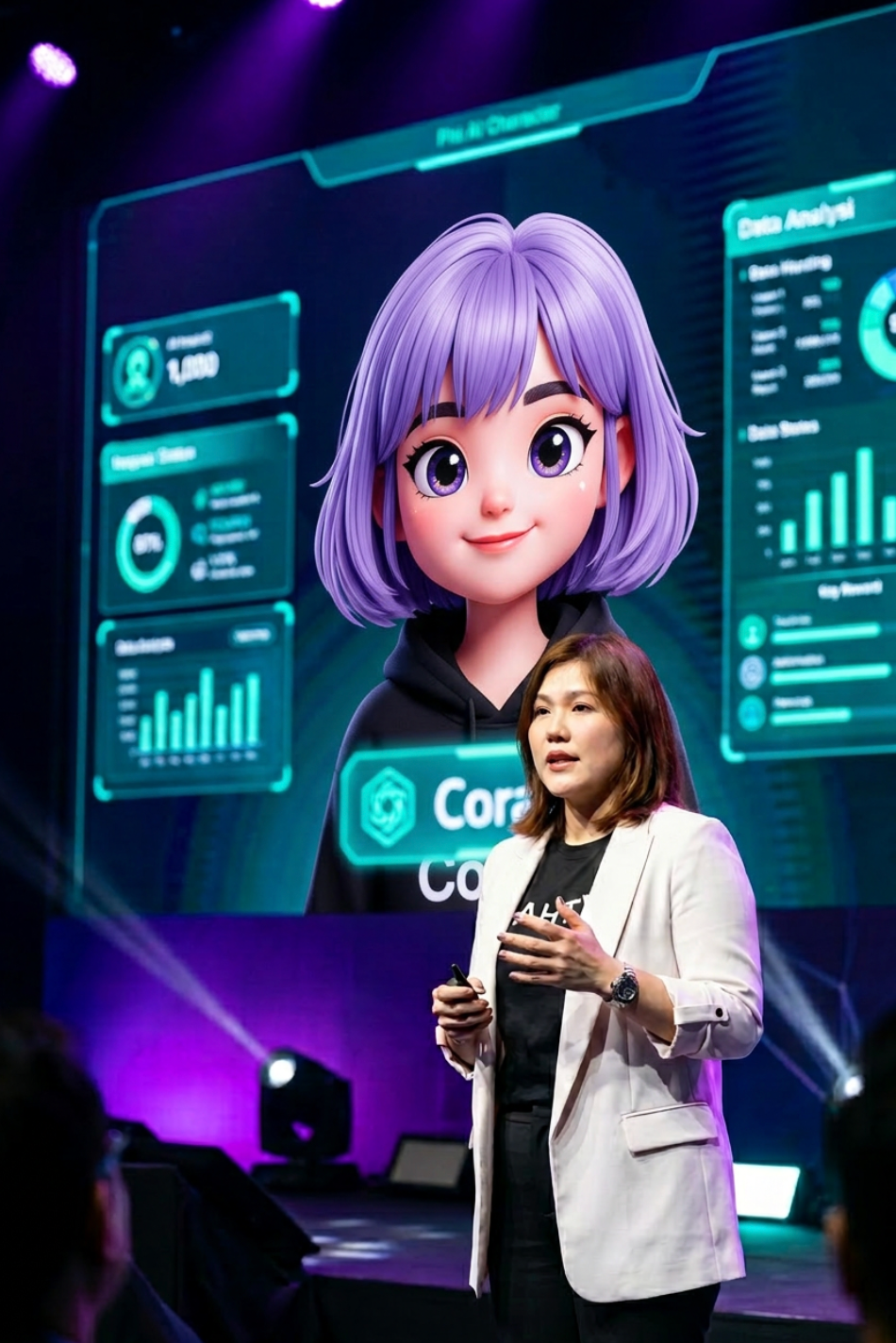
That question became CoraX. And Cora — the AI at the heart of it — became my answer to what a genuinely helpful digital assistant could look like when it’s designed for you, not for advertisers.
· · ·
The Problem I Couldn’t Stop Thinking About
I’ve spent years watching how people in Southeast Asia, the Middle East, and Latin America actually use messaging apps. Not how the apps want them to use them — how they actually do.
They run entire businesses inside WhatsApp groups. They coordinate communities of thousands across language boundaries that auto-translate poorly. They send money peer-to-peer through workarounds because the built-in tools are either absent, expensive, or locked behind regional restrictions.
And they do all of this while the platform collects their data, sells their attention, and offers them nothing in return.
“The community creates the value. The platform captures it. That equation has always felt broken to me.”
The crypto world tried to fix the financial piece of this. And it did — technically. On-chain transfers, DeFi yields, NFT communities, decentralized governance. But it forgot the human layer entirely.
Wallets are confusing. Gas fees are opaque. The interfaces feel designed by engineers for engineers. And there’s no messaging. No community. No real-world context for any of it.
I saw two worlds that should have been merged and weren’t: the everyday warmth of a messaging app, and the financial sovereignty of crypto. That gap is where CoraX lives.
· · ·
What Web4 Actually Means
You’ve heard the progression: Web1 gave us read. Web2 gave us read and write. Web3 gave us ownership.
Web4 gives us agency.
Not just the ability to own digital assets — but the ability to delegate. To have an AI act on your behalf, communicate for you, execute transactions, earn income, translate context, and operate within communities — all without you having to be there for every step.
That’s a meaningful shift. Most people don’t have time to manage a crypto portfolio, moderate a multilingual community, track earnings from multiple channels, and stay on top of AI tools simultaneously. But an agent can.
“Web4 isn’t about what you can do with technology. It’s about what technology can do for you, on your behalf, while you live your life.”
Cora is our bet on what that agent looks like inside a messaging context — native to the community, native to the wallet, native to the language you speak.
· · ·
Who Is Cora?
Cora isn’t a chatbot bolted onto a messaging app. She’s the reason the app exists.
When we were working through the early concept, we kept asking: what does someone actually need when they’re running a community, a small business, or a creator channel across multiple languages and time zones?
They need someone who knows context. Who understands that the message coming in from a customer in Arabic and the payment request from a supplier in Mandarin are part of the same business conversation. Who can surface the right information at the right moment — crypto prices, transaction history, pending tips, community metrics — without the person having to go look.
They need someone who can act, not just inform.
So Cora became that. An AI assistant who can answer questions, send messages, process payments, explain on-chain activity in plain language, and help community leaders understand what’s actually happening in their channels. She’s multilingual by default — because the communities we’re building for are multilingual by default.
We named her Cora because the name means “heart” in several languages. That felt right. The AI shouldn’t feel like a feature. She should feel like the soul of the product.
· · ·
The Revenue Model That Changes Everything
Most platforms treat community creators as a distribution channel. CoraX treats them as partners.
Every transaction that flows through CoraX carries a 1% fee. That’s it — transparent, flat, on-chain. No hidden costs, no variable rates, no surprise deductions.
Of that 1%, 30% goes back to the community — distributed to the leaders, contributors, and members who made that economic activity possible. 70% sustains the platform.
It sounds simple. That’s deliberate. In a space full of opaque fee structures and extractive models, we wanted something a user could understand in ten seconds and verify on-chain in thirty.
“If you build the community, you should share in what the community earns. That’s not radical — it’s just fair.”
This isn’t just an ethical position. It’s a growth strategy. Communities that earn from participation grow faster. Members who have skin in the game stay longer. Leaders who are compensated for their work build better things.
The fee split is the alignment mechanism. It makes what’s good for users good for CoraX, instead of in tension with it.
· · ·
The Hard Part Nobody Tells You
Building something like this is genuinely difficult. Not the technology — though that’s hard too — but the sequencing.
Do you build the AI before the wallet? The wallet before the messaging? The messaging before the community tools? Every choice closes off other paths. Every feature you build tells potential users what you think matters most.
We made mistakes. Early versions of Cora were too transactional. Users wanted warmth, not just utility. We rebuilt her personality. We tuned her not just to answer questions, but to feel like a conversation.
The multilingual layer was harder than we expected. It’s not enough to translate messages — you have to translate context, tone, and intent. A joke that lands in Cantonese doesn’t always land in English. Cora had to learn that.
The wallet integration required navigating compliance in multiple jurisdictions simultaneously while keeping the UX simple enough that someone who’d never touched crypto before could send their first payment in under two minutes. We’re still improving that.
But the hardest thing was resisting the pressure to simplify the vision. Every investor conversation, every user interview, every potential partnership came with suggestions to cut scope, focus on one market, drop the AI, drop the wallet, just be a chat app.
We didn’t, because we believe the whole is what makes each part valuable. A wallet without community has no context. An AI without financial capability is just a search bar. A messaging app without native payments is 2015. The combination is the product.
· · ·
Where We Are Now
CoraX is live. Support for 21 languages and intend to support thousands of on-chain transactions processed through the platform and CahtX (DEX).
Cora is live too, helping users navigate crypto, answer community questions, and process payments in natural language across languages. She’s not finished. She’s never going to be finished. That’s the nature of building an agent that learns from the communities she serves.
We shipped across Mac, Windows, Android, and Webdirectly, without going through app store gatekeepers because distributing a Web4 product through the world’s biggest intermediaries felt like the wrong foundation. iOS is coming, because those users matter too.
The on-chain fee infrastructure, the CoraX Commission Router, the Fee Splitter is deployed and running. Community earnings are real and claimable.
We’re not done. Not even close. But we’re past the point where this is a vision document. It’s a product.
· · ·
Why This Matters Beyond CoraX
I’m not building CoraX to capture a market. I’m building it because I genuinely believe the current model where platforms extract value from communities and return nothing is ending.
The tools now exist to do something different. On-chain settlements. AI agents that actually work. Real-time multilingual communication. Transparent fee structures that users can verify.
The question is whether someone will put them together in a way that’s actually usable by people who aren’t already technical from a single mother running a community business in Manila to a creator building a following across Arabic-speaking markets, a small team coordinating across four time zones and three languages.
Cora is our answer to that question. She exists because the person who needs her most is probably not the person most likely to find her on their own. We’re trying to change that.
“The future of messaging isn’t just smarter communication. It’s communication that works for you — that earns for you, translates for you, and acts on your behalf.”
That’s why Cora was born. And it’s why we’re not going to stop until she’s in the hands of every community that needs her.
· · ·
CoraX is available now at corax.live
Download for Mac, Windows, Android, or use the web app — no app store required. Make her your best working team mate and buddy.