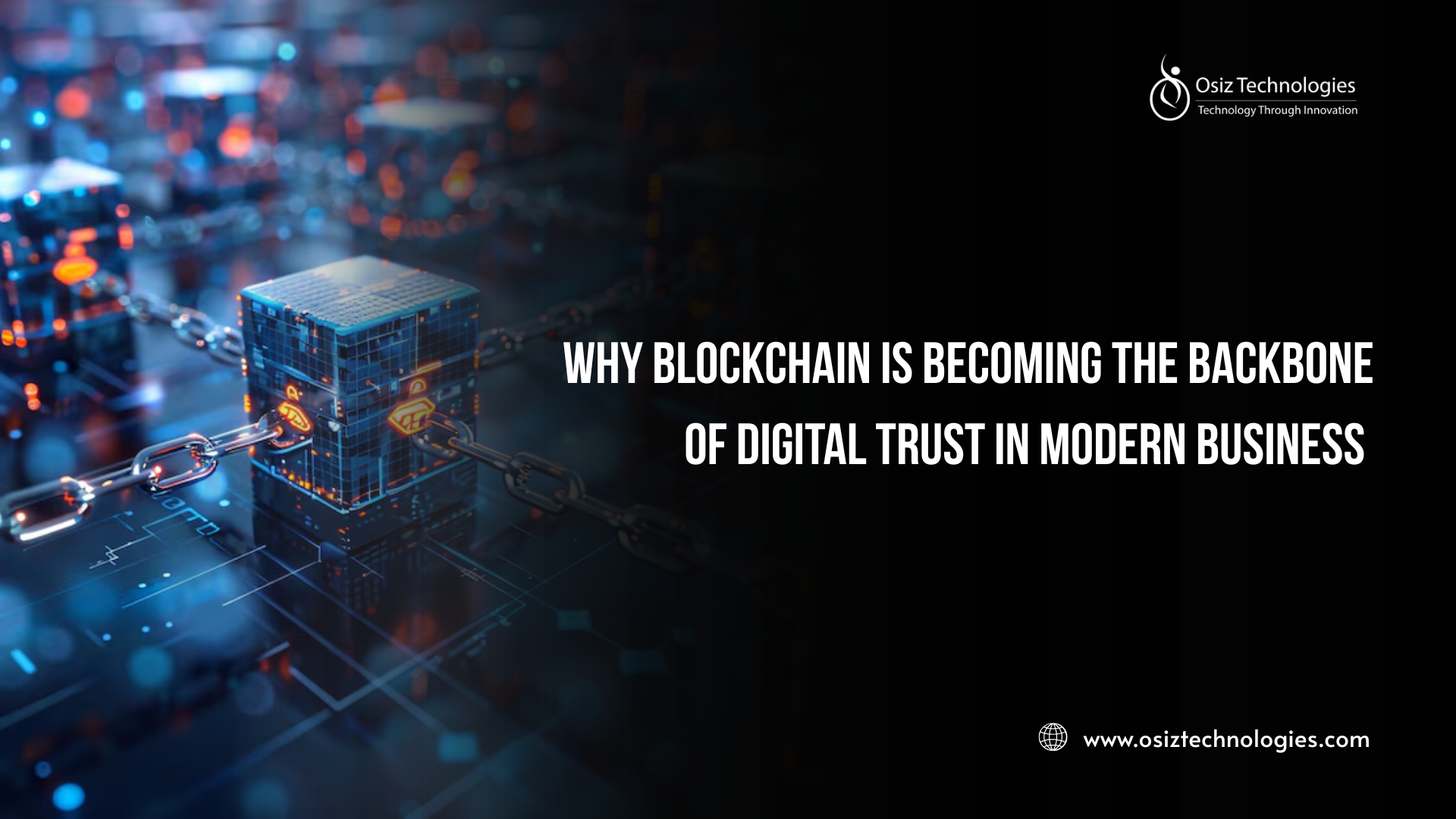
Why Blockchain is Becoming the Backbone of Digital Trust in Modern Business
--
Walmart recently partnered with IBM to use blockchain for tracking food supply, reducing traceability time from days to seconds. This shift highlights how businesses are actively rebuilding trust in a digital-first world where transparency matters more than ever.
Today, rising cyber risks and data manipulation push companies toward blockchain development to ensure secure and verifiable systems. With innovations like decentralization and real-time validation, businesses are upgrading how trust is built, shared, and maintained across modern digital ecosystems.
What Makes Blockchain the Foundation of Trust?
Trust in business often breaks when systems are controlled by a single authority. Data can be changed, hidden, or misused without clear visibility. Blockchain changes this by creating a shared system where every transaction is recorded and verified by multiple participants, making it more open and trust.
At its core, blockchain works on three pillars — immutability, transparency, and decentralization. Once data is recorded, it cannot be altered, which builds strong confidence among users. This is where blockchain development plays a key role in designing systems that are secure and tamper-proof. With smart contract development, actions are automated based on predefined rules, reducing human error and increasing trust.
In many cases, businesses also prefer Private Blockchain Development to control access while still maintaining transparency within their network. This balance helps organizations build trust internally and externally without compromising data privacy or security.
Real-World Use Cases: How Businesses Are Building Trust with Blockchain
Supply Chain Transparency
Companies track products from origin to delivery using blockchain. Every step is recorded and visible, helping businesses prove authenticity, reduce fraud, and build customer confidence in product quality.
Secure Financial Transactions
In finance, blockchain enables faster and tamper-proof transactions without relying on multiple intermediaries. This improves trust between parties while reducing costs and delays in cross-border payments.
Healthcare Data Security
Hospitals and healthcare providers use blockchain to store patient records securely. With controlled access and accurate data sharing, it ensures privacy while improving trust between patients and medical institutions.
Digital Identity Verification
With Blockchain Identity Management, users can control and share their identity data safely. This reduces identity theft and builds trust in online platforms where verification is critical.
Decentralized Applications (Web3)
Through Web3 development, businesses create decentralized apps where users interact without central control. This increases transparency and gives users more confidence in how platforms operate.
Challenges & Opportunities: Is Blockchain Ready for Mass Adoption?
Scalability Limits vs Growing Innovation
Blockchain networks can struggle with speed and high transaction loads. But new solutions like Layer 2 scaling and improved protocols are helping businesses move toward faster and more efficient systems.
Regulation Uncertainty vs Government Interest
Many countries are still defining rules for blockchain use. At the same time, governments are exploring its potential, which signals long-term growth and wider acceptance in regulated industries.
Adoption Barriers vs Business Demand
Some companies hesitate due to lack of awareness and technical complexity. This is where blockchain development services help simplify implementation and guide businesses toward practical use.
Integration Challenges vs Digital Transformation
Connecting blockchain with existing systems can be complex. However, businesses investing in digital transformation see blockchain as a strong foundation for building secure and transparent operations.
Future Potential vs Present Reality
While full-scale adoption is still evolving, blockchain is steadily proving its value. Businesses that adopt early are gaining a competitive edge in building trust and innovation.
Conclusion: The Road Ahead for Blockchain in Secure Business
Blockchain is no longer just an emerging idea — it is becoming a practical foundation for building trust in modern business. As companies move toward secure and transparent systems, choosing the right Blockchain Development Company plays a key role in turning this technology into real business value and long-term trust.
Looking ahead, blockchain will continue to shape how businesses operate, collaborate, and grow in a digital-first world. With its ability to ensure trust, reduce risks, and improve efficiency, it offers a clear path for organizations aiming to stay competitive and future-ready.