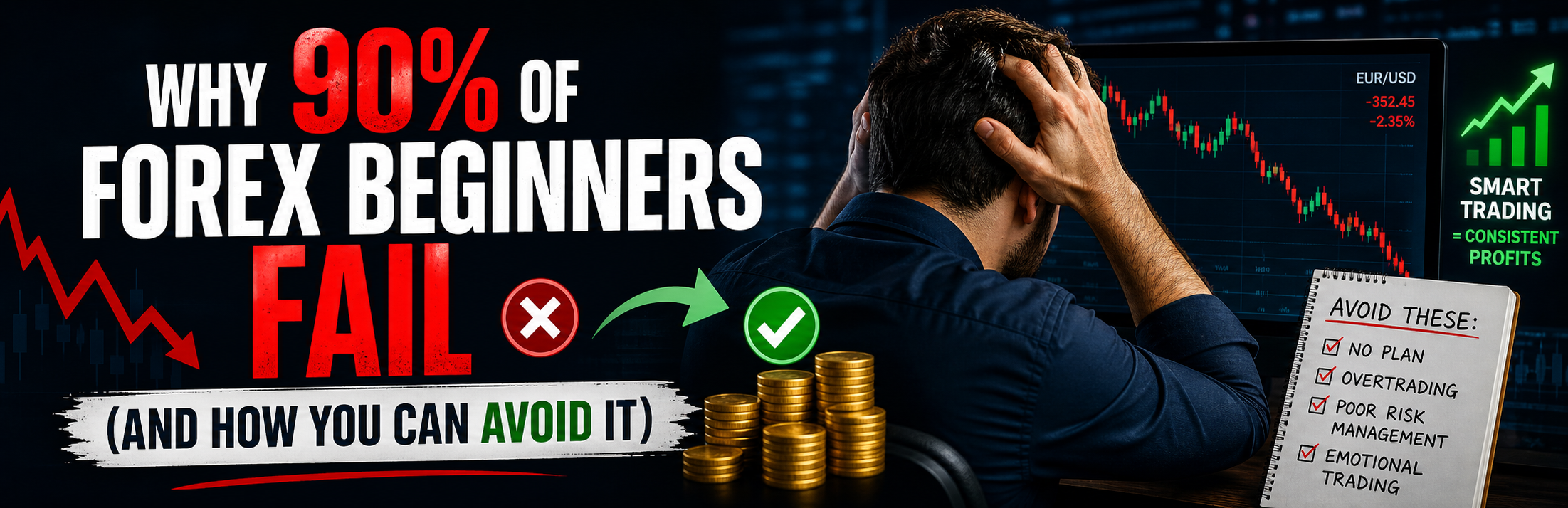
Why 90% of Forex Beginners Fail (And How You Can Avoid It)
 Renzel3 min read·Just now
--
Discover why most beginners fail in Forex trading and learn proven strategies, risk management tips, and mindset shifts to trade smarter and avoid losses
Forex trading is often marketed as a fast path to financial freedom. You’ve probably seen the screenshots — luxury cars, massive profits, and traders claiming they turned small accounts into life-changing money.
But here’s the uncomfortable truth: most beginners don’t succeed.
In fact, a large percentage of new traders lose their capital within the first few months. The good news? Their mistakes are predictable — and avoidable.
Let’s break down why most Forex beginners fail and, more importantly, how you can stay on the right side of that statistic.
1. They Start Without Proper Education
Many beginners jump into Forex trading with little to no understanding of how the market actually works. They rely on tips from social media, blindly copy signals, or watch a few videos and think they’re ready.
Forex is not gambling — it’s a skill-based activity that requires knowledge of:
- Market structure
- Technical and fundamental analysis
- Risk management
- Trading psychology
How to avoid this:
Take time to learn before risking real money. Focus on understanding why trades work, not just what to trade.
2. Lack of a Trading Plan
One of the biggest reasons beginners fail is inconsistency. They enter trades randomly, change strategies frequently, and have no clear rules.
A trading plan defines:
- Entry and exit rules
- Risk per trade
- Trading sessions and pairs
- Strategy conditions
Without a plan, you’re just reacting emotionally to the market.
How to avoid this:
Create a simple, clear trading plan and stick to it. Consistency beats complexity.
3. Poor Risk Management
This is where most accounts get wiped out.
Beginners often:
- Risk too much on a single trade
- Overleverage their accounts
- Chase losses
Even a good strategy can fail if risk management is ignored.
How to avoid this:
Never risk more than 1–2% of your account per trade. Protecting your capital is more important than chasing profits.
4. Emotional Trading
Fear and greed are the biggest enemies of traders.
Common emotional mistakes include:
- Closing trades too early out of fear
- Holding losing trades too long, hoping they recover
- Overtrading after a loss
These decisions are driven by emotion — not logic.
How to avoid this:
Treat trading like a business, not a game. Follow your plan regardless of emotions.
5. Unrealistic Expectations
Many beginners come into Forex expecting quick riches. When reality doesn’t match expectations, frustration sets in — and mistakes follow.
Forex trading is not a get-rich-quick scheme. It’s a long-term skill that requires patience and discipline.
How to avoid this:
Set realistic goals. Focus on consistency, not overnight success.
6. Overtrading
More trades do not equal more profit.
Beginners often:
- Trade every small movement
- Enter low-quality setups
- Stay glued to the charts all day
This leads to unnecessary losses and burnout.
How to avoid this:
Be selective. Wait for high-probability setups that match your strategy.
7. Ignoring Demo Practice
Many traders rush into live accounts without practicing.
A demo account helps you:
- Test strategies
- Understand market behavior
- Build confidence
Skipping this step is like learning to drive on a highway without lessons.
How to avoid this:
Practice on a demo account until you’re consistently profitable before going live.
8. Following the Crowd
Beginners often depend on signals, influencers, or “gurus” without understanding the logic behind trades.
This creates dependency — and when things go wrong, they don’t know how to adapt.
How to avoid this:
Learn to analyze the market yourself. Use external advice as guidance, not a crutch.
Final Thoughts
The reason most Forex beginners fail isn’t that the market is impossible — it’s because they approach it the wrong way.
If you:
- Take time to learn
- Manage your risk properly
- Control your emotions
- Stay consistent
…you already put yourself ahead of the majority.
Forex trading requires discipline, patience, and continuous learning. If you treat it like a great skill instead of a shortcut to money, your chances of success increase significantly.
Quick Recap
Most beginners fail because they:
- Trade without knowledge
- Ignore risk management
- Let emotions control decisions
- Expect quick profits
You can avoid failure by doing the opposite. Learn more