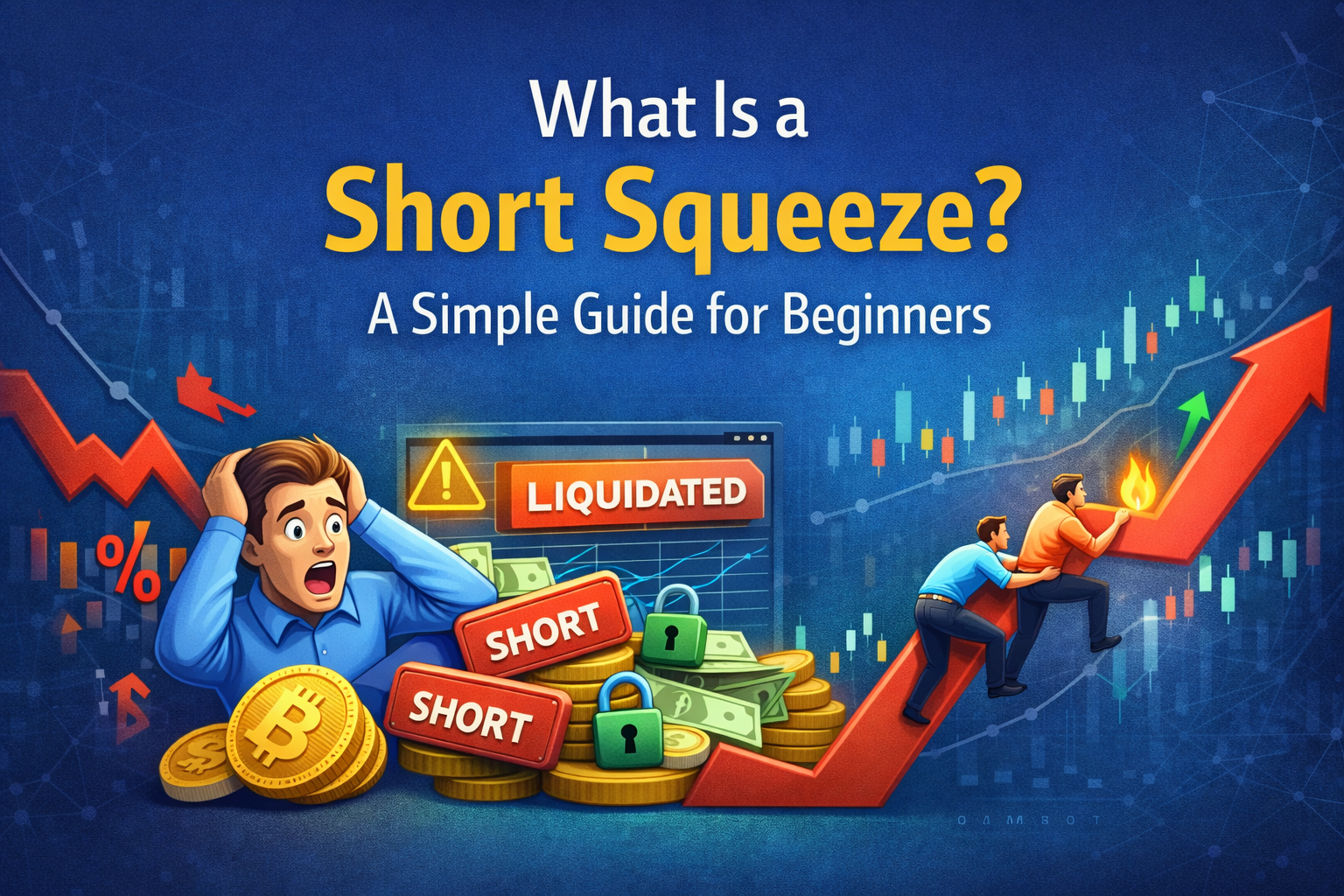
What Is a Short Squeeze? A Simple Guide for Beginners
 Cryptocurrency Exchange3 min read·1 hour ago
--
The financial markets are full of complex terms, but few are as dramatic — and misunderstood — as a short squeeze.
If you’ve ever seen a stock or cryptocurrency suddenly skyrocket in price without any obvious reason, chances are a short squeeze was at play. For beginners, understanding this concept can unlock deeper insights into how markets really move.
Let’s break it down in simple terms.
What Is a Short Squeeze?
A short squeeze happens when traders who bet against an asset (by short selling) are forced to buy it back as the price rises — pushing the price even higher.
In simple words:
When prices go up unexpectedly, short sellers rush to exit, creating a chain reaction of buying.
This sudden buying pressure leads to sharp and rapid price increases.
First, What Is Short Selling?
To understand a short squeeze, you need to know short selling.
Short selling is when a trader:
- Borrows an asset (stock or crypto)
- Sells it at the current price
- Plans to buy it back later at a lower price
If the price falls → profit
If the price rises → loss
How a Short Squeeze Happens
Here’s a step-by-step breakdown:
1. High Short Interest
Many traders are betting that the price will go down.
2. Price Starts Rising
Due to news, demand, or market sentiment, the price begins to increase.
3. Losses Begin for Short Sellers
As price rises, short sellers start losing money.
4. Forced Buying (Covering Shorts)
To limit losses, they buy back the asset.
5. Chain Reaction
This buying pushes the price even higher, forcing more short sellers to exit.
This loop creates a powerful upward surge.
Real-World Example
One of the most famous examples is the GameStop (GME) short squeeze in 2021.
- Hedge funds heavily shorted the stock
- Retail investors started buying aggressively
- Price surged massively
- Short sellers were forced to cover, pushing prices even higher
The result? A historic price explosion driven largely by a short squeeze.
Short Squeeze in Crypto Markets
Short squeezes are not limited to stocks — they’re very common in crypto.
In crypto markets:
- Traders use leverage
- Liquidations happen quickly
- Price moves are more volatile
This makes short squeezes even more intense.
For example:
- A sudden Bitcoin rally can trigger massive short liquidations
- This creates rapid upward spikes within minutes
On platforms like Delta Exchange, traders closely monitor liquidation data, open interest, and price momentum to better understand when such squeezes may occur.
Key Indicators of a Short Squeeze
While you can’t predict them perfectly, some signals can help:
- High short interest
- Rising trading volume
- Strong upward momentum
- Positive news or sentiment shift
- Liquidation spikes (in crypto markets)
These signs often indicate a potential squeeze forming.
Risks of a Short Squeeze
Short squeezes can be exciting — but they’re also risky.
For Short Sellers:
- Unlimited loss potential
- Forced liquidation
For Buyers:
- Prices can crash quickly after the squeeze
- Entering late can lead to heavy losses
What goes up fast can come down just as quickly.
Short Squeeze vs Gamma Squeeze
A short squeeze is driven by short sellers buying back shares.
A gamma squeeze is driven by options trading (market makers hedging positions).
Both can push prices higher — but through different mechanisms.
Why Beginners Should Care
Understanding short squeezes helps you:
- Avoid getting trapped in sudden volatility
- Identify unusual price movements
- Make smarter trading decisions
It’s not just a concept — it’s a real market force that can move billions in minutes.
Final Thoughts
A short squeeze is one of the most powerful forces in financial markets. It turns bearish bets into aggressive buying, creating explosive price movements.
For beginners, the key takeaway is simple:
Markets don’t just move on fundamentals — they also move on positioning and pressure.
By understanding short squeezes, you gain an edge in reading the market beyond just charts and headlines.
Disclaimer
This article is for educational purposes only and does not constitute financial advice. Always conduct your own research before trading or investing.