--
What I Would Build With Dubhe Engine in a Fully On-Chain World
A living game world where everything evolves based on player actions
You log into a game, and something feels different.
Not because of an update.
Not because of a reset.
But because the world kept moving without you.
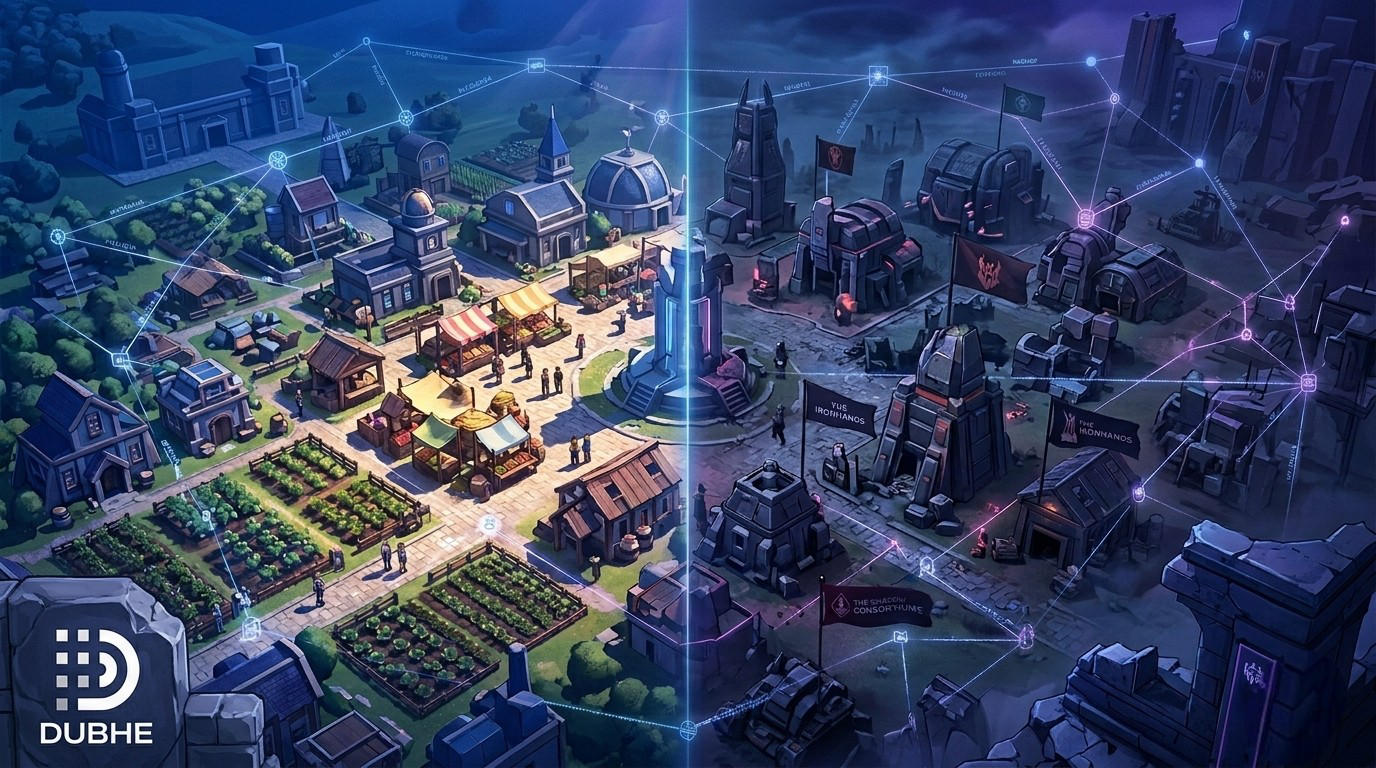
The world looks different from the last time you were there.
A place where you used to trade is now controlled by a different group.
Resources that were easy to find are now harder to get.
Not because the game changed it.
But because other players did.
A Game That Feels Alive
This is the kind of system I would build using Dubhe Engine.
Not just a game, but a world where every action matters and stays.
Players are not just controlling characters. They are shaping the world itself.
Land can be owned, used, or left behind.
Resources are not unlimited. If too many people use them, they become scarce.
If one area runs out of resources, players naturally move elsewhere or start trading with other regions.
Over time, players form groups. Some focus on exploring, some on trading, others on control.
These groups begin to influence how the world works.
Who controls a region can affect prices, access to resources, and how new players experience the game.
Why This Is Hard to Build
Ideas like this sound simple, but building them is not.
As the world grows, everything becomes harder to manage.
Every action affects something else.
Everything needs to stay consistent for all players.
And the system has to keep working as more people join.
Without the right structure, things can quickly become confusing and difficult to maintain.
That is why many on-chain games today stay simple.
How Dubhe Engine Helps
This is where Dubhe Engine becomes useful.
It gives developers a clear way to organize how everything in the game works.
Instead of figuring everything out from scratch, developers can define how their game is structured from the beginning.
For example, things like land, players, and items can all be clearly organized so they are easier to manage as the game grows.
Dubhe also makes it easier to handle how different parts of the game interact.
Instead of everything being mixed together, each part has its role, and the system controls how they connect.
This keeps things cleaner and easier to scale.
On top of that, Dubhe reduces a lot of the repetitive setup work.
So instead of spending time on technical setup, developers can focus more on building the actual game experience.
What This Makes Possible
With the right structure, building a world like this becomes more realistic.
Games can go beyond simple actions and become systems that grow and change over time.
Players are not just playing. They are participating in something that evolves.
This also makes it easier for more developers to build.
When tools are simpler and more organized, more people can experiment with new ideas.
Over time, this leads to better games, stronger in-game economies, and more meaningful experiences.
And that is what attracts people. Not just hype, but something that actually feels alive.
Beyond Just Games
Even though this idea focuses on gaming, the same approach can be used in other areas.
Any system where things need to change, interact, and grow over time can benefit from this kind of structure.
As technology improves, these systems could even work across different blockchains instead of being limited to one.
Looking Ahead
A fully on-chain world is not just about owning things.
It is about building systems that continue to exist and evolve.
The challenge has never been the ideas.
It has always been how to build them properly.
With tools like Dubhe Engine, that becomes easier.
And when building becomes easier, better ideas start to come to life.