What Actually Makes a DeFi Strategy Sustainable?
Not every high yield lasts — and that’s something I had to learn the hard way.
When I first started exploring DeFi, I was mostly focused on one thing: the highest APY.
Anytime I saw a new protocol offering crazy returns, it felt like an opportunity I couldn’t miss. And honestly, sometimes it worked — at least for a while.
But over time, I started noticing a pattern.
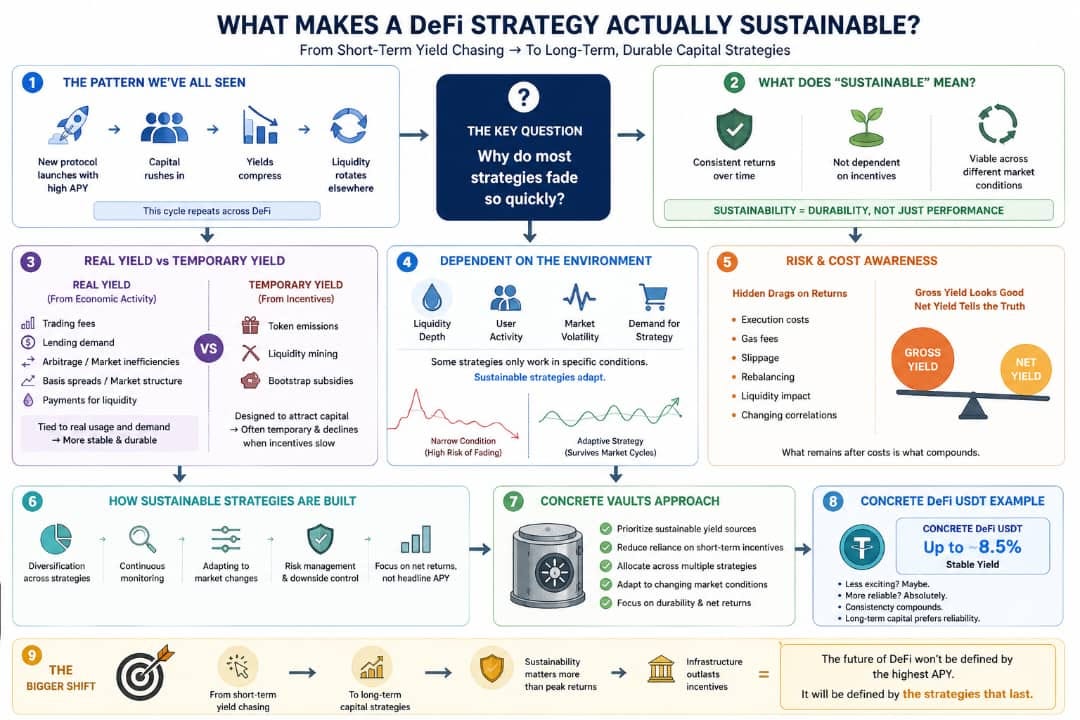
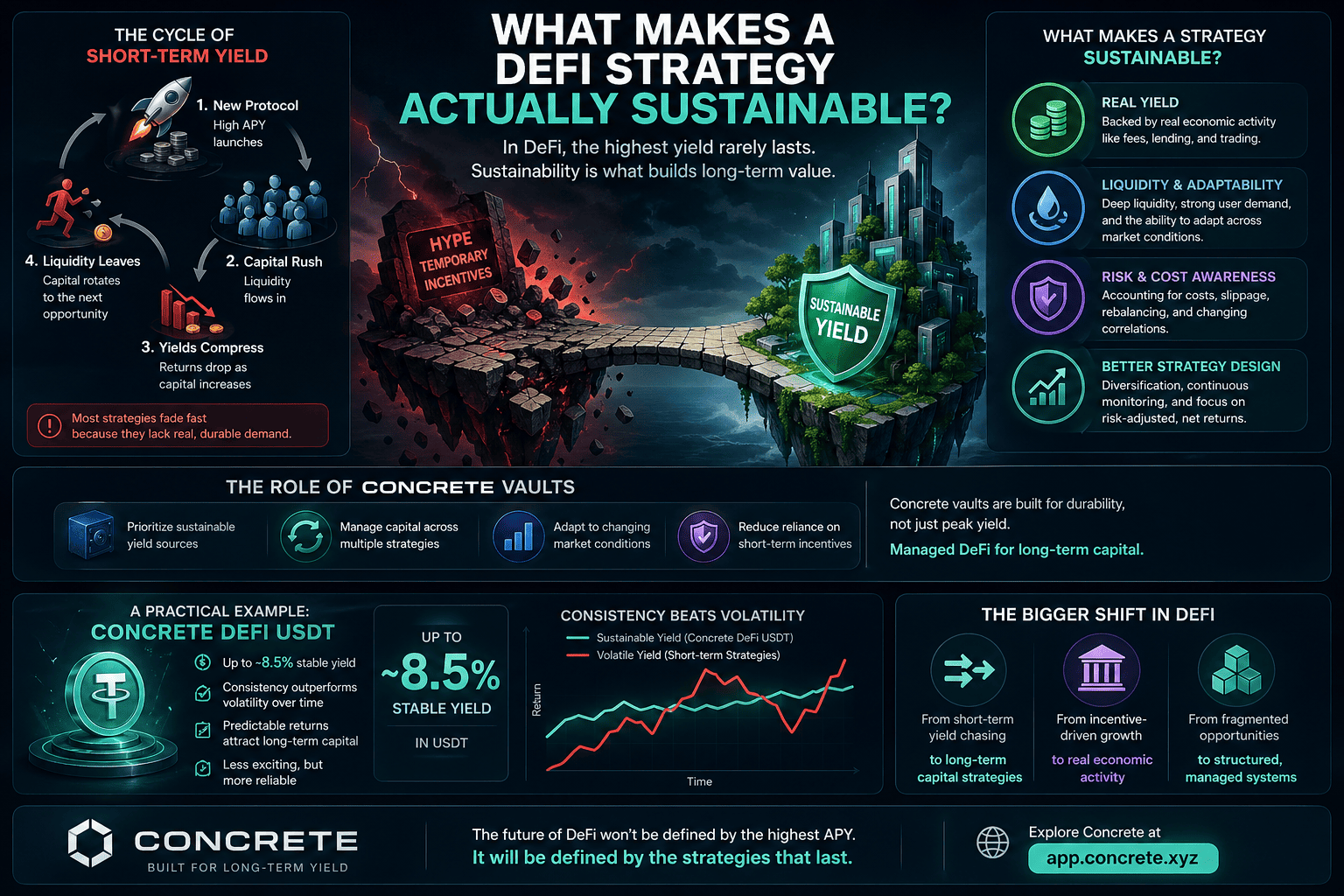
A new strategy launches.
Yields are high.
Capital rushes in.
Then slowly… everything drops.
APY goes down, liquidity leaves, and people move on to the next opportunity.
After seeing this happen multiple times, I started asking myself a different question:
What actually makes a DeFi strategy last?
Because clearly, not everything does.
For me, a sustainable strategy is not just about high returns. It’s about whether those returns can continue over time without depending on temporary factors.
Some strategies generate yield from real activity — things like trading fees, lending demand, or arbitrage. These tend to be more stable because they are based on actual usage.
Others rely heavily on token incentives or emissions. These can look very attractive at first, but once the incentives slow down, the yield usually drops as well.
That difference matters a lot.
Another thing I realized is that sustainability also depends on market conditions. Some strategies only work when volatility is low, or when liquidity is high. Once those conditions change, performance can drop quickly.
There are also hidden factors people don’t always think about.
Things like execution costs, rebalancing, slippage, and changing correlations can slowly reduce returns over time. So even if a strategy looks good on the surface, the real outcome can be very different.
Because of all this, I think sustainable strategies are less about chasing the highest number and more about consistency.
They are designed to adapt, manage risk, and focus on net returns instead of just headline APY.
This is also where I started to see the value of structured systems like Concrete vaults.
Instead of relying on one single opportunity, vaults can manage capital across multiple strategies, adjust over time, and focus more on stable and sustainable sources of yield.
For example, Concrete DeFi USDT offers around 8.5% stable yield. It may not look as exciting as some high APY farms, but over time, consistency like that can be more valuable than short-term spikes.
Especially in a space where most opportunities don’t last.
At this point, I see DeFi a bit differently.
It’s not just about finding the next big yield.
It’s about understanding what can actually survive.
Because in the long run, the strategies that last will always matter more than the ones that peak.
Explore Concrete at https://app.concrete.xyz/�
--