Virtual Card vs Physical Crypto Card — A Practical Decision Guide for 2026
 BountyPortals Official Blog6 min read·Just now
--
The discussion around virtual card vs physical crypto card decisions is often simplified into surface-level comparisons. Most guides focus on features, onboarding speed, or branding, but overlook the operational question that actually matters: how does the user spend money on a daily basis?
A person who mainly pays for online subscriptions, cloud services, digital tools, and e-commerce purchases has very different payment requirements compared to someone using cards for transportation, retail stores, restaurants, or international travel. Yet many users choose card formats without considering how their spending behavior affects long-term practicality.
This becomes especially important as crypto-funded payment systems mature beyond niche usage. A crypto card is no longer simply a novelty product. For freelancers, remote workers, travelers, and digital-first professionals, it increasingly functions as payment infrastructure. That means the format itself matters.
The decision between a virtual and physical card is ultimately less about technology and more about payment environments. Understanding that distinction is what helps users avoid unnecessary costs or operational limitations later.
What virtual cards actually are (and what they’re not)
Virtual cards are digital payment cards optimized primarily for online transactions. They are generally designed for fast issuance, immediate activation, and digital-first usage. In most cases, they can be used for online shopping, software subscriptions, cloud infrastructure payments, streaming platforms, productivity tools, and recurring billing systems.
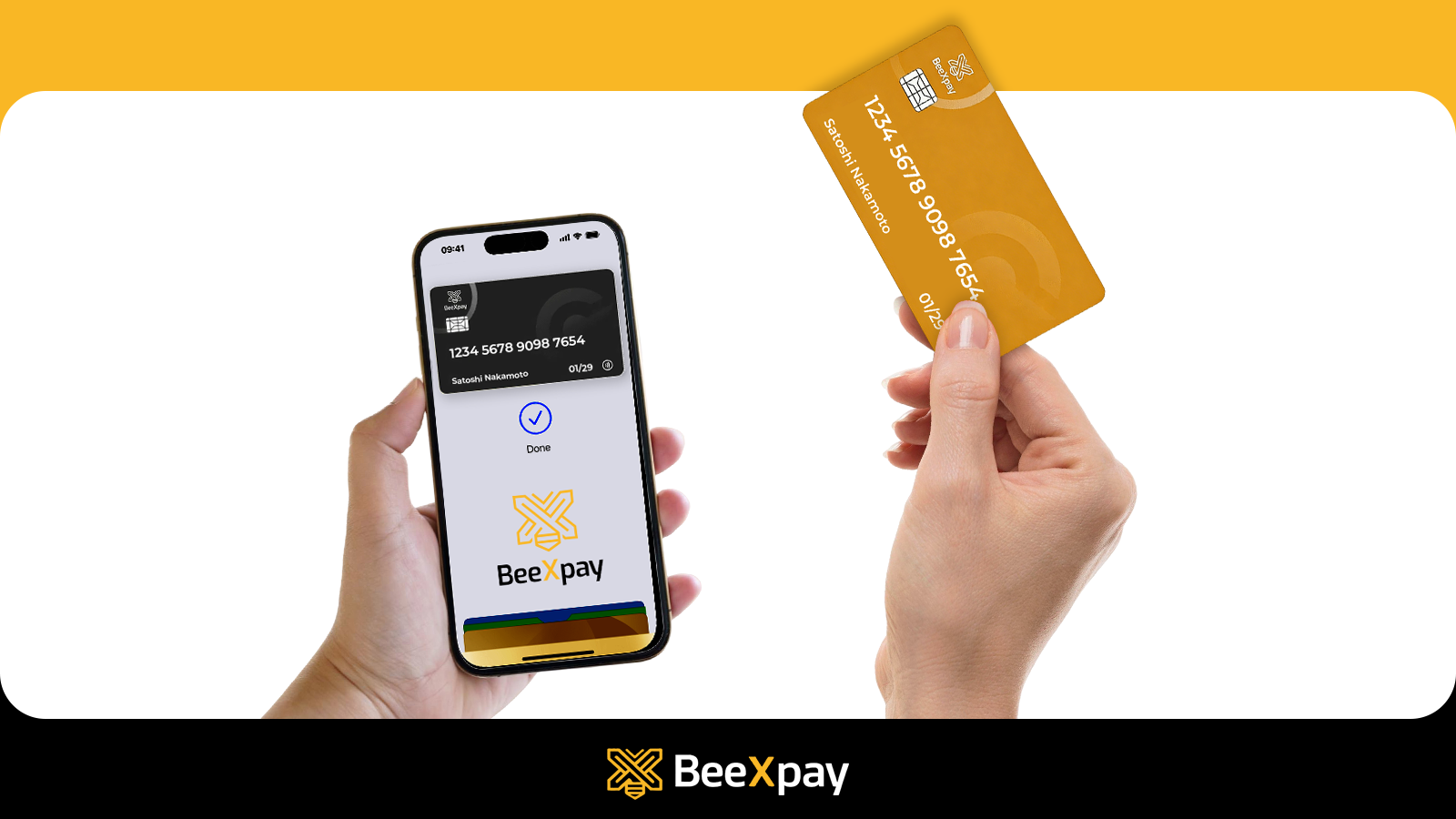
BeeXpay’s virtual card follows this model through its Telegram Mini App using a Light KYC structure. The card costs $10 and is designed around quick operational access. Users can onboard relatively quickly and begin using the card for online payments without waiting for shipping or physical production.
However, many users misunderstand what virtual cards are not. They are not always direct replacements for physical retail payment infrastructure. Their functionality depends heavily on merchant compatibility, terminal environments, and whether mobile wallet integrations such as Google Pay or Apple Pay are supported on the user’s device.
For purely online users, these limitations may barely matter. But once spending behavior expands into physical retail environments, transportation systems, or travel usage, the absence of a physical card can become more noticeable.
Virtual cards work best when the user’s financial activity remains primarily digital.
What physical cards unlock — and why the cost difference exists
Physical cards extend crypto-funded spending into broader real-world payment infrastructure. Unlike virtual cards, they are designed to function naturally within physical retail environments, in-store terminals, travel situations, and payment systems where a tangible card still improves compatibility and usability.
BeeXpay’s physical card costs $100 and operates through the Full KYC path within the BeeXpay application itself. Delivery generally takes approximately two weeks, reflecting the operational requirements behind manufacturing, verification, and shipping.
The price difference between a $10 virtual card and a $100 physical card often appears large initially. However, the cost reflects additional infrastructure layers rather than arbitrary pricing. Physical issuance requires identity verification, logistics management, production costs, and integration into broader retail payment systems.
For users operating mostly online, paying for this expanded infrastructure may not provide enough additional value. But for travelers, retail spenders, and users relying heavily on in-store payments, physical cards provide broader compatibility that virtual formats alone may not fully replace.
The distinction highlights an important point: physical cards are not simply virtual cards with plastic attached. They represent access to a wider operational payment environment.
The KYC tier connection: how access level determines card type
One of the more important aspects of crypto card comparison systems is the connection between KYC structure and card functionality. In many payment ecosystems, the onboarding model itself reflects the platform’s broader payment philosophy.
BeeXpay separates its card system into two access paths. The Light KYC structure operates through the Telegram Mini App and provides access to the virtual card. Reload fees under this structure are 4%, reflecting its focus on simplified onboarding and faster access.
The Full KYC structure operates through the BeeXpay application and unlocks access to physical cards alongside lower reload fees of 2.5%. This path prioritizes broader payment capability and operational efficiency for users with higher transaction volumes or more frequent spending activity.
This separation creates a practical trade-off. Simpler onboarding generally means faster operational access but potentially higher fees or narrower functionality. More extensive verification usually unlocks lower costs and expanded payment infrastructure.
For many users, the decision is not ideological. It is operational. Lower-volume online spenders may prioritize convenience, while higher-volume users may prioritize efficiency and broader payment access.
Real-world use case mapping: online shoppers, travelers, in-store spenders
Different user categories naturally align with different card structures.
A freelancer or digital professional who primarily pays for SaaS subscriptions, AI tools, streaming services, cloud hosting, online advertising, and e-commerce purchases may fit comfortably within the virtual card structure. Their spending environment remains almost entirely online, making physical issuance less important.
A second category includes travelers and digital nomads. These users often interact with transportation systems, physical retailers, restaurants, and travel-related payment terminals. For them, physical card compatibility becomes significantly more relevant.
A third category involves hybrid spenders such as agency owners, consultants, or international remote workers managing both online infrastructure and regular real-world expenses. These users may initially begin with virtual access but eventually transition toward physical cards as transaction complexity and volume increase.
The key insight is that there is no universally “best crypto card format.” The best format depends entirely on spending environment and operational behavior.
The $10 vs $100 decision: a practical cost-benefit breakdown
The pricing gap between virtual and physical issuance should be analyzed within the context of long-term usage rather than short-term comparison alone.
A user spending only a few hundred dollars monthly on digital subscriptions may find little practical advantage in paying for physical issuance. The $10 virtual card already solves the operational requirement at a lower entry cost.
However, higher-volume users face a different equation. Full KYC reload fees of 2.5% become increasingly meaningful compared to 4% under Light KYC. Over larger monthly transaction volumes, the reduced reload cost can partially offset the higher initial issuance price.
For example, a user spending $2,000 monthly through the card would pay significantly less annually under the Full KYC structure compared to Light KYC. In this context, the physical card becomes less about prestige and more about operational efficiency.
The real question is not “Which card is better?” but rather “Which payment environment describes the user’s actual behavior?”
Google Pay and Apple Pay: which card type enables this?
Mobile wallet compatibility adds another layer to the discussion. BeeXpay supports Google Pay and Apple Pay on supported devices, which can extend usability for both digital and real-world transactions.
For virtual cards, this integration may partially bridge the gap between online-only usage and physical payment environments. A user with compatible devices may still perform certain in-store transactions through mobile wallets without carrying a physical card directly.
However, compatibility depends on device support, merchant infrastructure, and local payment terminal environments. Physical cards still provide broader universal fallback compatibility across retail systems.
In practice, mobile wallet integration expands flexibility but does not completely eliminate the distinction between virtual and physical payment infrastructure.
Closing CTA: https://beexpay.app
As crypto-funded payment systems continue evolving, card format decisions are becoming more operationally important. Virtual and physical cards solve different spending problems rather than competing directly against each other.
Understanding spending environment, transaction volume, onboarding preferences, and payment behavior ultimately determines which structure makes more sense for the user.
BeeXpay provides both approaches through separate access paths designed around different payment needs and usage patterns.
More information: https://beexpay.app
Tags: Crypto Card Virtual Card Fintech Cryptocurrency Blockchain