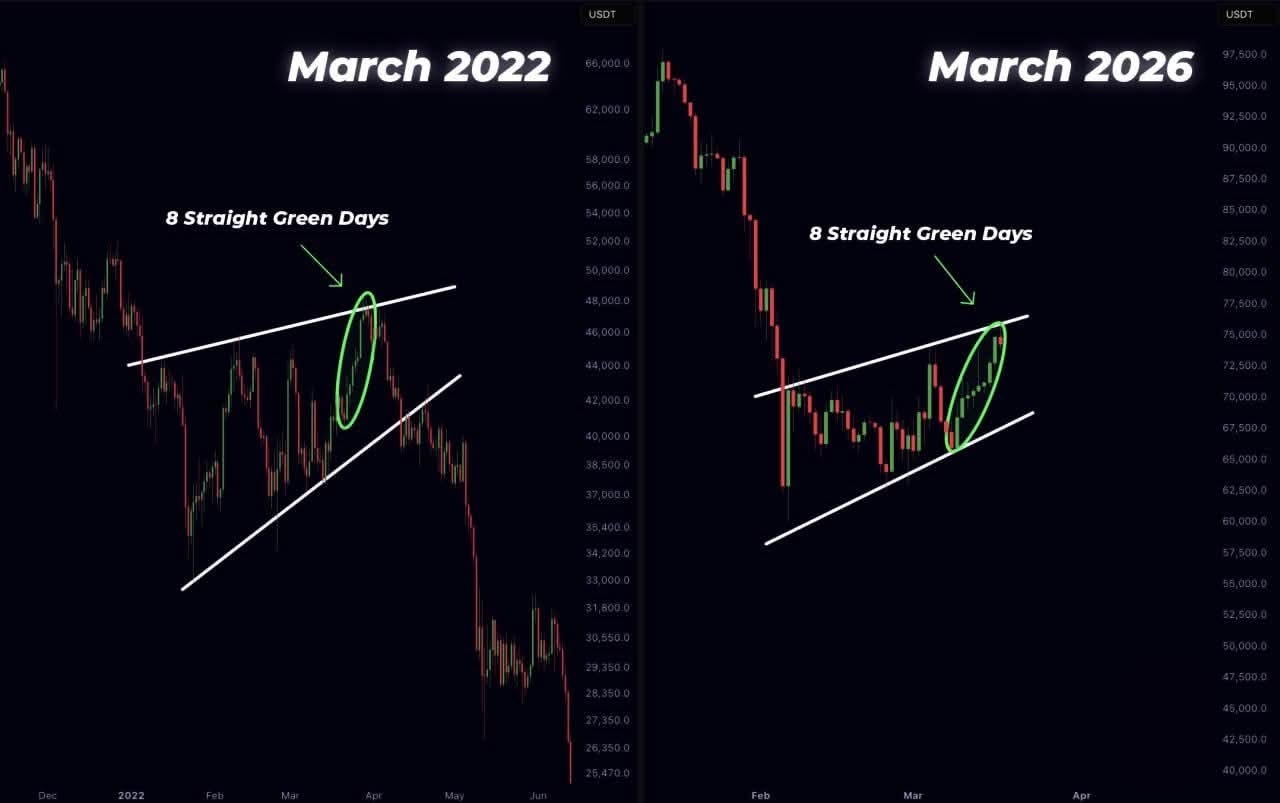
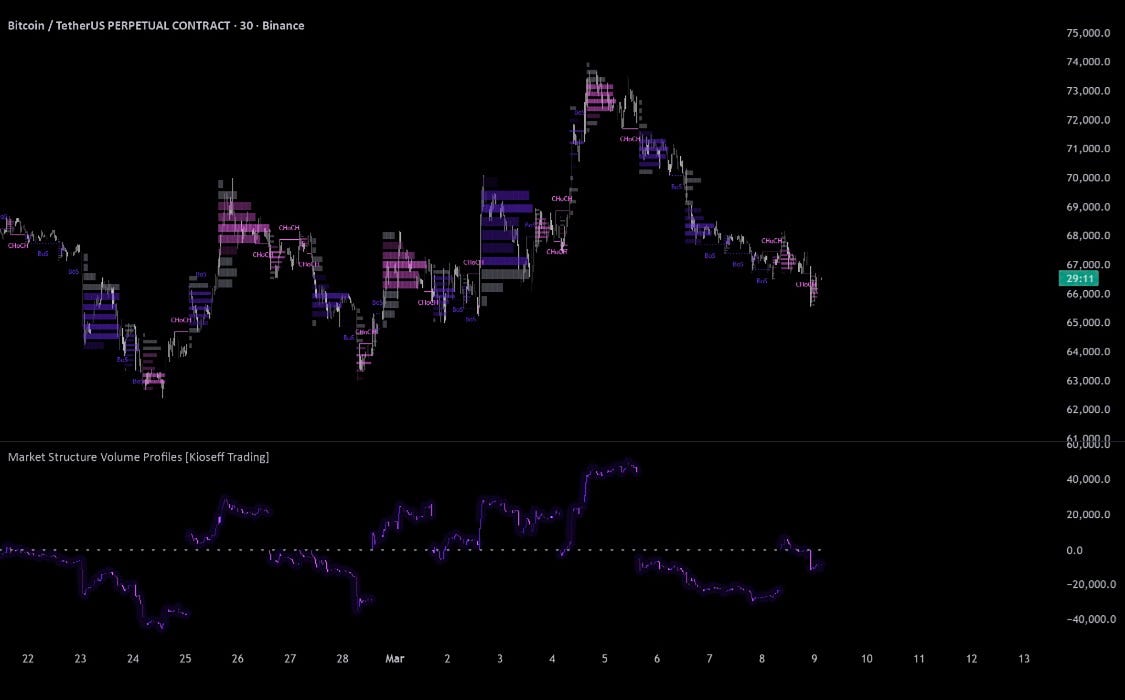
The United States has recently emerged as a more significant player in the digital asset economy.
Data from Kaiko Research shows that the share of global spot trading on U.S. exchanges nearly doubled in a year, climbing from 8% to 15%. This growth reflects more than just higher trading volumes.

It indicates that traders are increasingly moving toward platforms that offer deeper liquidity, meaning large trades can be executed with less impact on prices.
While offshore exchanges still handle the largest overall trading volumes, market depth is now improving faster on U.S. platforms. Notably, this shift is increasing competition between offshore exchanges and the growing U.S. crypto infrastructure.
With the Commodity Futures Trading Commission (CFTC) approving perpetual futures markets for firms like Coinbase in 2025, the U.S. is now challenging offshore dominance in derivatives trading.
On-chain metrics and ETF analysis
While headlines highlight Bitcoin [BTC] trading near $74,000, the bigger story lies in what’s happening behind the scenes.
Recent data from CryptoQuant shows that Bitcoin exchange netflows are around –3.1K BTC, meaning more coins are leaving exchanges than entering them.

When investors move Bitcoin off exchanges and into private wallets or cold storage, it usually signals long-term holding rather than short-term trading. This also reduces the amount of Bitcoin available for immediate selling, which can tighten supply and make prices react more strongly when new buyers enter the market.
Institutional demand has been a key driver of this trend. Since the 9th of March, U.S. Spot Bitcoin ETFs have consistently recorded inflows, including about $199.4 million on the 17th of March alone. This steady demand supports the market by absorbing selling pressure that cautious retail traders, still wary after recent volatility, are unwilling to take on.
Liquidation clusters would decide Bitcoin’s next move
However, the derivatives market tells a more complicated story.

Glassnode’s liquidation heatmap for the Binance BTC/USDT pair reveals large clusters of leveraged positions between $80,000 and $90,000, which could act as liquidity magnets and trigger a short squeeze if Bitcoin moves higher.
This could force traders who bet against the price to buy back Bitcoin and potentially push the price higher. However, it’s important to note that a major liquidation zone around $55,000–$60,000 could provide support if the market declines.
Market in fear or greed?
At the same time, market sentiment is slowly improving. The Crypto Fear & Greed Index has moved out of the “Extreme Fear” level and sat in the Fear zone at 26 at press time.

While investors are still cautious, this marks a recovery from the deep market anxiety seen in February.
Confirming the sentiment, recent analysis by AMBCrypto shows that long-term Bitcoin holders are once again playing a major role in shaping the market. In fact, the current level of long-term holding is close to a four-year high, similar to the accumulation phase seen in late 2022.
Several market signals also aligned on the 17th of March when Bitcoin traded around $74,057, suggesting that bearish pressure may be weakening.
Taken together, these signals suggest that the current market move may be more than just a temporary rebound. After months of uncertainty, the market balance may finally be shifting, with buyers slowly gaining control.
Final Summary
- Traders are increasingly moving to platforms with deeper liquidity, where large trades can happen with less price impact.
- Large liquidation clusters between $80K–$90K and $55K–$60K could influence Bitcoin’s next major move.
Ishika Kumari
JournalistIshika Kumari is a Crypto Analyst at AMBCrypto, specializing in regulatory developments, market dynamics, and blockchain’s real-world impact. She breaks down complex protocols and legislation into practical, easy-to-understand insights.