A U.S. federal court has authorized an onchain Arbitrum DAO vote to transfer more than 30,765 ETH tied to the rsETH exploit recovery effort to an Aave-controlled wallet, marking a rare legal intervention into active DAO governance. The amended Arbitrum Improvement Proposal [AIP], submitted by Aave Labs, KelpDAO, LayerZero, EtherFi, and Compound contributors, seeks approval to transfer the frozen ETH into custody under Aave LLC while court proceedings continue. The Arbitrum Security Council originally immobilized the funds following the 18 April rsETH exploit linked to KelpDAO's LayerZero OFT bridge infrastructure. The incident drained roughly 116,500 rsETH worth nearly $292 million at the time. The latest proposal would transfer exactly 30,765.6675 ETH from an Arbitrum-controlled immobilization address to an Aave LLC-controlled wallet, subject to court-approved conditions. Court permits onchain governance process The proposal follows a restraining notice served against "Arbitrum DAO" by plaintiffs in Kim v. Democratic People's Republic of Korea, a U.S. case involving judgment creditors pursuing North Korean-linked assets. After emergency motions and hearings, the U.S. District Court for the Southern District of New York issued an order allowing the DAO vote and transfer process to proceed. The order specifically states: Any party initiating that on-chain transaction, voting with regard to that on-chain transaction, or participating in the on-chain transfer of assets to Aave LLC shall not be in violation of the Restraining Notice. That language gives legal protection to delegates and governance participants involved in the vote. The court also ordered that the restraining notice would "follow" the ETH after transfer, meaning Aave LLC must continue holding the assets under court restrictions. Aave becomes legal custodian for frozen ETH The proposal changes the original recovery structure significantly. An earlier version planned to move the ETH into a 3-of-4 multisig controlled jointly by Aave, KelpDAO, EtherFi, and Certora participants. The amended proposal instead routes custody through Aave LLC to align with the court order and simplify legal administration. However, the proposal makes clear that Aave LLC cannot: distribute, stake, lend, bridge, transfer, or otherwise use the ETH unless the court later authorizes such actions. The court has not yet decided the final disposition of the funds. Recovery efforts continue across DeFi The proposal also provided updates on the broader rsETH recovery process. On 6 May, positions tied to the identified attacker were liquidated on Aave V3. The recovered rsETH collateral moved to a Recovery Guardian wallet as part of the coordinated recovery plan. The proposal said affected rsETH on Arbitrum will eventually be burned, while corresponding LayerZero packets on Ethereum will be retired to prevent additional minting. The broader goal remains restoring full collateral backing for rsETH and normalizing impacted lending markets. The amended AIP does not request any new treasury allocation from Arbitrum DAO. Instead, it focuses solely on transferring already immobilized ETH into court-supervised custody. Final Summary A U.S. court authorized an Arbitrum DAO vote to transfer 30,765 ETH tied to the rsETH exploit recovery into Aave LLC custody. The restraining order remains active, meaning the ETH cannot be distributed or used until further court approval.
U.S. court authorizes DAO vote in latest twist of rsETH exploit recovery
This article was originally published on AMBCrypto and is republished here under RSS syndication for informational purposes. All rights and intellectual property remain with the original author. If you are the author and wish to have this article removed, please contact us at [email protected].
Related Articles




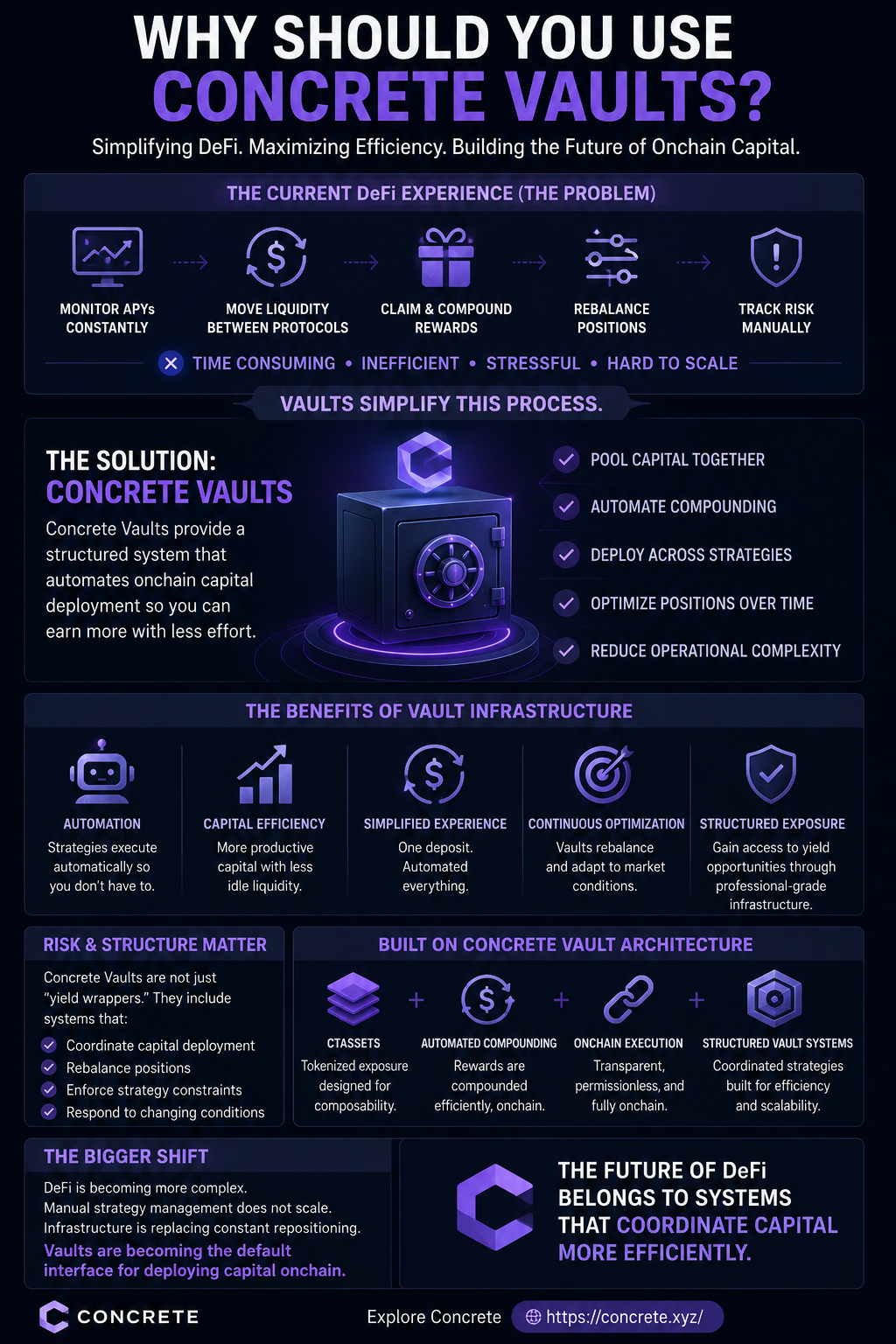
Why Should You Use a Concrete Vault?
DeFi offers endless opportunities. Continue reading on Medium »