Tokenization Of Real Assets: Property, Art, And Businesses On The Blockchain.
 Tek News Feed6 min read·Just now
--
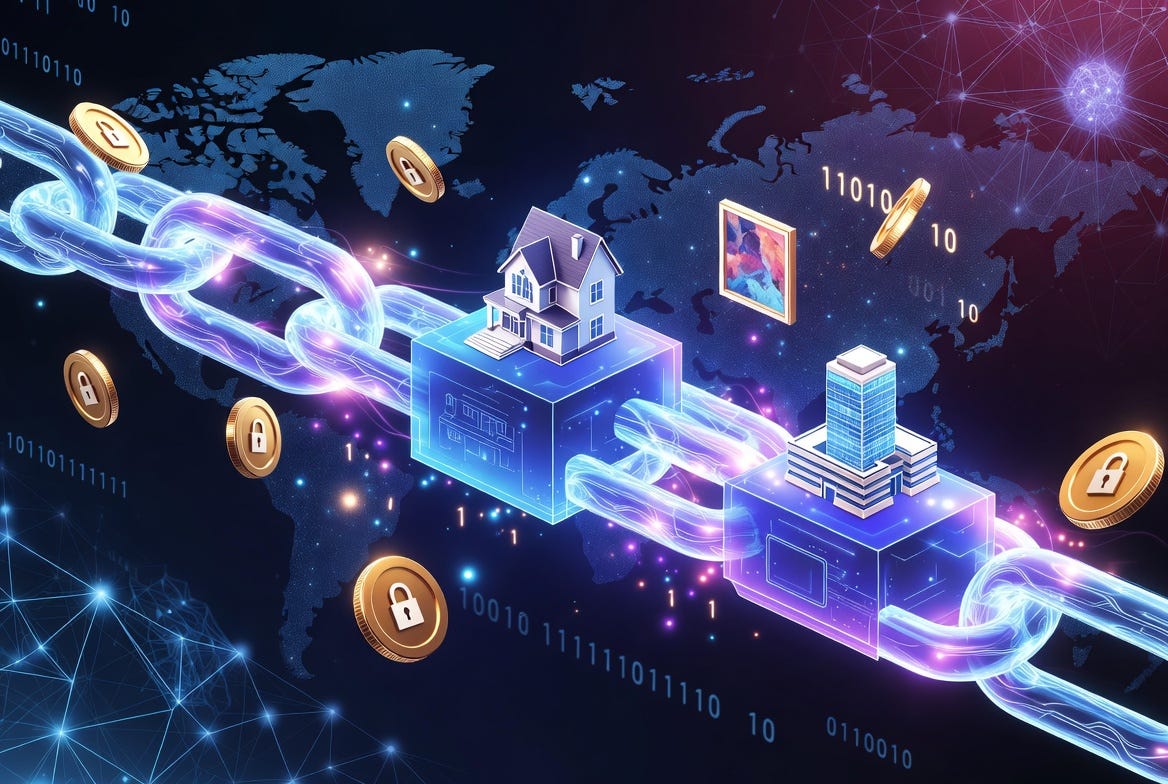
For years, blockchain technology was associated mostly with cryptocurrencies and speculative digital assets. To many people, it seemed disconnected from the real economy. But that perception is beginning to change. One of the biggest developments emerging from the Web3 space is the tokenization of real-world assets, a concept that could fundamentally reshape ownership, investing, and how assets are traded globally.
In simple terms, tokenization involves converting ownership rights of a real-world asset into digital tokens stored on a blockchain. These tokens can represent property, artwork, company shares, commodities, or almost anything with measurable value. While the idea once sounded experimental, it is increasingly being explored by businesses, investors, and institutions looking for more efficient ways to manage ownership and liquidity.
In 2026, tokenization is moving beyond theory and starting to show practical use cases that could have long-term impact across multiple industries.
What Is Asset Tokenization?
Asset tokenization is the process of creating a digital representation of a physical or real-world asset on a blockchain. Instead of ownership existing only through paper records or centralized databases, ownership can be divided into blockchain-based tokens.
Each token represents a portion of the asset and can potentially be bought, sold, or transferred digitally.
For example, instead of purchasing an entire investment property, a person could buy a fraction of it through tokens representing partial ownership. The same concept applies to artwork, businesses, or other high-value assets.
The blockchain acts as a transparent ledger that records ownership and transactions, reducing reliance on traditional intermediaries.
Why Tokenization Is Gaining Attention
The biggest reason tokenization is attracting interest is because it solves several long-standing inefficiencies in traditional markets.
Many real-world assets are:
difficult to access, expensive to transfer, illiquid, and limited to wealthy investors or institutional players.
Tokenization aims to change that by making ownership more flexible and accessible.
By dividing assets into smaller digital units, tokenization lowers the barrier to entry for investors. Someone who could never afford an entire commercial property may now be able to invest in a small percentage of one.
This opens markets to a much wider pool of participants while increasing liquidity for asset owners.
Real Estate: One of the Biggest Use Cases
Property is widely considered one of the strongest applications for tokenization. Real estate transactions are traditionally slow, paperwork-heavy, and capital intensive.
Tokenization simplifies this process by allowing properties to be divided into smaller ownership units. Investors can purchase shares in properties without needing large amounts of upfront capital.
This creates several advantages.
First, it improves accessibility. More people can invest in real estate markets that were previously out of reach.
Second, it increases liquidity. Property is normally considered an illiquid asset because selling it can take months. Tokenized ownership allows smaller portions to be traded more easily.
Third, it creates global investment opportunities. Investors can gain exposure to international property markets without the complexity of direct ownership structures.
While regulation remains a key issue, tokenized real estate is already beginning to emerge in certain jurisdictions.
Art and Collectibles Enter the Digital Economy
The art world has also become a major area of interest for tokenization. High-end artwork has traditionally been accessible only to wealthy collectors and institutions.
Tokenization changes this by allowing fractional ownership of expensive pieces.
Instead of a single buyer owning an entire artwork worth millions, multiple investors can own shares represented by tokens. This creates a new form of investment market around assets that were once highly exclusive.
Beyond accessibility, blockchain technology also helps with provenance and authenticity. Ownership history can be permanently recorded on-chain, making it easier to verify legitimacy and reduce fraud.
Collectors, galleries, and investors are increasingly exploring these systems as the market evolves.
Businesses and Equity Tokenization
Another emerging area is the tokenization of businesses and private equity.
Traditionally, investing in private companies has been limited to venture capital firms, institutional investors, or wealthy individuals. Tokenization could potentially broaden access by allowing businesses to issue digital ownership shares.
This creates opportunities for startups and private businesses to raise capital more efficiently while opening investment opportunities to a wider audience.
For business owners, tokenization could also improve liquidity. Instead of waiting for a full business sale or public listing, portions of ownership could potentially be traded digitally.
Although regulations surrounding securities remain strict in many countries, this area is attracting increasing attention from financial institutions and technology companies.
How Blockchain Improves Transparency
One of the major advantages of blockchain-based ownership systems is transparency.
Traditional ownership records often rely on fragmented systems, paper documentation, or centralized databases that can be difficult to verify or update.
Blockchain creates a transparent and tamper-resistant ledger where transactions and ownership records are stored permanently.
This can reduce disputes, improve trust, and streamline verification processes.
In industries where authenticity and traceability matter, such as real estate and art, this level of transparency becomes especially valuable.
The Role of Smart Contracts
Smart contracts are another key part of tokenization. These are self-executing agreements stored on a blockchain that automatically enforce predefined rules.
For example, rental income from a tokenized property could potentially be distributed automatically to token holders based on their ownership percentage.
This reduces administrative overhead and eliminates some of the manual processes traditionally handled by intermediaries.
Smart contracts can also automate compliance, payments, and ownership transfers, creating more efficient systems overall.
The Challenges Holding It Back
Despite the potential, tokenization still faces major challenges.
Regulation is one of the biggest obstacles. Real-world assets often fall under securities laws and financial regulations that vary significantly between countries.
Governments and regulators are still determining how tokenized assets should be classified and managed. This uncertainty slows adoption and creates legal complexity for businesses entering the space.
There are also technological and security concerns. Blockchain systems must remain secure, scalable, and user-friendly if mainstream adoption is going to happen.
Another challenge is trust. Many people still associate blockchain with scams, speculation, and volatility due to the early crypto boom years. Overcoming this perception will take time.
Institutional Interest Is Growing
Despite these challenges, institutional interest in tokenization is increasing rapidly.
Banks, investment firms, and major financial players are beginning to explore blockchain infrastructure for handling real-world assets more efficiently.
This matters because institutional adoption brings legitimacy, capital, and regulatory pressure that can accelerate development.
Many experts believe tokenization could eventually become a standard part of financial infrastructure rather than a niche alternative system.
Why This Could Reshape Investing
If tokenization reaches mainstream adoption, it could fundamentally change how investing works.
Markets that were once limited to wealthy investors may become more accessible to ordinary people. Assets that were difficult to trade could become more liquid. Ownership could become more global, digital, and efficient.
This does not mean traditional systems disappear overnight, but it does suggest a gradual shift toward more flexible models of ownership and capital formation.
In many ways, tokenization represents the merging of traditional assets with digital infrastructure.
Final Thoughts
The tokenization of real-world assets is no longer just a futuristic idea. Property, art, and businesses are increasingly being explored through blockchain-based ownership systems that promise greater accessibility, liquidity, and transparency.
While challenges around regulation, trust, and infrastructure still exist, the momentum behind tokenization continues to grow.
The real significance of this shift is not just technological. It is economic.
Tokenization has the potential to change who can invest, how ownership works, and how value moves across the global economy.
The future may not be fully decentralised, but it is becoming increasingly digital, fractional, and connected through blockchain technology.