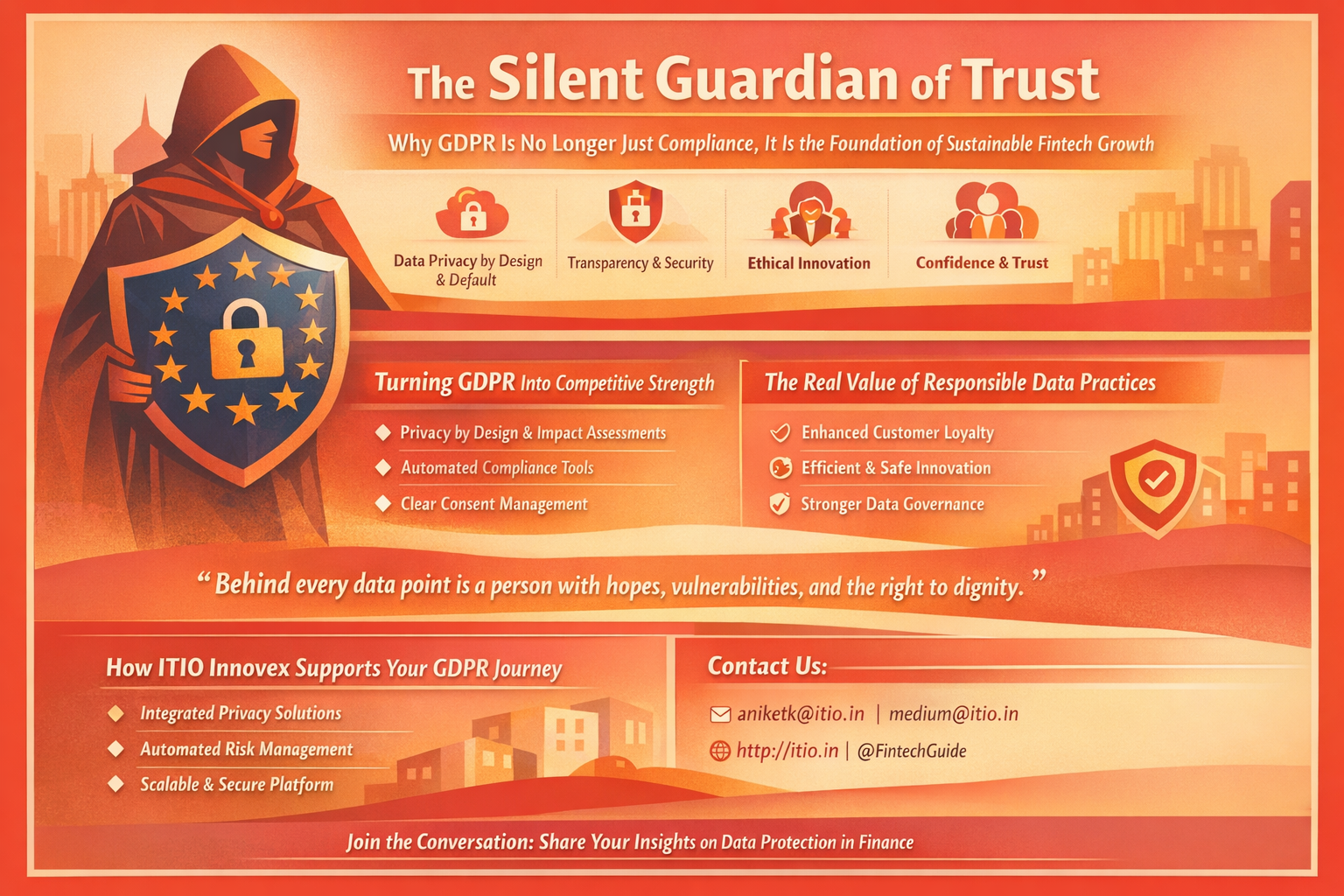
The Silent Guardian of Trust: Why GDPR Is No Longer Just Compliance, It Is the Foundation of Sustainable Fintech Growth
In an age where personal data fuels innovation yet carries profound risks to individual dignity, the General Data Protection Regulation stands as a quiet reminder that true progress respects the humanity behind every record.
 AniketBuilds7 min read·Just now
--
I still remember the hushed conversation with a fintech founder whose promising payment platform had just suffered a minor data incident. No massive breach, yet the fear in his eyes was unmistakable. “One wrong move with customer information,” he said, “and years of building trust evaporate overnight.”
That moment captured a feeling many leaders quietly carry in finance, data is both the greatest asset and the heaviest responsibility. The General Data Protection Regulation (GDPR) was born from this tension. Enacted to give individuals greater control over their personal information, it has evolved from a European rule into a global benchmark for ethical data handling. Far from being a mere legal obligation, GDPR now shapes how thoughtful organisations build lasting relationships with the people they serve.
The Growing Unease with Data in Financial Services
Finance has always dealt with sensitive details, such as incomes, spending habits, identities, and aspirations. Today, with digital transactions, AI-driven insights, and cross-border flows, the volume and sensitivity of that data have grown exponentially. Customers expect seamless experiences, yet they also demand respect for their privacy. A single lapse can erode confidence instantly.
The human cost runs deep. Customers worry about identity theft and privacy breaches. Founders lose sleep wondering if their next feature will cross an invisible line. Teams burn out navigating complex requirements while trying to deliver delightful products. In emerging markets or among vulnerable users, the fear of data misuse creates hesitation that slows adoption for everyone.
GDPR addresses this unease at its root. By establishing clear principles of lawfulness, fairness, transparency, purpose limitation, data minimisation, accuracy, storage limitation, integrity, confidentiality, and accountability, it pushes organisations to treat personal data with the care it deserves. In 2026, with enforcement remaining strict and cumulative fines reaching billions of euros, the regulation continues to serve as both a safeguard and a strategic compass.
Turning GDPR from Burden into Competitive Strength
Effective GDPR compliance begins with intentional design. Privacy by design and by default means building systems that minimize data collection from the outset and protect it throughout its lifecycle. Conducting thorough Data Protection Impact Assessments for high-risk processing activities helps identify and mitigate issues before they escalate.
Consent management deserves particular attention. Instead of vague or buried checkboxes, effective approaches offer clear, granular choices that users can easily understand and withdraw. Data mapping exercises reveal where information resides, who accesses it, and how long it is kept, enabling more precise retention policies and faster responses to subject access requests.
Automation plays a growing role. Tools that scan for sensitive data, monitor access logs, and automate breach notifications reduce human error while freeing teams for higher-value work. Cross-border considerations, including appropriate safeguards for transfers, require ongoing attention. Regular training and a culture of accountability ensure that everyone, from engineers to customer support, understands their role in protecting privacy.
The Real Value That Emerges from Responsible Data Practices
When GDPR principles are woven thoughtfully into operations, the benefits extend far beyond avoiding fines. Customers respond to organizations that treat their information with respect. Retention improves as people feel seen and protected rather than monitored. Brand loyalty grows when transparency becomes a visible commitment rather than fine print.
For the business itself, strong data governance unlocks cleaner datasets for innovation. Teams make better decisions when they can trust the quality and legitimacy of the information they use. Operational efficiency rises as processes for handling requests and audits become streamlined. Many organizations discover that privacy-focused design actually accelerates product development by forcing clearer thinking about user needs from the start.
On a human level, the transformation feels meaningful. Support teams spend less time managing crises and more time helping customers. Leaders sleep easier knowing their growth rests on ethical foundations. Users regain a sense of agency over their financial lives, fostering greater participation in digital services. In an industry built on trust, GDPR becomes a quiet differentiator that signals seriousness and care.
The Honest Challenges That Test Resolve
Compliance is rarely effortless. The volume of personal data in fintech creates complexity, especially when combining legacy systems with new AI capabilities. Resource constraints hit smaller teams particularly hard. User adoption of new processes can be slow unless training feels supportive.
Cross-border operations add layers of difficulty. Transfer mechanisms and supplementary measures require careful navigation amid a fragmented global landscape. The intersection with emerging rules around artificial intelligence introduces fresh questions about transparency and bias in processing. These realities test patience and creativity, yet addressing them openly builds stronger, more resilient systems.
The Mindset Shift Taking Place in Fintech Leadership
Across the fintech ecosystem, a subtle yet profound shift is occurring. Leaders are increasingly recognizing that data protection is not a cost center but a strategic capability that builds resilience and competitive advantage. Decision-making gains depth when innovation is weighed against its impact on individual rights and long-term trust.
This mindset values stewardship alongside speed. Growth opportunities arise for those who master accountability while continuing to push technological boundaries. Innovation challenges feel more human when balanced with empathy for the people whose data powers new features. Cultures that succeed foster collaboration between legal, technical, and product teams, creating environments where ethical questions receive as much attention as technical ones.
How ITIO Innovex Supports Thoughtful GDPR Compliance
ITIO Innovex has built its platform with these realities firmly in mind. The solution embeds privacy controls directly into workflows, offering automated data mapping, consent management, impact assessments, and breach response capabilities within a unified environment. Secure architecture ensures integrity and confidentiality while supporting flexible configurations that align with evolving requirements.
The modular design allows teams to scale responsibly, whether launching new features, expanding geographically, or integrating AI responsibly. White-label and customizable dashboards preserve brand identity while delivering enterprise-grade governance behind the scenes.
Why Responsible Teams Choose ITIO Innovex
What sets ITIO Innovex apart is deep respect for the operator’s journey. The platform reduces complexity without sacrificing rigor, letting teams focus on delivering value rather than wrestling with fragmented tools. Built-in automation for routine compliance tasks lowers risk and operational burden. Scalable architecture supports ambitious growth while maintaining the transparency and accountability that build lasting trust.
The partnership feels collaborative, grounded in shared understanding of both regulatory demands and the human stakes involved in handling financial data.
The Evolving Landscape and Future Opportunities
GDPR remains a cornerstone of global privacy expectations. Enforcement continues with focus on consistency, while proposals for targeted simplifications aim to ease burdens on smaller organizations without weakening core protections. The convergence with AI governance adds new dimensions, requiring heightened attention to transparency in automated processing.
Market trends point toward deeper integration of privacy-enhancing technologies and responsible data practices as competitive differentiators. As financial services become more embedded in daily life, organizations that treat GDPR as a foundation for ethical innovation will be best positioned to earn and maintain user confidence amid rapid technological change.
Real Stories of Impact
Practical examples illustrate the difference thoughtful approaches make. A growing payment platform redesigned its onboarding with privacy by design, resulting in higher completion rates and fewer support inquiries about data usage. Another organization implemented automated consent and access request handling, transforming what once felt like a compliance burden into a seamless part of the user experience. Teams across various fintechs report greater confidence in launching new features when governance is embedded early rather than retrofitted later.
These stories reveal a common truth: when data protection aligns with genuine care for users, both compliance and innovation flourish.
A Final Reflection
At its heart, the story of GDPR is profoundly human. It is about recognizing that behind every data point is a person with hopes, vulnerabilities, and the right to dignity. It is about choosing to build systems that empower rather than exploit. It is about leaders who understand that sustainable success rests not only on technological brilliance but on the quiet foundation of trust earned through responsibility.
The future will reward those who approach data protection with humility and foresight. Not because regulation demands it, but because respecting personal information is simply the right way to build in a connected world. In the end, the organizations that thrive will be those that treat GDPR not as a constraint, but as an invitation to create finance that feels both innovative and deeply respectful of the lives it touches.
If your team is navigating the complexities of data protection while pursuing ambitious fintech goals, we would welcome the opportunity to explore how ITIO Innovex can support your vision with practical, thoughtful infrastructure.
Contact us at: [email protected] DM’s: [email protected] Official Website: http://itio.in Follow us: https://medium.com/the-fintech-guide
We also warmly invite thoughtful writers and industry voices to contribute to The Fintech Guide. If you have insights, stories, or reflections on data protection in finance, please reach out. The conversation grows richer with every new perspective.
If this piece resonated with you, I would be grateful if you applauded it so others wrestling with these questions might find it. Leave a comment below: What has been your biggest lesson or challenge around data privacy in fintech? Let us keep the dialogue going. And if you are building something meaningful in this space, consider connecting. Collaboration has always been the quiet force behind more trustworthy financial systems.
Thank you for reading. In a world awash with data, the organizations that protect it with care will be the ones that earn the trust to shape its future.