The Real Cost of High-Risk Payment Processing (Most Businesses Get This Wrong)
 Inquid Net Digital Services3 min read·Just now
--
f you run a business in forex, gaming, IPTV, crypto, or any high-risk category, there’s a good chance you’ve asked this:
“Why are my payment processing fees so high?”
And more importantly:
“Am I overpaying?”
The truth is — most high-risk businesses don’t fully understand what they’re paying for.
And that lack of clarity quietly eats into margins every single month.
Why High-Risk Businesses Pay More
Not all businesses are treated the same by payment providers.
If your business falls into a “high-risk” category, you’re automatically dealing with:
- Higher chargeback probability
- Cross-border transaction complexity
- Regulatory and compliance pressure
- Fraud exposure
From a provider’s perspective, that risk translates directly into cost.
That’s why standard payment processors often reject these businesses altogether, pushing them toward specialized solutions like a high risk merchant account paired with a dedicated payment gateway.
What You’re Actually Paying For
Let’s break this down in simple terms.
Most businesses focus only on the transaction fee — but that’s just one piece of the puzzle.
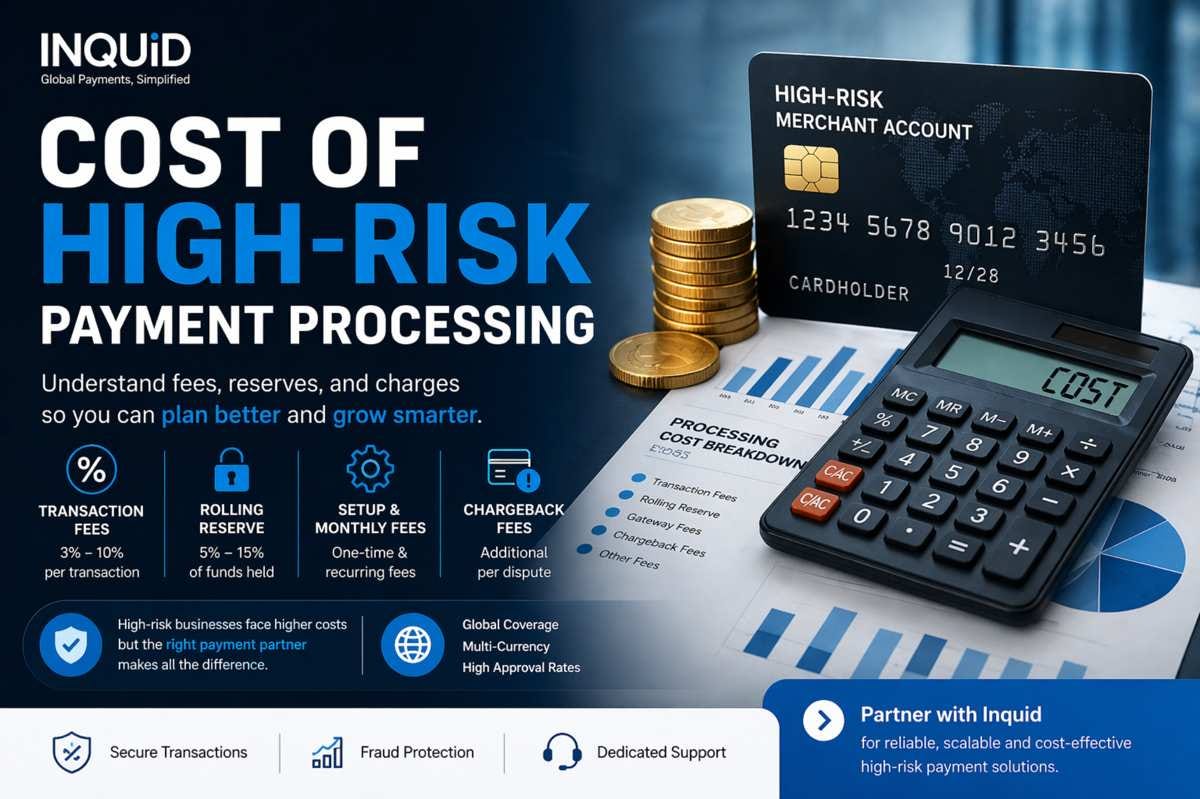
1. Transaction Fees
Typically range between 3% and 10% per transaction.
These vary based on:
- Industry risk level
- Customer location
- Payment method
2. Rolling Reserves
This is where many businesses get surprised.
A portion of your revenue (usually 5% to 15%) is held by the provider for a fixed period.
It’s designed to cover potential chargebacks — but it also impacts your cash flow.
3. Gateway and Monthly Fees
These include:
- Payment gateway usage
- Maintenance and support
- Account management
4. Chargeback Costs
Every chargeback comes with:
- A fixed fee
- Potential penalties
- Increased risk profile (which can raise your fees over time)
The Hidden Cost Most People Miss
Here’s the part that rarely gets discussed:
Poor payment setup costs more than high fees.
If your payment system is unstable, you may face:
- Failed transactions
- Lower approval rates
- Lost customers at checkout
In many cases, businesses lose more revenue from failed payments than from fees themselves.
How Smart Businesses Reduce Costs
Reducing payment processing costs isn’t about finding the cheapest provider.
It’s about building a more efficient system.
Improve Your Risk Profile
Lower chargebacks = better rates.
This means:
- Clear refund policies
- Fraud monitoring
- Better customer communication
Optimize Your Payment Flow
A strong payment gateway setup can:
- Increase approval rates
- Reduce failed transactions
- Improve user experience
Choose the Right Partner
This is the most important factor.
A provider that understands high-risk industries can:
- Structure your account better
- Improve approval rates
- Offer more stable processing
So, What’s the Right Approach?
If you’re serious about scaling, you need to stop looking at payment processing as just a cost.
It’s an infrastructure decision.
The right setup helps you:
- Process more transactions
- Reduce losses
- Scale globally without friction
A Deeper Breakdown
If you want a full breakdown of:
- Actual cost ranges
- Hidden fees most providers don’t mention
- How to reduce your payment processing costs
- What to look for in a high-risk payment provider
👉 Read the complete guide here:
Cost of High-Risk Payment Processing (2026 Guide)
https://inquid.net/cost-of-high-risk-payment-processing/
Final Thought
High-risk businesses don’t fail because of demand.
They fail because their payment systems can’t support growth.
Understanding your costs — and optimizing your setup — is one of the most important steps you can take.