The Quiet Reality of Trust in DeFi
 0xrizzz3 min read·Just now
--
DeFi started with a bold promise. Replace people with code, remove intermediaries, and let systems run on their own.
For a while, that felt true. Smart contracts handled transactions, protocols operated without banks, and everything looked cleaner and more transparent.
But over time, a different picture started to form.
Trust didn’t go away. It just became harder to see.
Most users don’t think about it, but every interaction in DeFi still involves trust. You trust that a smart contract won’t break. You trust that price feeds are accurate. You trust that governance decisions won’t suddenly change the rules in a harmful way.
It’s not that DeFi failed. It’s that the original framing was incomplete.
No system can fully remove trust. What matters is how that trust is handled.
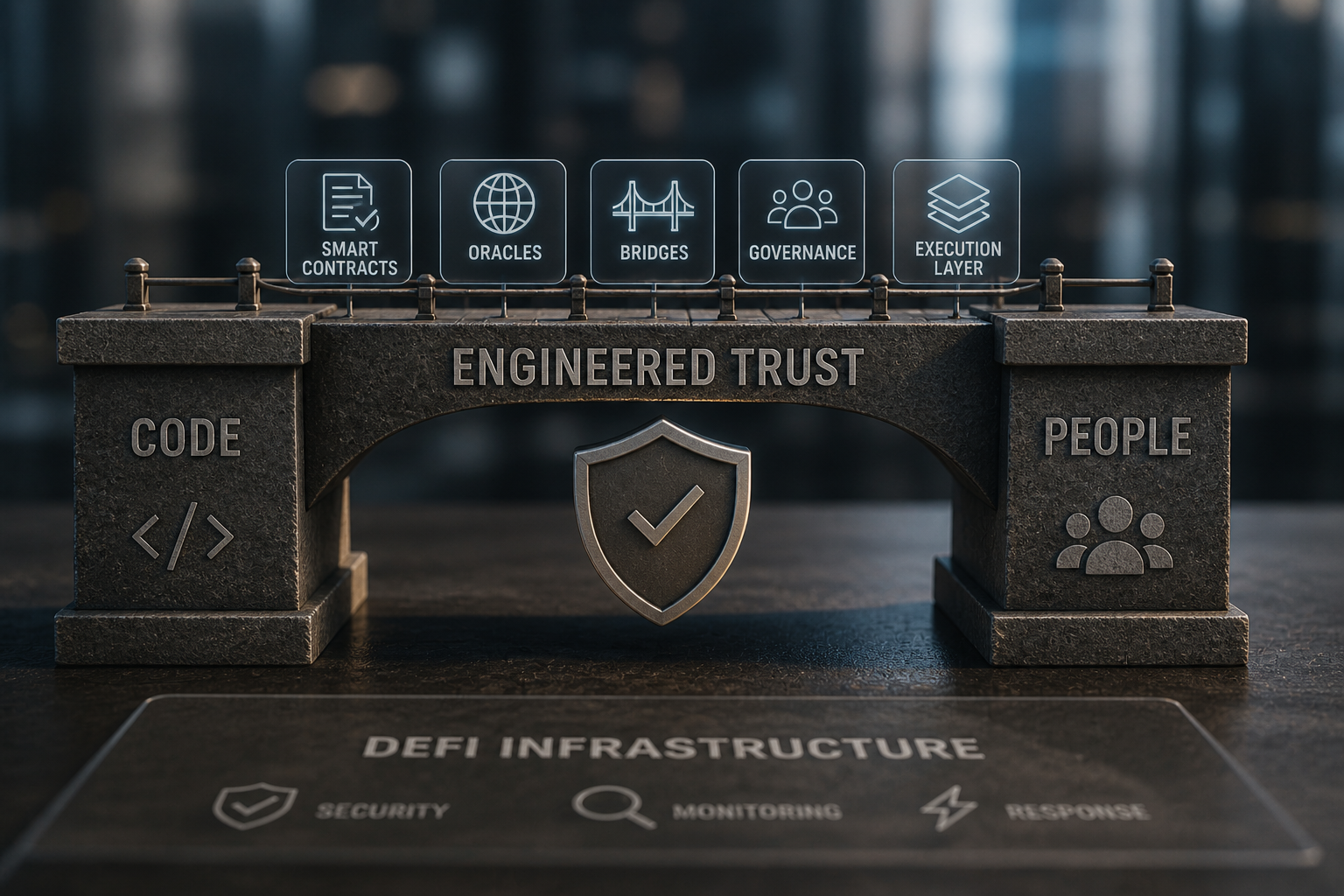
When you look closer, trust in DeFi exists in several places at once. Smart contracts are written by humans, which means they can have bugs or unintended behavior. Governance systems often rely on a small group of active participants, even if they appear open to everyone. Oracles bring in external data, but that data can be delayed, manipulated, or disrupted. Bridges connect ecosystems, yet they’ve consistently been one of the most fragile points in the entire space.
Even execution layers come with assumptions. Whether it’s validators or sequencers, someone is ultimately responsible for ordering and processing transactions.
None of this makes DeFi broken. It just means the system is built on layers of trust that aren’t always obvious.
The bigger issue shows up when protocols try to hide this reality.
Some projects lean heavily into the idea of decentralization without actually building for resilience. A multisig wallet might control critical functions, but if only a few people hold the keys, risk is still concentrated. A DAO might exist in theory, but if participation is low, decisions end up in the hands of a small minority. Timelocks can slow things down, but they don’t necessarily stop bad outcomes. And when something goes wrong, many systems don’t have a clear way to respond.
This creates a gap between how systems look and how they behave.
That gap is where problems tend to surface.
A more honest approach is to accept that trust is always part of the system and design around it.
Instead of trying to eliminate trust, stronger systems define it clearly. Who can do what, under which conditions, and with what limits. Permissions are not vague. They are specific and enforced. Actions are not assumed to be safe. They are constrained by design.
This is what engineered trust looks like in practice.
It doesn’t rely on the idea that nothing will go wrong. It assumes that things can go wrong and prepares for it.
That’s where operational thinking becomes important. Systems need visibility so issues can be detected early. They need mechanisms to act quickly when something unexpected happens. And in some cases, they need human judgment to handle edge scenarios that code alone can’t predict.
Security isn’t just about preventing failure. It’s about managing it when it happens.
This is also where a shift in infrastructure design becomes visible.
Concrete takes a more grounded approach to this problem. Instead of presenting a system as fully trustless, it makes trust explicit and structured. Roles are clearly defined. Permissions are limited and enforced onchain. Monitoring and intelligence extend beyond static contracts. Execution is controlled rather than left open-ended.
Concrete vaults reflect this philosophy. They are not just passive pools of capital. They are designed environments where behavior is constrained and responses are possible.
This matters more as DeFi starts to attract larger and more serious capital. Institutional DeFi doesn’t operate on narratives. It operates on reliability. Systems need to behave predictably, especially under stress.
That’s why operational security becomes more important than surface-level decentralization.
If something breaks, the question isn’t whether a system was decentralized on paper. The question is whether it can handle the situation without collapsing.
DeFi is slowly moving in that direction.
The conversation is shifting away from idealistic claims and toward practical design. People are starting to care less about whether a system calls itself trustless and more about how it actually performs.
In the end, trust isn’t the enemy. Hidden trust is.
The systems that will last are the ones that bring it into the open, define it clearly, and build around it with intention.
Explore Concrete at https://concrete.xyz/