The Macro Reality Behind DeFi , And Where ORBT Fits In
 Emmytex King3 min read·Just now
--
The macro economy isn’t just a backdrop to crypto , it’s the foundation that shapes its direction.
Right now, we’re in a strange phase.
Interest rates remain elevated compared to the past decade, yet real yields (adjusted for inflation) are still not compelling enough for long-term wealth growth. Traditional finance offers stability, but increasingly at the cost of opportunity. Capital is preserved , not multiplied.
This is where DeFi steps in.
DeFi didn’t emerge because finance was broken.
It emerged because finance became inefficient, exclusive, and slow to evolve.
The Current State of Macro + DeFi
Globally, liquidity conditions are tightening. Central banks are more cautious. Risk appetite is selective.
But in parallel, DeFi is maturing.
We’re moving away from:
• Unsustainable yield farming
• Inflated token incentives
• Short-term speculation
And toward:
• Real yield (fees, usage-based revenue)
• Capital efficiency
• Infrastructure that abstracts complexity
DeFi today is no longer just “higher yield.”
It’s becoming alternative financial infrastructure.
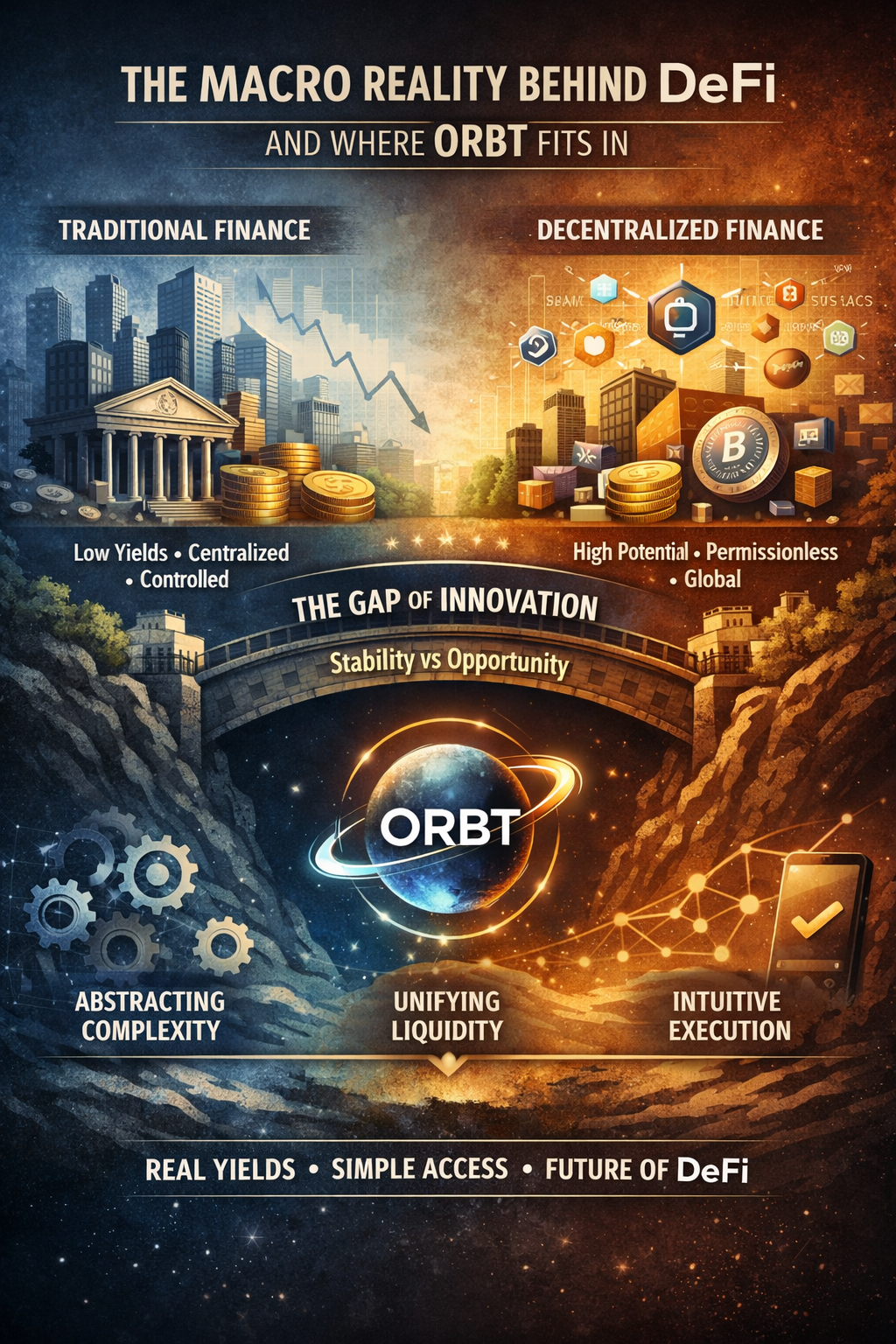
Low TradFi Yields vs DeFi Opportunity
In traditional markets, yield is often:
• Controlled
• Intermediated
• Limited by geography and access
In DeFi, yield is:
• Permissionless
• Composable
• Globally accessible
But that doesn’t mean it’s risk-free.
The trade-off is clear:
• TradFi = lower risk, lower upside
• DeFi = higher potential, but requires understanding
The gap between the two is where innovation happens.
Centralization vs Decentralization
Centralized systems optimize for control and predictability.
Decentralized systems optimize for openness and resilience.
The future isn’t one replacing the other , it’s a convergence.
Users don’t care about ideology.
They care about:
• Simplicity
• Security
• Outcomes
The winning systems will combine:
• The usability of centralized platforms
• The trust guarantees of decentralized ones
Risks and the Path to Mass Adoption
The biggest barrier to adoption isn’t regulation or volatility.
It’s complexity.
Most users still struggle with:
• Bridging assets
• Managing wallets
• Understanding risk layers
Until DeFi feels invisible , like using a normal app, mass adoption will remain limited.
At the same time, risks are evolving:
• Smart contract vulnerabilities
• Liquidity fragmentation
• Over-reliance on incentives
The next phase of growth will reward protocols that reduce friction without compromising decentralization.
Where ORBT Fits In
This is where ORBT becomes interesting.
The future of DeFi isn’t about adding more features.
It’s about removing the need for users to think about infrastructure at all.
ORBT positions itself in that exact gap:
• Abstracting complexity
• Unifying fragmented liquidity
• Enabling intent-based execution
Instead of asking users how to do something,
ORBT focuses on what the user wants to achieve.
That shift matters.
Because the next wave of users won’t come for yield alone, they’ll come for experience.
The Next Few Years
Looking ahead, we’ll likely see:
• Continued pressure on traditional yields
• Increased demand for alternative financial systems
• Stronger regulation shaping both TradFi and DeFi
• A shift from speculation to utility
Protocols that survive won’t be the loudest, they’ll be the ones that quietly become indispensable.
Final Thought
DeFi is no longer early.
But it’s not finished either.
The macro environment is forcing a reset,
and that reset is pushing the space toward real value.
In that transition, projects like ORBT have a clear path:
Not by competing on hype,
but by becoming the layer users don’t even notice, because everything just works.