The Invisible Hand of Logic: Why the Future of Finance Relies on Explicitly Engineered Trust
 Forsytheart4 min read·Just now
--
Human history is essentially an evolution of trust. We migrated from the intimate trust of tribal bonds to the institutional trust of paper contracts and central banks. When Bitcoin and subsequent DeFi protocols emerged, they promised the final frontier: trustless systems. The rallying cry was simple: “Code is Law.” We were told that for the first time in history, trust was no longer a required ingredient for financial cooperation.
But as the ecosystem matured into a complex web of DeFi infrastructure, the industry hit a sobering realization. Trust didn’t vanish — it was simply converted into a different form of energy.
Phase I: The Great Displacement
The narrative that “DeFi removes trust” is one of the most successful myths in modern finance. In reality, the system merely shifted trust from human institutions to technical abstractions. When you interact with a “trustless” protocol, you are not operating in a vacuum of certainty. You are placing an enormous amount of implicit faith in:
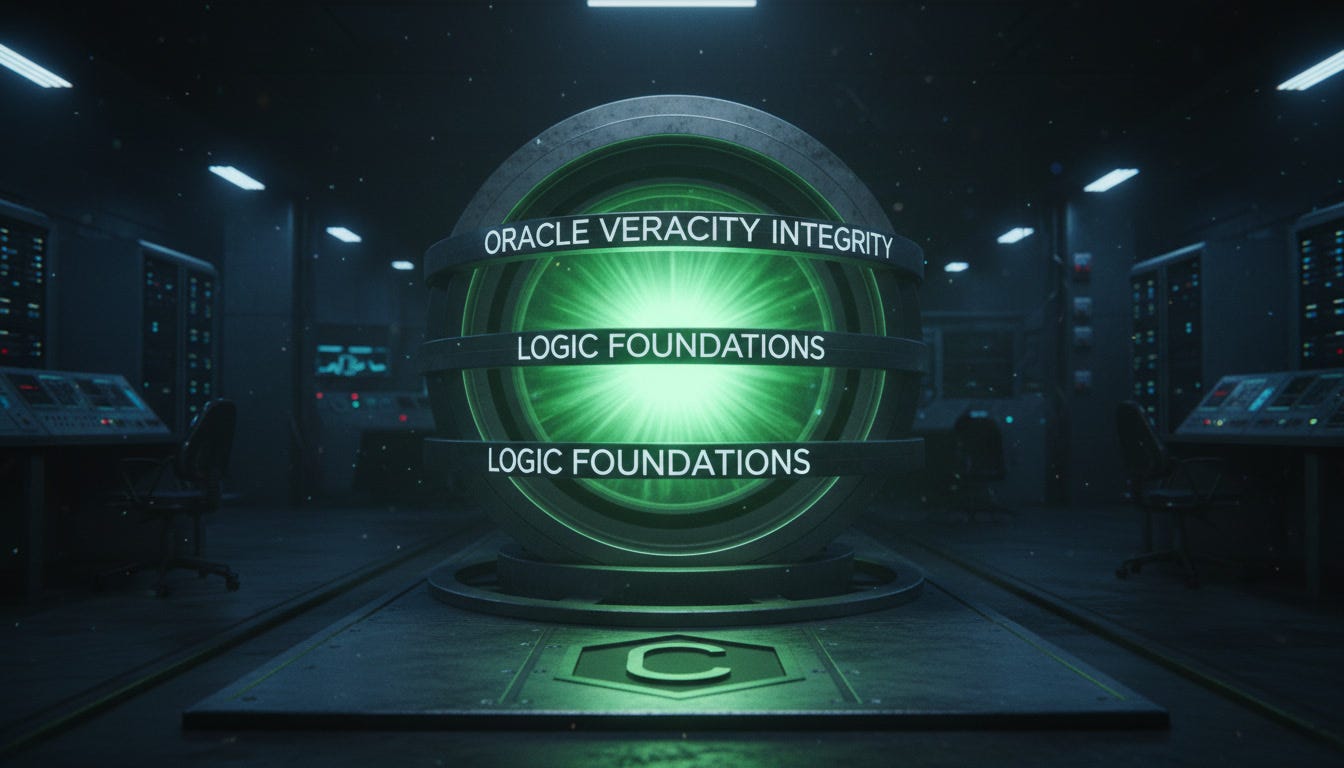
- Logic Foundations: You trust that the developers’ intent matches the smart contract’s execution.
- Data Veracity: You trust that oracles are providing unmanipulated, real-time pricing data.
- Governance Integrity: You trust that the collective of token holders (or the multisig signers) won’t prioritize short-term extraction over long-term protocol health.
- The Bridge & The Layer: You trust the security of the cross-chain bridges and the finality of the execution layers.
In this light, trust hasn’t been deleted; it has been fragmented across a sprawling, often invisible, technical stack.
Phase II: The Trap of “Decentralization Theatre”
To bridge the gap between the “trustless” ideal and the messy reality, many projects have retreated into what we call Decentralization Theatre. This is the practice of designing systems that appear decentralized on the surface to satisfy ideological cravings, while remaining operationally fragile.
We see this theatre in various forms:
- The Multisig Mirage: Protocols that claim decentralization while a 3-of-5 multisig holds the “god mode” keys to the treasury.
- Performative DAOs: Governance structures where 90% of tokens are held by three entities, yet every minor change requires a week-long public vote.
- Passive Timelocks: Security measures that delay a disaster but don’t have the “intelligence” to prevent it.
These systems are built for the aesthetic of safety, but they lack the structural resilience required for true institutional DeFi. In a crisis, “theatre” fails. Only engineered architecture survives.
Phase III: The Discipline of Engineered Trust
If trust is unavoidable, the most sophisticated approach is not to deny it, but to engineer it. Engineered trust is the transition from accidental dependencies to deliberate, structured, and enforceable constraints. It is the architectural recognition that code alone is a static defense, and real systems require dynamic resilience.
Engineered trust means:
- Explicit Permissions: Roles are not just “admin” or “user,” but granular, time-bound, and strictly defined.
- Enforced Constraints: The system doesn’t just “hope” for good behavior; it makes bad behavior mathematically and economically impossible.
- Active Response: Moving beyond “prevention” to “response” — building systems that can detect anomalies and react in real-time.
This is how mature financial systems operate, and it is the baseline for the next generation of on-chain finance.
Phase IV: Operational Security & The Human Edge
A common fallacy in early DeFi was the belief that human judgment should be entirely excised. However, operational security in complex environments actually requires a layered approach. While code handles the 99% of standard execution, the “edge cases” — the black swans and zero-day exploits — require a fusion of on-chain enforcement and off-chain intelligence.
Real-world DeFi security demands:
- Continuous Monitoring: Scanning for deviations in protocol behavior.
- Layered Defense: Multiple fail-safes so that a single oracle failure or contract bug doesn’t lead to total capital loss.
- Rapid Response: The ability to isolate threats without compromising the entire protocol’s immutability.
Phase V: The Concrete Architecture
Concrete was built to move beyond the “trustless” slogans of the past. We don’t participate in decentralization theatre; we build for operational reality. Our architecture is designed to make trust explicit and manageable.
By rethinking how DeFi infrastructure behaves under stress, Concrete introduces a new standard:
- Onchain Enforcement + Off-chain Intelligence: Concrete uses sophisticated monitoring to detect risk, but the actual protection of assets is hardcoded into the blockchain.
- Engineered Vaults: Assets aren’t just “locked”; they are placed in Concrete vaults — controlled execution environments where permissions are role-based and attack surfaces are ruthlessly minimized.
- Response-Driven Design: Our systems are built to recognize and react to market stress, ensuring that capital preservation isn’t a passive hope, but a functional guarantee.
Concrete prioritizes the actual safety of capital over the mere appearance of decentralization.
The New Paradigm
The narrative is shifting. We are moving away from an era defined by who claims to be most trustless, toward an era defined by who engineers trust the best. Resilience is the new alpha. As institutional DeFi takes center stage, the winners will be those who acknowledge that code is only the beginning of the story.
The future of finance isn’t a vacuum of trust — it is a masterpiece of engineered trust.
READY TO SECURE THE FUTURE?
Don’t settle for decentralization theatre. Build on infrastructure designed for the real world.