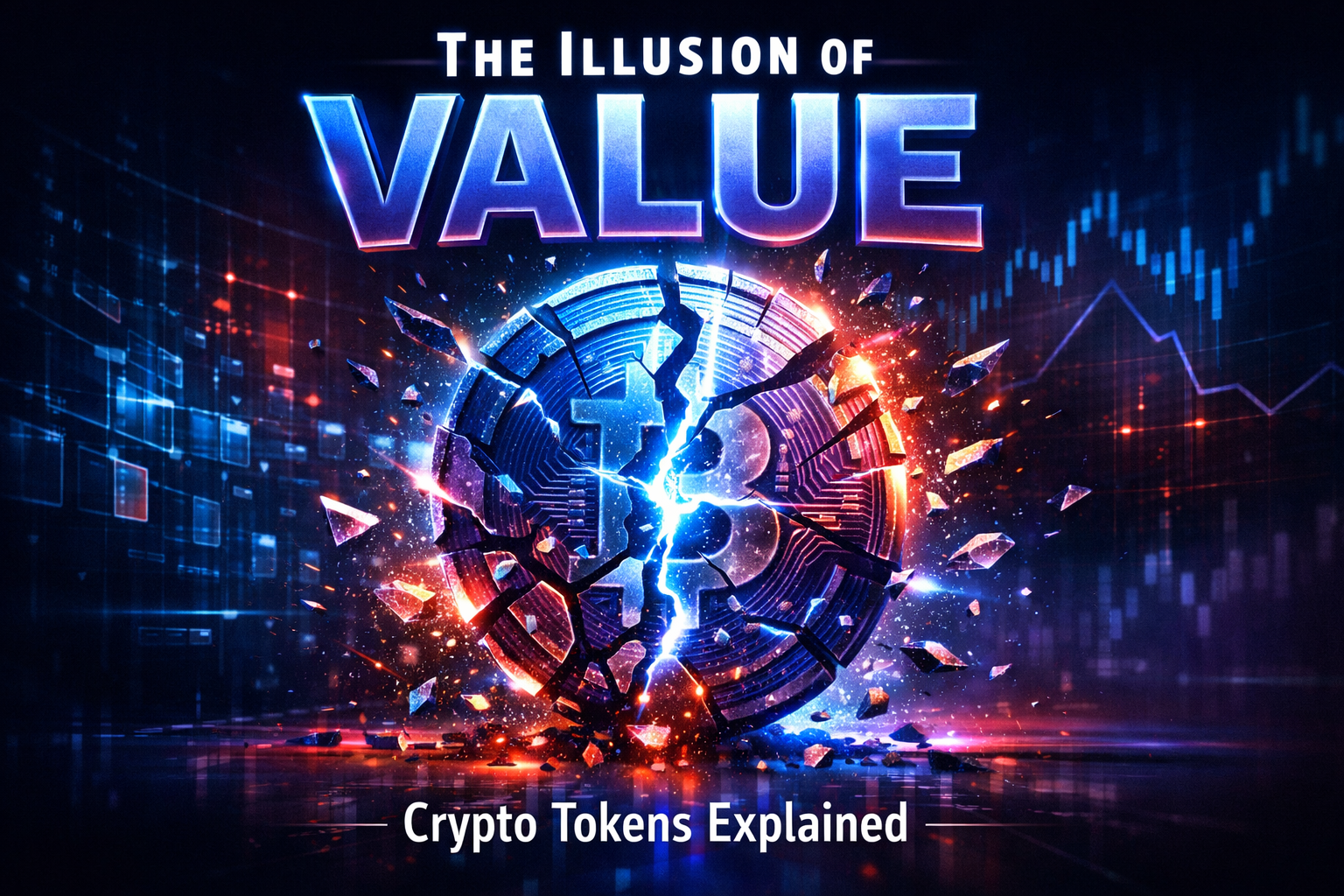
The Illusion of Value: Why Crypto Tokens Are Not Just Digital Assets
In crypto tokens are not things you can hold.
 Saumya R | Future of Finance4 min read·Just now
--
They are not price, market value or even usefulness. They are belief.
Every time someone buys a crypto token they silently assume it has value will keep value and someone else will believe in that value tomorrow. This assumption feels normal. It is actually very fragile.
Unlike assets crypto tokens are not backed by real goods, predictable income or guarantees from institutions. They are backed by something tangible. Collective belief in a system.
Tokens Are More Than Code
A token is technically simple: a contract, a balance on a blockchain and a programmable unit of value.. This definition misses the bigger picture. Tokens do not exist alone; they exist within systems.
A token aligns:
1-Incentives
2-Participation
3-Ownership
4-Governance
In finance institutions handle these roles. Banks manage money companies issue equity and governments regulate markets. In crypto tokens try to embed these roles into code.
The Illusion of “ Another Asset”
Many people think of crypto tokens like stocks. They ask: What is the price? What is the market value? When will it go up? This mindset is familiar but flawed.
Tokens are not financial instruments. They do not guarantee returns represent ownership or tie to cash flows. Their value comes from:
1-Network usage
2-Market sentiment
3-Utility within ecosystems
4-Demand
5-Governance rights
Most importantly shared belief in their future relevance. Without that belief the entire system weakens.
Where Value Actually Comes From
Token value is not inherent; it is constructed.
1. Network Effects Create Value
A token becomes valuable when it is used not held. Used to:
Pay fees
Access services
Participate in governance
Secure networks
The more people rely on the token the more embedded it becomes. Without usage a token is code. With usage it becomes essential.
2. Scarcity Shapes Perception
Many tokens are designed with supply creating scarcity.. Scarcity alone does not create value. A rare asset with no demand is still worthless. Scarcity only matters when combined with demand, utility and belief.
3. Incentives Drive Behavior
Tokens shape behavior. Users earn tokens for providing liquidity validating transactions and contributing to ecosystems. This creates a feedback loop: Participation → Utility → Demand → Value.. This loop is fragile. If incentives are misaligned users extract value of creating it.
The Fragility Beneath the Surface
Token ecosystems often look strong during growth. Prices rise, communities. Adoption increases.. This strength is often temporary.
Speculation vs Utility: Many tokens grow through speculation. Rising prices attract attention and users increase demand.. If utility does not follow the system becomes unstable.
Liquidity Is Not Guaranteed: Token markets depend on exchanges, market makers and active participants. During downturns liquidity dries up prices become confidence drops.
Governance Is Complex: Many tokens promise governance. Token holders can vote on decisions. In theory this creates fairness. In practice it introduces problems like participation concentrated ownership and misaligned incentives.
The Shift Happening in Crypto
The early token era was driven by hype. Launch fast list quickly. Grow rapidly.. The industry is evolving. A shift is happening: from speculation to utility from hype to sustainability and from term to long-term.
Tokens are no longer tradable assets; they are becoming infrastructure for digital economies. This shift mirrors broader changes in fintech. Tokens are moving from assets to systems of coordination.
The Real Product Is Not the Token
A token alone has no meaning. Its value depends on the system it powers the users it attracts and the problems it solves. Without these a token is empty. With them it becomes powerful.
What Mature Token Systems Do Differently
As the ecosystem matures strong token systems follow principles:
Focus on utility before hype
Design incentives
Align token value with real usage
Manage supply responsibly
Build communities
They prioritize long-term stability over short-term attention. Because attention fades, systems
The Hidden Risk: Collapse of Belief
Tokens do not fail like assets; they fail when belief disappears. This can happen due to loss of utility security failures, poor governance or market shocks. Once belief breaks recovery is difficult.
Final Thought
Crypto tokens are often described as assets.. This description is incomplete. They are not just assets; they are tools for organizing systems without central control. Their success depends on more than code; it depends on trust. The future of crypto tokens will not be defined by price. It will be defined by whether they can sustain systems where value is created through participation incentives are. Trust emerges naturally. Because in the end tokens do not create value; they coordinate belief, around value.. In any financial system belief is everything.