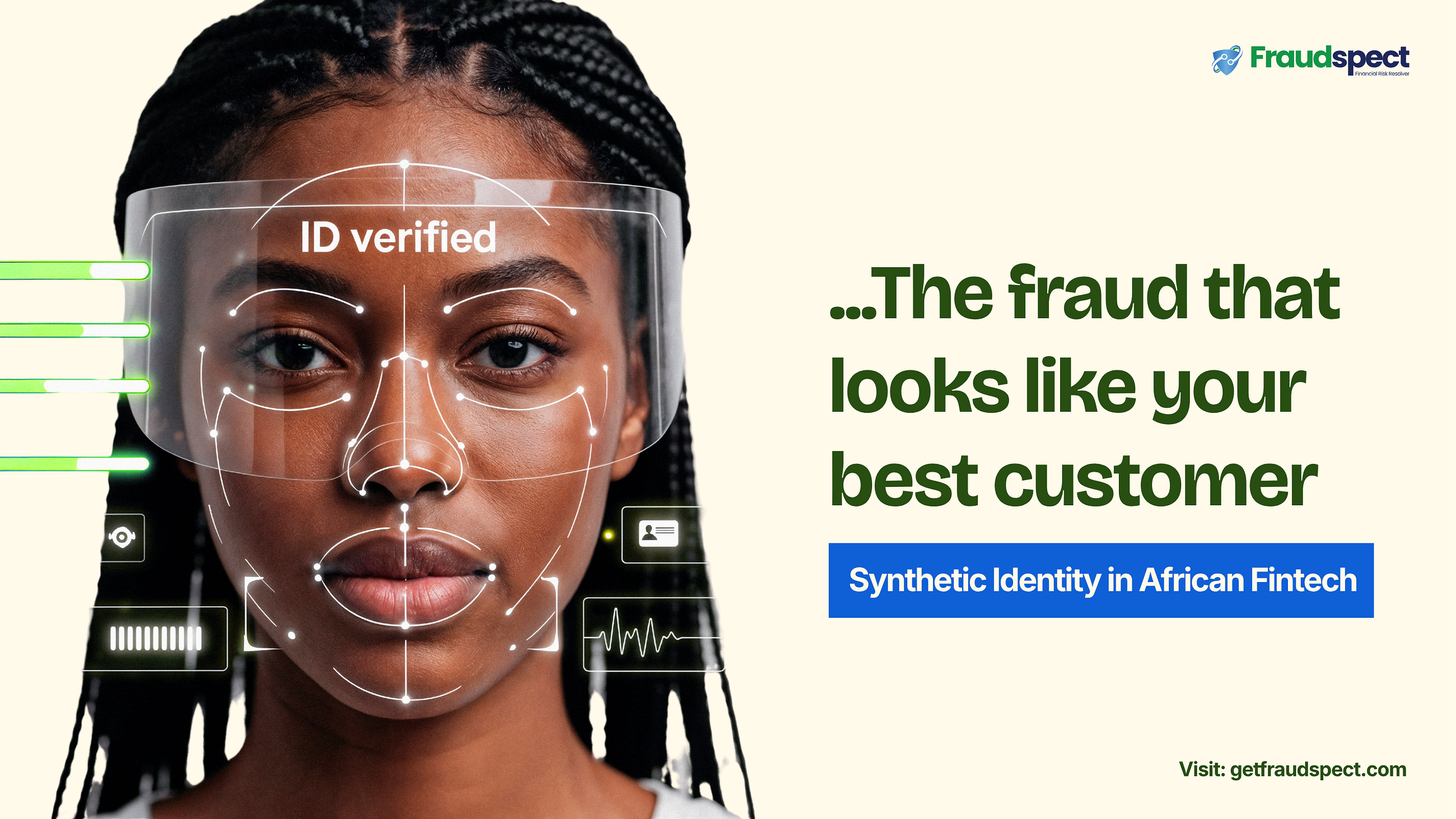
The Fraud That Looks Like Your Best Customer: Synthetic Identity in African Fintech
 FraudSpect2 min read·Just now
--
For most compliance teams in Nigeria, the mental model of fraud looks like this: a customer with a stolen identity, a mismatched document, or a biometric that fails verification.
Synthetic identity fraud is categorically different. It is not pretending. It is building. A real NIN. A real phone number. An AI-generated face that passes liveness checks. A fabricated persona assembled to pass every check you have and then to behave impeccably for long enough to build trust before acting.
In Nigeria, the raw materials are commercially accessible. BVN and NIN data appear on dark markets for as little as N1,000. The fraud operator does not need to steal an identity. They rent the components and construct one. The resulting account looks entirely legitimate because technically, it is. Each component is real. The combination is fabricated.
What makes this fraud category particularly resistant to standard monitoring is the 60 to 90-day build phase. The synthetic identity does not act immediately. It transacts normally, builds a credit profile, and establishes behavioural patterns consistent with a reliable customer. The periodic KYC review, typically annual or semi-annual, sees a clean account with a clean history.
The monitoring architecture that catches synthetic identity fraud has three components: identity clustering, behavioural baseline monitoring, and continuous KYC.
Fraudspect operationalizes all three (and much more), all in one platform.
Build with certainty.
getfraudspect.com