Member-only story
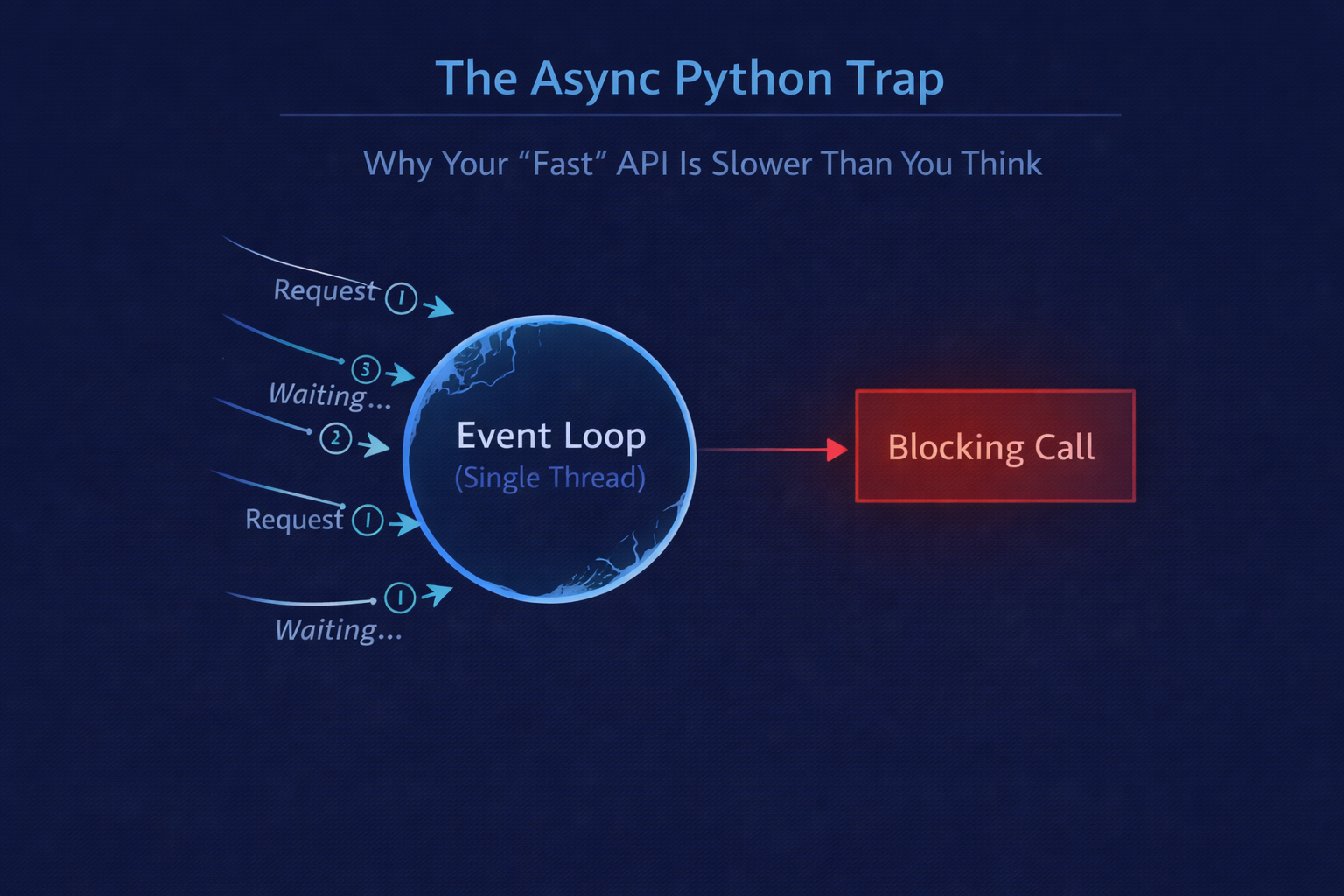
The Async Python Trap: Why Your “Fast” API Is Slower Than You Think
 Anas Issath9 min read·Just now
--
You added async def to your endpoints. You deployed on Uvicorn. You expected speed. Instead, your p99 latency got worse. Here's why.
I’ve reviewed pull requests where developers converted every endpoint from def to async def and called it a performance improvement. No benchmarks. No profiling. Just vibes.
Three months later, the service was slower under load than the synchronous version it replaced.
Async Python is powerful. But it’s also one of the easiest ways to make your backend worse if you don’t understand what’s actually happening under the hood. I’ve debugged this exact problem across four production services over the last two years. This article is everything I wish someone had told me before I started writing async def everywhere.
The Fundamental Misunderstanding
Here’s what most developers think async does:
“Async makes my code run faster.”
Here’s what async actually does:
“Async lets your code wait more efficiently.”
That’s it. Async doesn’t speed up computation. It doesn’t make your database query execute faster. It doesn’t reduce the time your LLM takes to respond. What it does is free up your…