The Anatomy of a Trap: Why “Weak Lows” Are Your Secret Edge
 Backtesting with Vai3 min read·Just now
--
We’ve all been there. You’re staring at the chart, you see a support level hold once, twice, maybe three times, and you think: “That’s a strong floor. It’s safe to buy here.”
But in the world of professional liquidity, what looks like a “strong floor” to a retail trader is often nothing more than a “weak low” to an institution. It isn’t a floor; it’s a magnet. And if you don’t know how to spot the difference, you aren’t trading the move — you are the move.
My name is B, and I document every trade and backtest on my journey toward consistent profitability. Today, I want to talk about the psychological shift from fearing a breakdown to hunting for one.
The Scouting Report: Bullish Bias vs. The Weak Link
Heading into the New York session, the higher-timeframe narrative was bullish. We had the structure, we had the momentum, and we had the bias. But there was a problem: a “weak low” sitting right in our path.
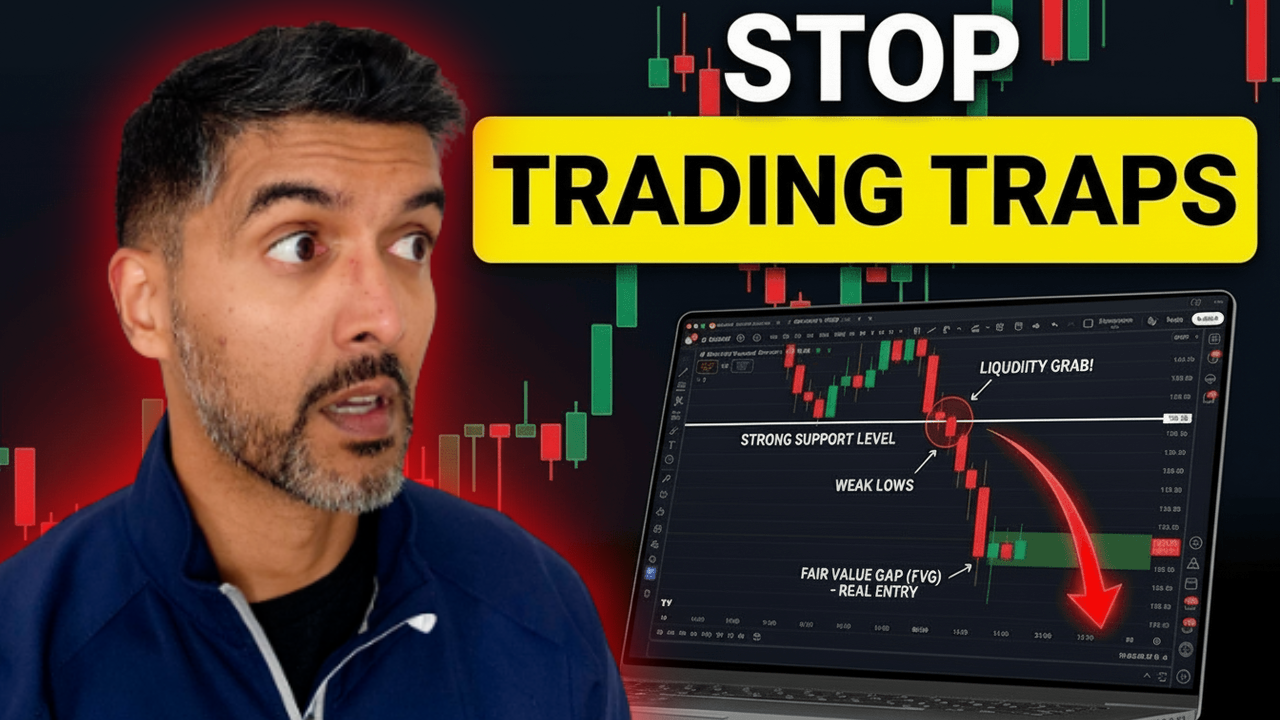
I call it a weak low because it failed to do its job. In a healthy market, a low should propel price to a new high. This one didn’t. It just sat there, failing to take out any significant resistance. To make matters even more interesting, this low coincided exactly with the previous day’s New York session low.
When you see multiple “lows” stacking up in the same area, don’t see it as support. See it as stacked liquidity. It’s a giant sign that says, “There are thousands of stop-losses sitting right under here.”
The Patient Hunt: Waiting for the Liquidation
Most traders see a low get broken and panic. They think the trend is over. But if you understand liquidity, you know that the break is often the beginning of the actual trade.
I waited. A little after 10:00 a.m., the market did exactly what the data suggested: it liquidated that weak low. It swept the floor, triggered the stops, and gathered the “fuel” it needed to actually move higher.
This is where the discipline kicks in. I didn’t jump in the second the low broke. I dropped down to the one-minute chart and waited for the buyers to prove they were back in control. I needed to see an aggressive push-back — a signal that the sellers who just smashed through that low were officially overpowered.
The Entry: Trusting the Footprint
Once I saw a candle close above our key level, I knew the trap was set. I found a tiny “fair value gap” on the three-minute chart — a small footprint left by institutional buyers — and placed my entry right there.
The reaction was immediate. Price tagged the entry, collected the remaining orders, and began a steady climb. By 3:00 p.m., the trade hit a 3.5R profit.
The Hard Lesson: Liquidity is Not a Floor
The key takeaway from this session is simple but profound: Weak lows are liquidity, and liquidity gets taken.
The “edge” in this trade wasn’t a magic indicator or a secret formula. It was the confluence of understanding why price was moving. It moved down to collect the money it needed to move up.
If you’re frustrated because you keep getting stopped out right before the market goes in your direction, ask yourself: “Was I buying a support level, or was I buying a weak low that needed to be liquidated?”
I’m not a guru. I’m just a trader documenting the grit and the data it takes to sharpen an edge. Every trade teaches something different, and the more we study these “traps,” the less likely we are to fall into them.
Did you trade the “floor” today, or did you wait for the sweep?
Join the Journey
If you want to see the actual charts, the live executions, and the raw backtesting data behind these narratives, head over to my YouTube channel. I break down the wins and the losses in real-time so we can keep sharpening our edge together.
Watch the Weak Low Liquidation Breakdown on YouTube: https://www.youtube.com/watch?v=BXJCsztIQvc