The 2026 On-chain Shift: When AI Agents Start Paying, How Close Are We to a Fully Autonomous Economy?
 Claire Li3 min read·Just now
--
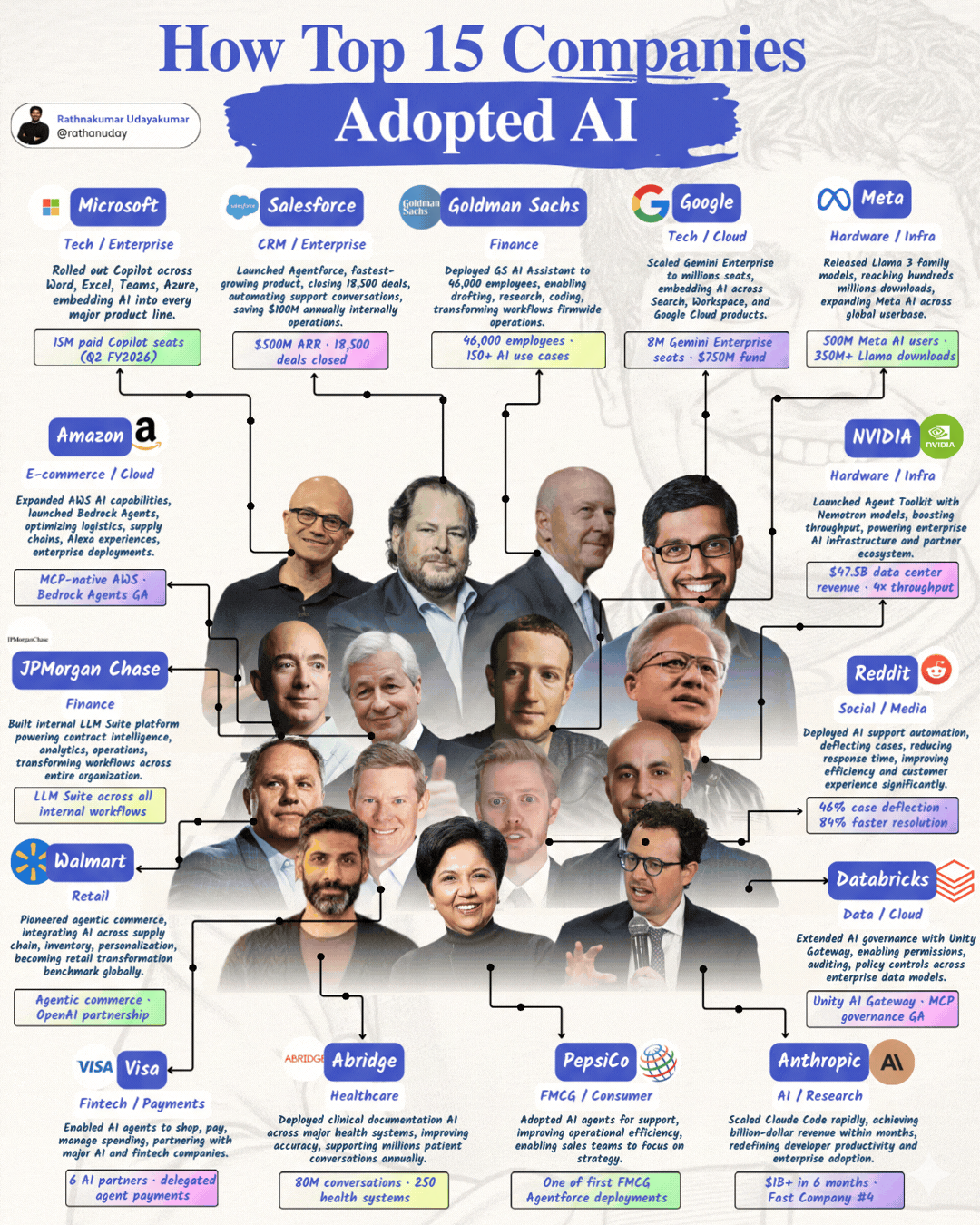
When looking at the enterprise landscape, it’s clear that the gap is doubling every quarter. This chart from top firms reinforces why the ‘Golden Path’ toward fully autonomous agents isn’t sci-fi; it’s a necessary strategic shift. The question is no longer about testing the tech — it’s about whether your infrastructure, from RWAs to stablecoin settlement layers, is ready to handle these autonomous workflows in production.
To be honest, the speed at which Web3 and AI are converging lately is staggering. As a Product Manager observing the space, it’s clear that on-chain activity is undergoing a fundamental paradigm shift: we are moving from “human-driven” clicks to “agent-driven” execution. This isn’t just a trend; it’s a complete restructuring of our infrastructure that requires us to move beyond Tool Thinking into the complex world of System Orchestration.
Here are my product observations on three key movements defining the space right now:
1. The “Last Mile” of the Machine-to-Machine (M2M) Economy
The recent collaboration between Google Cloud and Solana to launch Pay.sh is a massive signal. It solves the primary friction point in the M2M economy: autonomous payment authorization.
- The PM Take: Traditionally, AI agents hit a “payment wall” when executing complex tasks across platforms, requiring a human in the loop for authorization.
- Architectural Shift: By allowing agents to handle stablecoins directly for metered API usage, we are removing the “handcuffs” from autonomous agents.
- From UI to Intent: The product flow is evolving from
User -> UI -> Actionto a more streamlinedUser -> Intent -> Agent -> On-chain Settlement.
2. RWA as the Liquidity Moat for AI Agents
Coinbase recently doubled down on Centrifuge, naming them a key partner for tokenization on Base. Simultaneously, SoFi choosing Solana for stablecoin issuance confirms that TradFi is aggressively moving toward on-chain clearing for speed and cost efficiency.
- The PM Take: Once AI agents can pay, they need stable, yield-bearing assets to manage their treasuries or hedge risks.
- Liquidity as Fuel: Bringing Real-World Assets (RWA) like T-bills or private credit on-chain provides these agents with the “ammunition” they need to operate.
- Market Proof: GitHub projects like TradingAgents show that when investment teams are simulated by AI, on-chain RWA liquidity becomes the core competitive advantage.
3. From Lone Wolves to “Agent Orchestration”
The latest GitHub trends, featuring projects like ruvnet/ruflo and agency-agents, show that the developer community has moved past building “chatbots”. They are now building Agentic Teams.
- Multi-Agent Collaboration: Tools like dexter or n8n-mcp allow AI to not just “search,” but to self-plan, execute, and self-correct through iterative loops.
- Developer Experience (DX): Lightweight assistants like jcode are embedding AI directly into the terminal, optimizing the workflow so developers can manage dozens of agents without overhead.
- The Winning Stack: The winners in 2026 won’t be those with the longest feature list, but those who master Multi-agent Orchestration — creating systems that are self-healing, self-settling, and securely governed.
Conclusion: It’s a Rebuild, Not Just an Update
We are currently in the transition from “Human-Navigated” to “Agent-Driven” operations. For any enterprise or protocol, the question isn’t whether AI will replace tasks — it’s whether your on-chain infrastructure (Stablecoins, RWA settlement layers, and Agent Frameworks) is ready to handle thousands of autonomous agents.
This isn’t just a Web3 niche anymore; it’s the underlying logic of how business will run for the next decade.
Reference Case Studies & News:
- Google Cloud x Solana Pay.sh: Pay.sh Official
- Coinbase x Centrifuge (RWA): Coinbase invests in Centrifuge as Base tokenization partner
- SoFi Stablecoin on Solana: SoFi issues stablecoins on Solana for efficiency
- GitHub Trending: ruvnet/ruflo, n8n-mcp
I’d love to hear your thoughts: Is your team still in the “Demo” phase, or are you already testing Multi-agent Orchestration in production? Drop a comment below!