South Korea proposes AI tax dividend, KOSPI tumbles 5.1%
A single Facebook post from a presidential advisor about taxing semiconductor profits tanked South Korea's benchmark index before the government rushed to do damage control.
Share
Add us on Google by Editorial Team May. 13, 2026One Facebook post. That’s all it took to wipe billions off South Korea’s stock market on May 12, 2026.
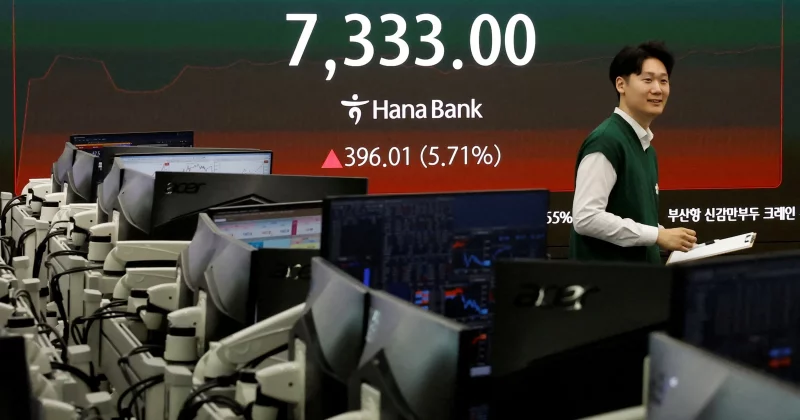
Kim Yong-beom, a top presidential policy advisor, floated the idea of a “citizen’s dividend” funded by taxes on profits from the country’s booming semiconductor sector. The KOSPI index responded by dropping as much as 5.1% intraday, with chipmakers Samsung and SK Hynix leading the selloff. The government scrambled to clarify that the proposal was Kim’s personal opinion, not official policy, and the index clawed back some losses to close down roughly 2-3%.
What the proposal actually said
Kim’s concept wasn’t about imposing brand-new taxes on South Korea’s chip giants. Instead, it centered on redistributing existing tax revenues generated by AI and semiconductor profits into a national dividend for citizens. Think of it as Alaska’s Permanent Fund model, where oil revenues get split among residents, except applied to the profits flowing from South Korea’s semiconductor dominance.
South Korea’s semiconductor exports hit $141 billion in 2025. That’s an enormous wealth engine concentrated in a handful of companies. Kim’s argument, shared with the subtlety of a social media post, was that ordinary citizens should get a cut of the windfall.
The market fallout and government walkback
Semiconductor stocks bore the brunt. Samsung and SK Hynix, which together represent a massive chunk of the KOSPI’s total market capitalization, saw investors rush for the exits. The fear was straightforward: if the government redirects corporate profits into citizen dividends, after-tax earnings shrink, valuations compress, and foreign capital finds somewhere else to park.
The President’s Office moved quickly to contain the damage. Officials clarified that Kim’s post reflected his personal views and did not represent any planned government action. That reassurance helped the KOSPI recover from its lows, though it still closed with a 2-3% loss.
South Korean experts have been vocal about the need for proactive government policies addressing how AI and semiconductor wealth gets distributed. Kim’s post didn’t emerge from a vacuum. It tapped into an ongoing national conversation about economic equity in an era where a handful of tech firms capture outsized gains while wage growth for most workers stays flat.
Disclosure: This article was edited by Editorial Team. For more information on how we create and review content, see our Editorial Policy.