We’re excited to announce expanded coverage for Fluid inside Sentora’s DeFi Risk Radar. This release brings dedicated risk metrics across Fluid’s Vaults, DEX, Lending, and Smart Lending, with indicators tailored to the risk profile of each protocol type.

Why Fluid
Fluid brings multiple DeFi primitives together through a shared liquidity layer, connecting lending, borrowing, and trading in a capital efficient design. Because liquidity and positions can interact across modules, risk can propagate quickly during volatility, shifts in utilization, or liquidity stress. That makes consistent, module aware monitoring especially important for protocols, risk teams, and advanced users.
Fluid’s rapid growth and expanding partner integrations further reinforce the importance of robust risk monitoring. The protocol has scaled across both lending (Top 3 Lending Protocol) and DEX activity (Top 2 DEX on Ethereum).
Strategic alliances with leading DeFi protocols , including Jupiter Exchange through Jupiter Lend, and Venus Protocol through Venus Flux , extend Fluid’s unified liquidity architecture into high-traffic, production-grade environments.
What’s Included in the Fluid Risk Radar
The Fluid Risk Radar organizes indicators by protocol type so you can evaluate both local risk inside a module and system wide conditions that may affect it.
Vault Risk
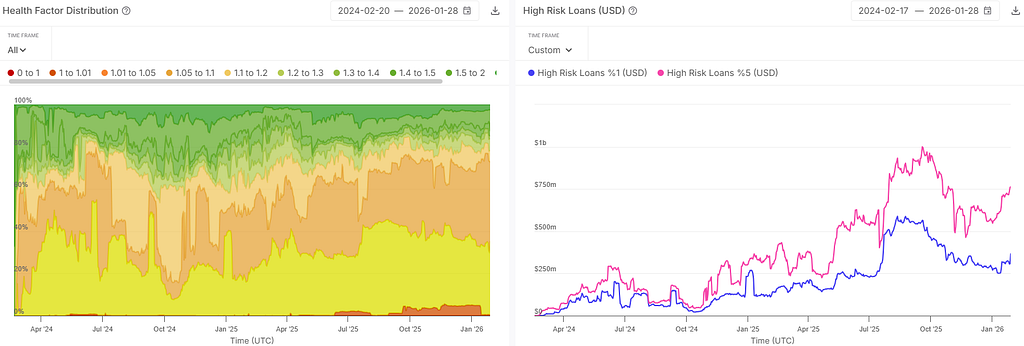
Vault coverage highlights the health of borrower positions and the dynamics that typically precede liquidation cascades. The goal is to help you see where the system is most exposed if collateral prices move or liquidity thins.
Key focus areas include:
- Collateralization and loan health monitoring across top positions
- Open liquidation exposure, borrowing and liquidation activity trends
- Collateral concentration and correlated collateral risk
Lending Risks
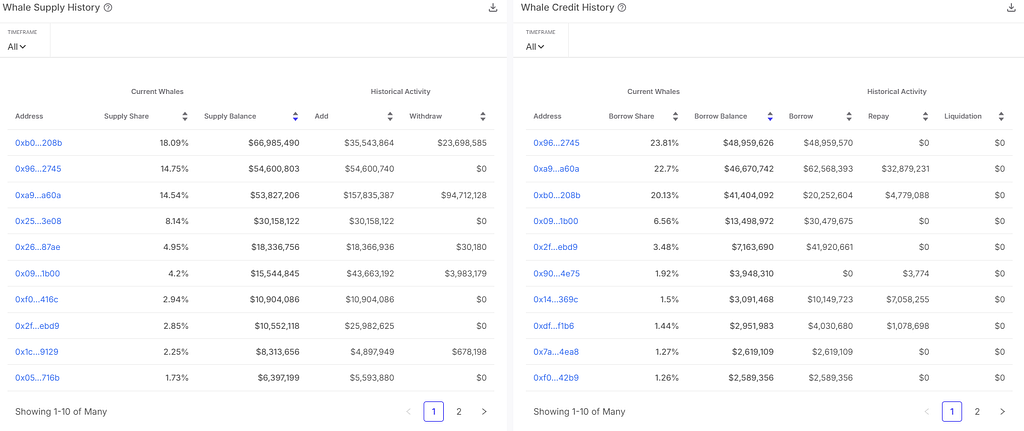
The Risk Radar for Fluid covers a broad range of economic risk indicators for both lending and smart lending. The coverage focuses on supply, and utilization behavior, since sharp changes can signal growing fragility or constrained withdrawability under stress.
Key focus areas include:
- Liquidity flows
- Large depositor concentration and withdrawal signals
DEX Risks
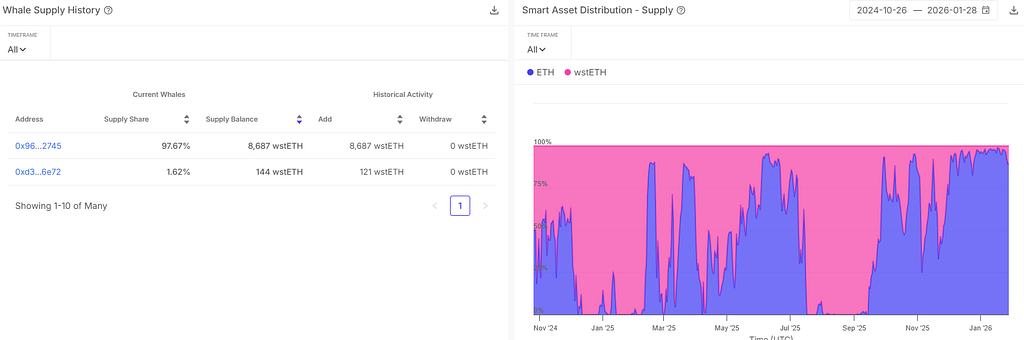
DEX coverage captures pool level liquidity depth, concentration, and conditions that can amplify slippage and volatility. It also surfaces signals related to the interaction between trading activity and collateral or debt mechanics where relevant.
Key focus areas include:
- Pool liquidity depth and smart asset distribution
- DEX liquidity composition and flows
- Trade volume and slippage
Quick Insights with Risk Pulse
Support for Fluid in Risk Pulse is included in this release. Risk Pulse provides a live feed of notable risk conditions such as liquidity cliffs, large collateral shifts, liquidation spikes, and rapid utilization changes, so monitoring is faster and more actionable.
Access Risk Pulse: https://defirisk.sentora.com/pulse
Explore the Fluid Dashboard
These indicators are just a glimpse of what’s available in Sentora’s DeFi Risk Radar for Fluid.
Explore the Fluid dashboard: https://defirisk.sentora.com/metrics/ethereum/fluid
About Sentora
Sentora provides sophisticated risk analytics and institutional DeFi solutions. By combining transparent on chain data with purpose built risk models, Sentora helps users understand complex DeFi dynamics and enables them to evaluate risk reward profiles of DeFi opportunities.
Sentora Expands DeFi Risk Analytics with Fluid Risk Radar was originally published in Sentora on Medium, where people are continuing the conversation by highlighting and responding to this story.