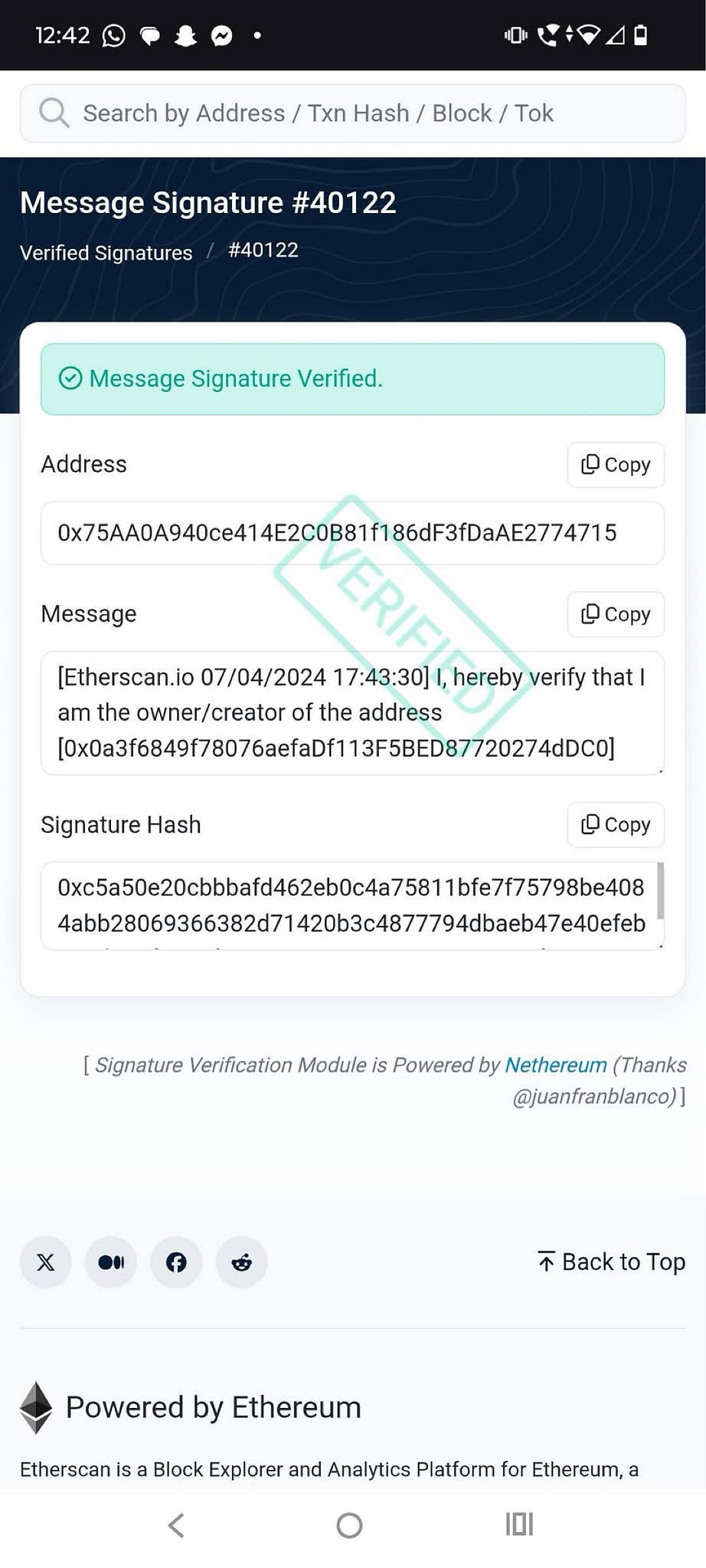
As of late March 2026, Ripple’s dollar-pegged stablecoin had 1.41 billion tokens in circulation, backed by roughly $1.57 billion in reserves — a surplus that points to a stablecoin holding more cash than it owes.
Deloitte Steps In To Verify The Numbers
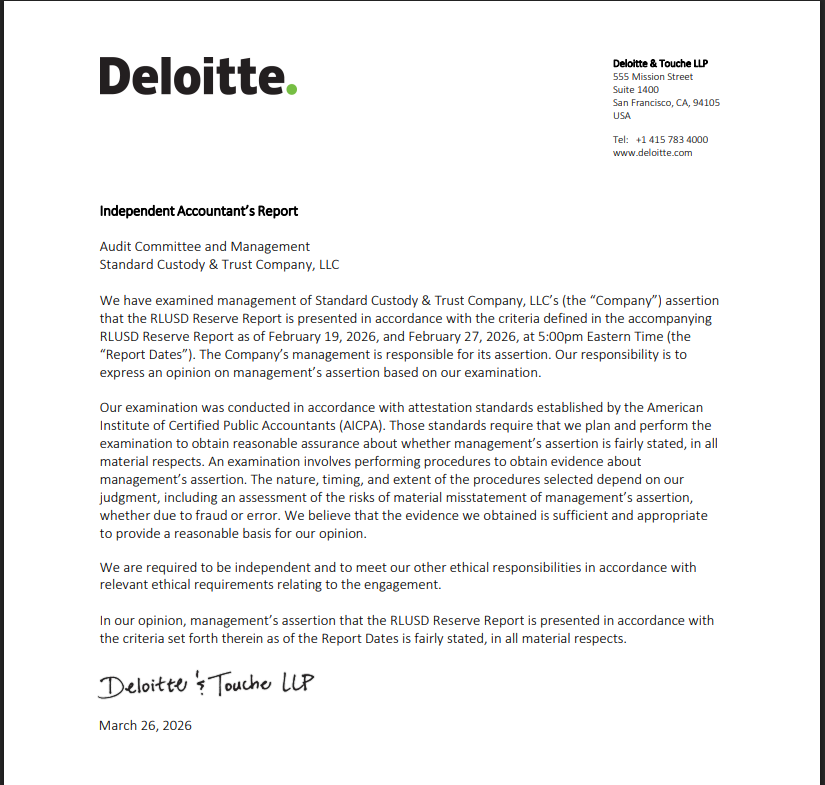
The bigger validation came weeks earlier. On February 27, Deloitte — one of the world’s largest accounting firms — confirmed that RLUSD held $1.568 billion in reserves against 1.49 billion tokens.
The Big 4 firm also checked an earlier snapshot from February 19, when the supply stood at 1.54 billion tokens, backed by $1.60 billion in reserves. Both figures showed the same pattern: more money in reserve than tokens outstanding.
The attestation was not a full audit. It was a point-in-time check confirming that reported figures matched reserve assets on those two specific dates. Still, having Deloitte sign off carries weight, especially for a stablecoin still building its track record.

What The Regulators Require
RLUSD operates under a license from the New York State Department of Financial Services, which sets strict rules on how reserve assets can be held. Issuers must keep funds in segregated accounts and limit their holdings to low-risk instruments.
Eligible options include short-term US Treasuries, overnight reverse repurchase agreements, insured bank deposits, and approved money-market funds. According to Deloitte’s report, RLUSD’s reserve structure meets all of those requirements.
The NYDFS framework is considered one of the tougher regulatory regimes for stablecoins in the US. Passing that standard — and having it verified by an outside firm — gives institutional users a clearer picture of what backs the tokens they hold.
Ripple Follows A Trend Already In MotionRipple is not alone in going this route. Earlier this year, Tether selected KPMG to examine the reserves behind USDT, its own dollar-pegged token, as part of a push into the US market.
Data shows that stablecoin issuers across the board are moving toward third-party verification, driven partly by growing regulatory pressure and in part by competition for trust among large financial institutions.
RLUSD remains far smaller than USDT or USDC by market size. But consistent reserve surpluses and a clean regulatory record are exactly the kind of credentials that tend to attract banks and payment firms looking for a stablecoin they can rely on. The numbers check out — now Ripple needs the market to take notice.
Featured image from Meta, chart from TradingView