 Adeyemi Adekunle3 min read·Just now
--
Project Research: CHAINLINK
Chainlink was created to solve the limitation of smart contracts: their inability to access reliable external data. As blockchains grew, it became clear that most real world applications finance, insurance, and tokenized assets require accurate off chain information. Chainlink introduced a decentralized oracle network that connects smart contracts to external data, APIs, and systems in a secure and verifiable way.
Over time, Chainlink has evolved beyond simple price feeds into a broader infrastructure layer for onchain finance and cross chain communication. Its vision is to become the standard middleware that allows blockchains to interact with real world data and traditional financial systems.
HOW IT WORKS
Chainlink operates as a decentralized network of node operators that supply data, computation, and services to smart contracts. Its most widely used product, Data Feeds, provides high quality price and market data that powers lending, derivatives, and DeFi protocols.
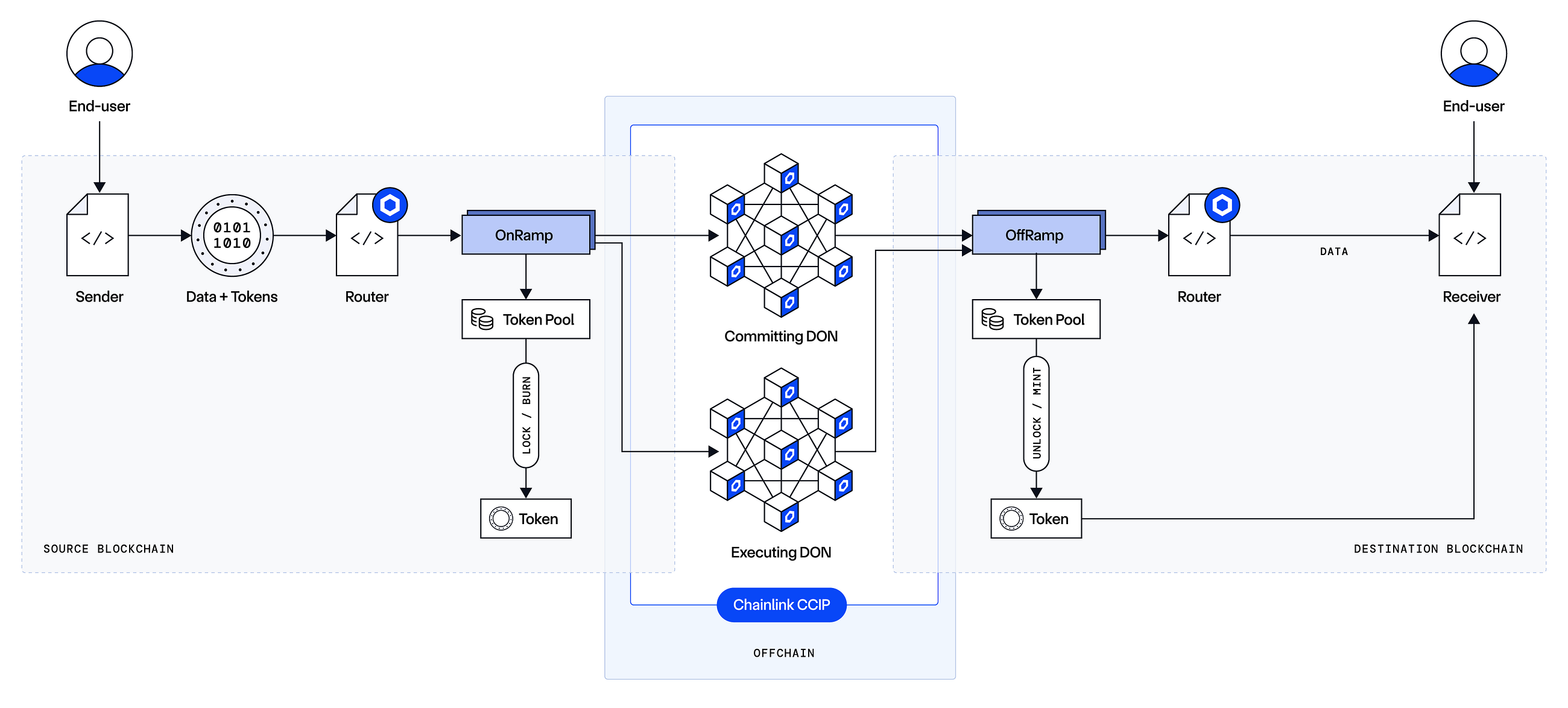
Beyond data, Chainlink has expanded into multiple core services. The Cross Chain Interoperability Protocol (CCIP) enables secure communication and asset transfers across different blockchains, addressing one of the biggest challenges in a multichain ecosystem.
The network also provides Automation, which allows smart contracts to execute actions automatically, and Functions, enabling developers to fetch external data and run off chain computation.
Recent developments show Chainlink moving deeper into institutional infrastructure. The launch of the Chainlink Runtime Environment (CRE) introduces an orchestration layer for building complex, cross chain applications, while tools like Data Streams and DataLink deliver high frequency and institutionalgrade financial data onchain.
Adoption has expanded significantly, with banks, asset managers, and platforms using Chainlink to power tokenized funds, cross chain settlements, and real world asset markets. This positions Chainlink not just as a DeFi tool, but as core infrastructure bridging traditional finance and blockchain systems.
Chainlink has become a critical layer of the crypto stack, often described as the “plumbing” of onchain finance. It enables smart contracts to interact with real world data, communicate across chains, and execute complex logic reliably.
Its evolution from oracle provider to full stack infrastructure covering data, interoperability, automation, and compliance positions it at the center of the growing tokenization and multichain economy. As financial institutions move onchain, the need for trusted data and coordination layers becomes essential.
> If adoption continues at its current pace, Chainlink’s long term role is likely to be that of a standard infrastructure layer for global onchain finance, similar to how core internet protocols underpin today’s web.
Chainlink operates in the oracle and interoperability infrastructure sector, competing with projects like Band Protocol, API3, and Pyth Network, which also provide decentralized data feeds.
It also overlaps with interoperability solutions such as LayerZero and Axelar, which focus on cross chain communication.
Chainlink’s advantage lies in its broad product suite, deep integrations, and institutional adoption, allowing it to go beyond oracles into a full infrastructure layer for data, messaging, and coordination across blockchains.