Order Flow in Trading: The Hidden Language of the Market
--
If you’ve ever looked at a chart and wondered why price suddenly exploded upward, reversed sharply, or stalled at a level that looked random — the answer often lies in something deeper than candles and indicators.
That “something” is order flow.
Most beginner traders focus only on charts. They watch patterns, moving averages, RSI, and support/resistance zones. But professional traders often pay attention to what is happening inside the market in real time — who is buying, who is selling, and how aggressively they are doing it.
That is order flow.
What Is Order Flow?
Order flow is the study of actual buy and sell orders entering the market.
Every move in price happens because of one reason:
- More aggressive buyers are lifting offers
or - More aggressive sellers are hitting bids
Price doesn’t move because of indicators. Indicators simply react to price. Price moves because orders are being executed.
When traders analyze order flow, they try to understand:
- Where big buyers are entering
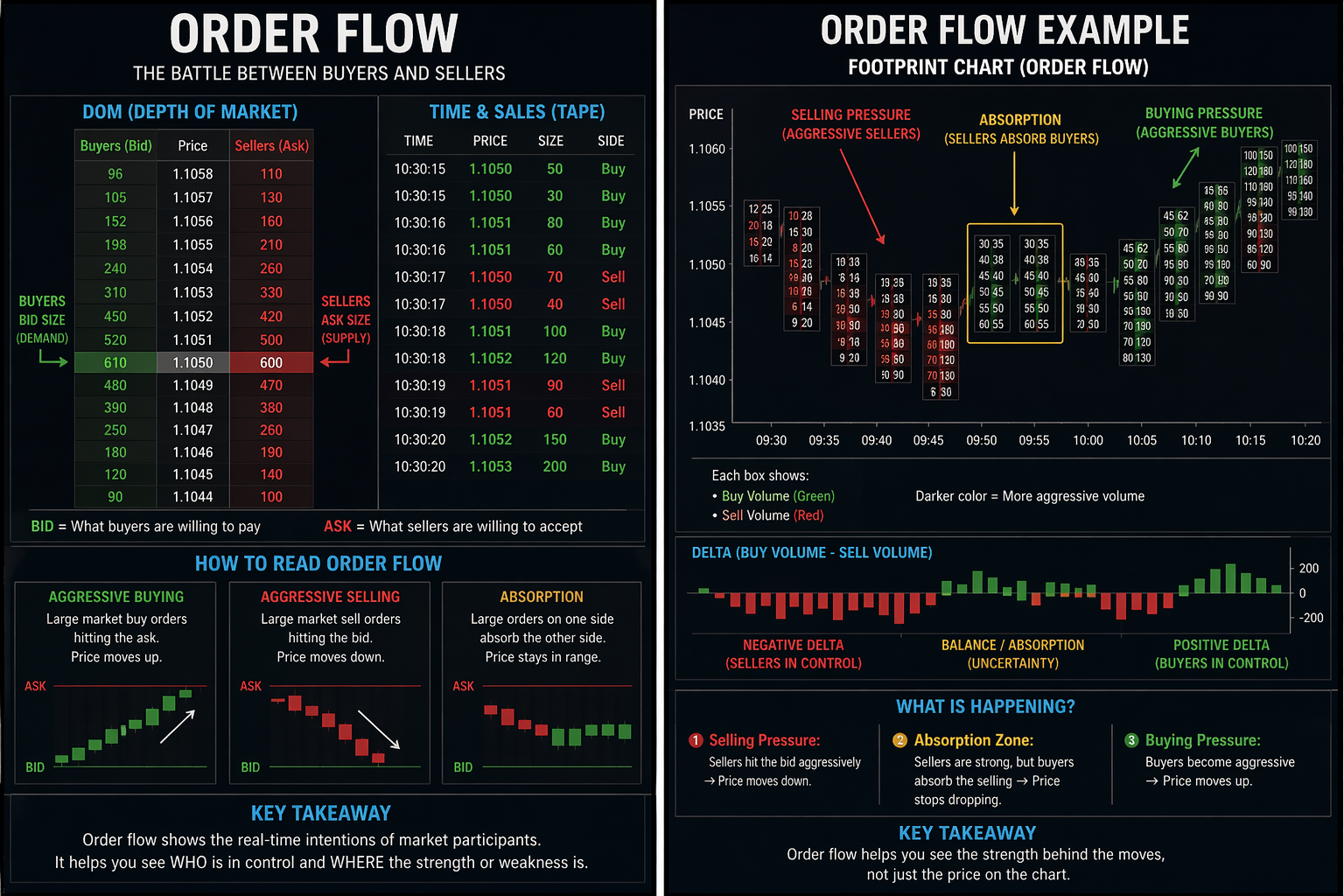
- Where sellers are absorbing demand
- Whether momentum is real or fake
- If a breakout has strength behind it
- Where liquidity is sitting
In simple words:
Order flow helps you see the battle between buyers and sellers.
Why Order Flow Matters
Imagine two charts showing the same breakout above resistance.
On Chart A:
- Volume is strong
- Buyers are aggressive
- Large orders keep hitting the ask
On Chart B:
- Price breaks resistance
- But buyers are weak
- Sellers quickly absorb the move
Both charts look similar from a candle perspective.
But only one breakout is real.
This is why order flow can give traders an edge.
It helps separate real moves from traps.
Key Concepts of Order Flow
1. Bid and Ask
Every market has two prices:
- Bid = highest price buyers want to pay
- Ask = lowest price sellers want to sell at
When buyers become aggressive, they buy at the ask.
When sellers become aggressive, they sell at the bid.
Watching this interaction tells you who is in control.
2. Market Orders vs Limit Orders
Market Orders
These execute instantly.
- Buyer uses market order → price pushes up
- Seller uses market order → price pushes down
Limit Orders
These wait at a price level.
They often create support or resistance.
Large hidden limit orders can absorb moves.
3. Absorption
Absorption happens when aggressive buyers or sellers keep attacking a level, but price refuses to move.
Example:
- Huge buying volume enters
- But price does not rise
This may mean a strong seller is absorbing demand.
Often this can signal reversal.
4. Imbalance
An imbalance happens when one side dominates.
Example:
- Buyers massively outnumber sellers
This often creates fast momentum moves.
How Traders Use Order Flow
Professional traders often use order flow to:
Confirm Breakouts
Instead of blindly buying resistance breakouts, they check if real buyers are participating.
Find Reversals
If sellers are aggressive but price won’t fall, it may indicate hidden buyers.
Time Entries Better
Order flow can help reduce late entries and improve precision.
Avoid Fake Moves
Many retail traders get trapped in weak breakouts. Order flow can expose weakness early.
Common Tools for Order Flow Trading
To study order flow, traders often use:
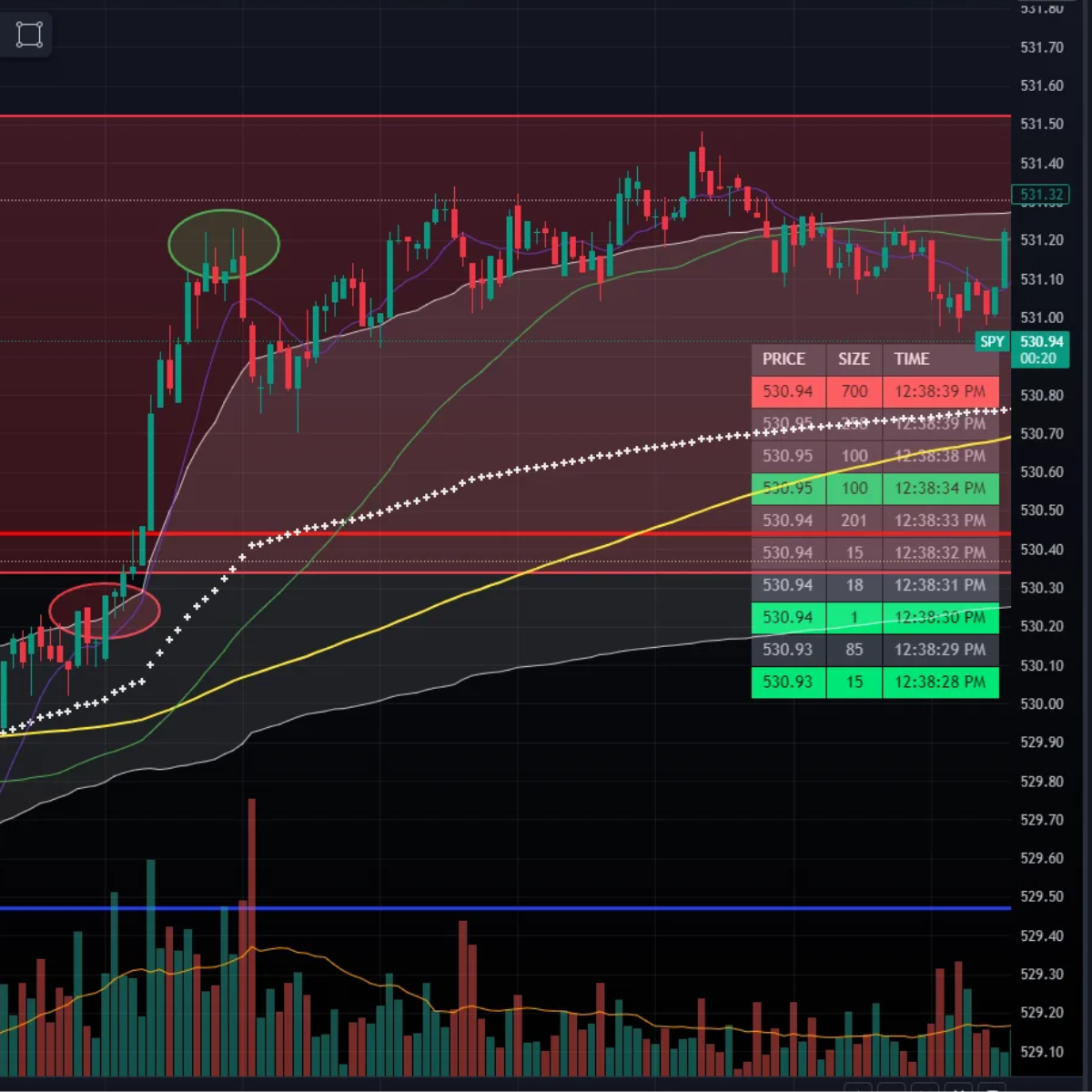
- DOM (Depth of Market)
- Footprint charts
- Time & Sales tape
- Volume profile
- Delta analysis
- Heatmaps
These tools reveal what normal candlestick charts hide.
Is Order Flow Useful for Retail Traders?
Yes — but with realistic expectations.
Order flow is powerful, but it is not magic.
It works best when combined with:
- Good risk management
- Market structure understanding
- Context (trend, news, session timing)
- Discipline
Without these, even the best data won’t save poor decisions.
Order Flow in Different Markets
Futures
One of the best markets for order flow because exchange data is centralized.
Forex
More difficult because spot forex is decentralized, but futures proxies can help.
Stocks
Very useful, especially intraday.
Crypto
Growing popularity because many exchanges provide transparent data.
Final Thoughts
Charts tell you where price has been.
Order flow helps you understand why price is moving now.
That difference can be game-changing.
If you are serious about trading, learning order flow can open a new level of market understanding. You start seeing the market less as candles… and more as a live auction between buyers and sellers.
And once you understand that auction, the market starts making a lot more sense.
Conclusion
Order flow is not about predicting the future with certainty.
It is about reading current intentions.
It is about spotting pressure, weakness, aggression, and hidden liquidity.
In trading, information is edge.
And order flow is one of the purest forms of market information available.
for more intersting stories head over to Radii labs .