Markets move to price in rate hikes as inflation fears and geopolitics reshape Fed expectations
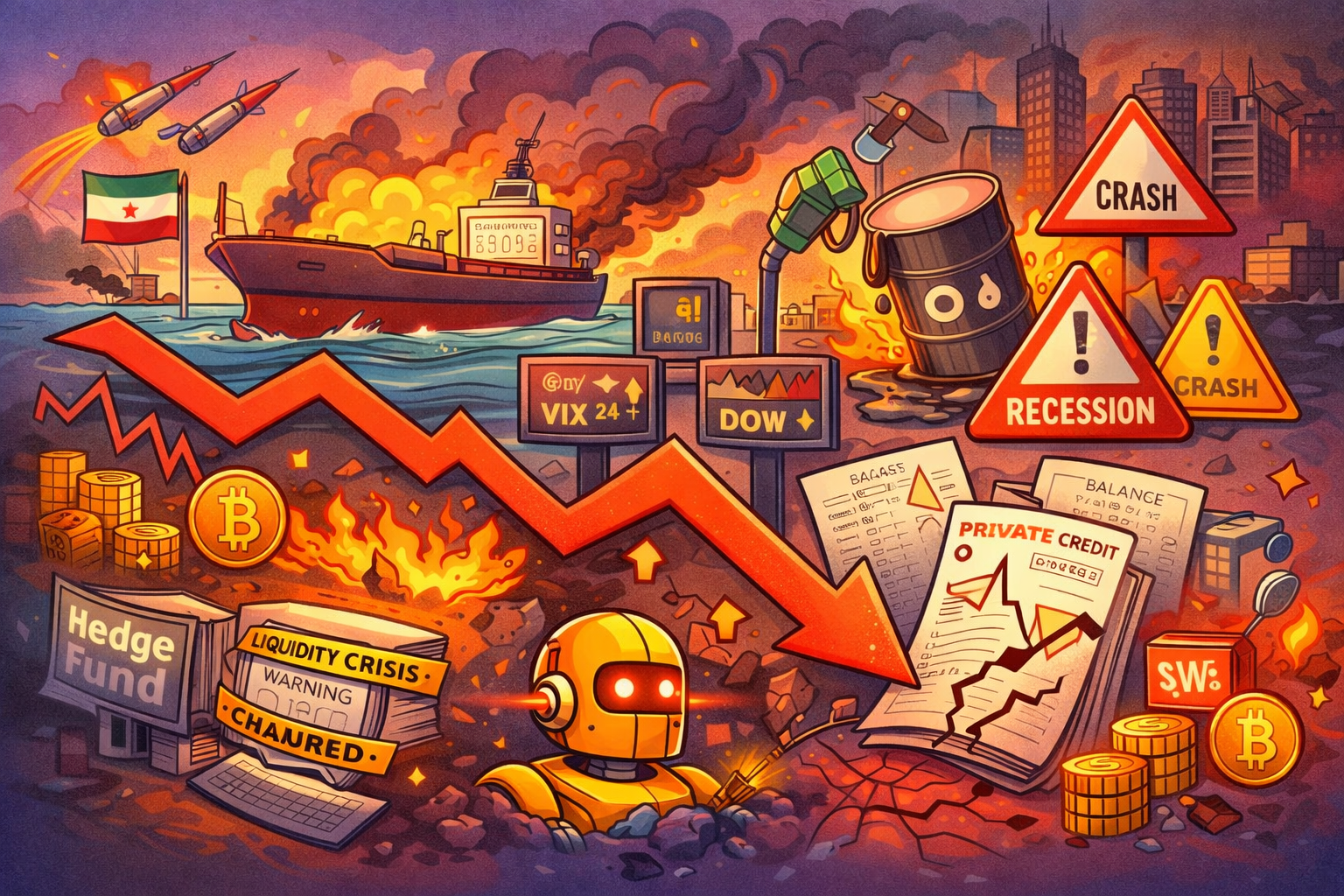
Middle East tensions have driven divergences across asset markets as oil stays elevated and traditional safe havens falter.
By James Van Straten, AI Boost|Edited by Stephen Alpher Mar 29, 2026, 3:46 p.m. Make preferred on
What to know:
- Markets have flipped from pricing in multiple Fed rate cuts to expecting rate hikes thanks to energy-led inflation fears.
- Oil remains elevated, gold has fallen sharply despite its safe-haven status, and U.S. equities have weakened. Bitcoin has outperformed, but only in the very short term.
A "180" hardly does justice to the recent shift in market expectations regarding central bank monetary policy.
Expecting multiple Federal Reserve rate cuts in 2026 just weeks ago, markets have seriously begun to price in rate hikes this year.
Current pricing on CME FedWatch Tool shows nearly a 30% chance that the fed funds rate will be higher to end the year than its current level of 3.50%-3.75%. The odds that rates might go lower, meanwhile, have crashed to 2.9%.
The shift has been driven largely by renewed inflation fears tied to energy markets. Since the escalation of tensions in the Middle East at the end of February, the price of Brent Crude oil has risen from about $70 per barrel to its current level of $111. That's helped send yields at the long end of the Treasury curve sharply higher, the 10-year yield rising to the current 4.40% from below 4% weeks ago.
"Food and energy prices are tragically going to climb and remain high for a while, at least until the utter mess of Middle East shipping is sorted out," according to Crypto is Macro Now Newsletter. "Even if a peace deal were to be agreed tomorrow (unlikely), that would take months at best."
Even prior to oil's gains, inflation was still running well above the Fed's 2% target. Core inflation in February came in at a 2.5% year-over-year pace and has not fallen below that 2% level since April 2021.
Longer-term inflation expectations remain above target as well, with 5-year and 10-year measures at 2.5% and 2.3%, respectively, suggesting markets expect inflation to exceed the Federal Reserve's mandate beyond the immediate term.
"The US economy as a whole will, of course, benefit from higher energy prices as it is a net exporter," Crypto is Macro Now continued. "And military spending will shoot up to replenish hardware, adding further stimulus. Both sectors should help keep GDP from dropping sharply."
Bitcoin outperforms, but there's more to the story
Still holding in the $65,000-$70,000 area, bitcoin BTC$66,483.57, by holding roughly steady, has — on paper — outperformed since the start of the Iran war.
Gold, for instance, is lower by about 20% since the U.S. attacks began, while the Nasdaq on Friday entered correction territory by falling more than 10% from its 2026 highs.
But consider what came prior. Gold at the start of March was in the midst of a historic run higher, its price more than doubling over the preceding year. The Nasdaq, too, was near a record high, up 50% from its April 2025 lows. Bitcoin, meanwhile, was down about 50% from its early October 2025 record.
Taken on anything but the shortest of time frames, bitcoin continues to sizably underperform key assets like stocks and gold.
MarketsFederal Open Market Committee (FOMC)AI Disclaimer: Parts of this article were generated with the assistance from AI tools and reviewed by our editorial team to ensure accuracy and adherence to our standards. For more information, see CoinDesk's full AI Policy.More For You
The Definitive Stablecoin Landscape Series: North America
By CoinDesk ResearchMar 26, 2026 Commissioned byRipple
As stablecoins evolve into core financial infrastructure, North America leads. This report maps the regulation, market shifts, and players driving adoption.
Why it matters:
Stablecoins are entering their third phase of evolution - the institutionalization era - becoming increasingly embedded into core financial infrastructure. As institutions prioritize transparency and compliance, regulated issuers like USDC, RLUSD, and PYUSD are steadily gaining share with RLUSD surpassing $1B in market cap within its first year. North America, leading in regulatory frameworks and institutional distribution, is at the center of it all.
View Full ReportMore For You
XRP tests $1.33 as rising leverage and weak price action create unstable setup
By Shaurya Malwa2 hours ago
Funding spikes and liquidations point to positioning build-up, with direction hinging on whether buyers can defend support.
What to know:
- XRP is hovering around $1.33 as price action drifts lower, with momentum slowing but not yet reversing.
- Rising funding rates and growing leverage show traders are increasingly bullish even as repeated rejections near $1.35 to $1.36 keep sellers in control.
- If $1.33 support breaks, XRP could slide toward $1.30, while...

New Ethereum project aims to fix network fragmentation and improve user experience
1 hour ago
XRP tests $1.33 as rising leverage and weak price action create unstable setup
2 hours ago
Bittensor ecosystem tokens' value hit $1.5 billion as Jensen Huang endorsement supports TAO rally
2 hours ago
Inside Aave’s governance battle as DeFi giant prepares for upgrade
3 hours ago
Crypto needs a reset before the next bull run
21 hours ago
Washington sues Kalshi as states ramp up legal pressure against prediction markets
22 hours agoTop Stories
Bitcoin miners are becoming AI companies and selling their BTC to fund the transition
Mar 28, 2026
Morgan Stanley enters bitcoin ETF race with market-leading low fee
Mar 27, 2026
Crypto stocks battered as Nasdaq enters correction in $17 trillion market rout
Mar 27, 2026
Here's how bitcoin, Ethereum and other networks are preparing for the looming quantum threat
Mar 28, 2026
Canada moves to ban crypto donations for election campaigns following UK
23 hours ago
Here's what next as Anthropic's most powerful AI model leaked via unsecured data cache
Mar 28, 2026In this article
 BTCBTC$66,487.04◢0.62%