Market Insights · Issue 4
The first reversal week. Three consecutive ETF inflow weeks ended in net outflows; MMF assets crossed below the $7.70T structural threshold for a third consecutive week; and the regulatory vacuum on perpetual futures, now approximately one month past Chairman Selig’s commitment, is being filled by private-sector self-certification rather than published rules.
 Bitbase Exchange17 min read·1 hour ago
--
Week of April 27 to May 3, 2026
Bitbase Research · May 4, 2026
Market Insights is Bitbase Research’s short-wave companion to our Deep Dive flagship series. Each edition reviews the most structurally meaningful developments of the preceding week in compliant crypto derivatives and on-chain native infrastructure, mapped against the long-wave framework set out in our flagship reports. This issue marks the first material reversal in our weekly tracking: three theses we have publicly held — the durability of the ETF inflow streak, the ambiguity of the MMF inflection-point signal, and the imminence of CFTC perpetual-futures guidance — have each shifted state in a single week. Our discipline is to record this honestly, with the same data-and-citation discipline we apply to confirmation periods.
1. The one chart that matters
The two panels capture the structural reversal of the week. On the left, the four-week BTC ETF trajectory shows the breakdown clearly: three consecutive weeks of net inflows (+$786M, +$996M, +$823.7M [1][2][3]) gave way to a Mon-Thu net outflow of -$475.87M [4], partially recovered by a +$630M Friday rebound on May 1 [5]. The five-day net (+$154M) is technically positive but represents a sharp deceleration: -81% from the prior week. Critically, the four trading sessions before Friday’s rebound posted three consecutive outflow days — the first such pattern since the late-March bottom. The reversal correlates directly with the April 29 FOMC decision (see Section 2). Cumulative spot Bitcoin ETF AUM ended the week at approximately $100.5 billion as of April 30 [6]; cumulative net inflows since the January 2024 launch reached approximately $58.5–58.6 billion including the Friday print [6]. April’s monthly total of approximately +$1.97 billion was the strongest month of 2026, but the late-month deceleration is the structural fact, not the monthly aggregate.
On the right, the ICI weekly money market fund release dated April 30, 2026 reports total MMF assets at $7.623 trillion for the week ended April 29 — a -$10.98 billion decline from the prior week and a -$233 billion decline from the March 19 peak [7]. Three structural readings follow. First, this is the third consecutive weekly reading below the $7.75 trillion diagnostic threshold we set in Issue 2. Second, all three readings are also below the $7.70 trillion structural confirmation level. Third, the rate of decline has shifted from the initial -$175.8 billion week (Issue 2) to -$5.56 billion (Issue 3) to -$10.98 billion (this issue) — a stabilizing rather than accelerating profile, but stabilizing at a level structurally below both diagnostic thresholds. The Deep Dive 1 Part 1.4 MMF inflection-point signal has now reached what we are willing to call sustained empirical confirmation. The next checkpoint is whether the four-week rolling average — currently approximately $7.629 trillion — remains below $7.70 trillion through the May releases.
2. This week’s structural signal
The structural signal of the week is causal, not incidental. Three observations link in sequence.
First, the April 29 FOMC decision is the macro driver of the ETF reversal. The Federal Open Market Committee held the federal funds rate at 3.50–3.75% in an 8–4 vote [8] — the largest number of dissents since October 1992, and Chair Jerome Powell’s last meeting as Chair (his term ends May 15) [9]. Three of the four dissenters reportedly opposed inclusion of an easing bias in the statement; one, Stephen Miran, wanted a 25-basis-point cut [8]. The unusually fractured vote — combined with Powell’s announcement on April 30 that he will remain on the Board of Governors after his chairmanship ends, the first chair to do so since Marriner Eccles in 1948 [9] — pushed front-end Treasury yields higher and triggered risk-off rebalancing. The BTC ETF outflow pattern (Apr 27 -$263.18M, Apr 28 -$89.68M, Apr 29 -$137.77M [4]) tracks the build-up to and reaction following the FOMC decision with high precision. Bitcoin traded in a $74,973 to ~$79,400 range through the week, failing to break $80,000 for the second consecutive week and remaining below its 200-day moving average ($82,228) for the seventh consecutive month [10].
Second, the ETH ETF channel rotation broke in tandem. ETH ETFs posted -$183.65 million over Mon-Thu (Apr 27 -$50.48M, Apr 28 -$21.80M, Apr 29 -$87.73M, Apr 30 -$23.64M [11]) before flipping to +$101.2 million on May 1 (ETHA +$43.2M, FETH +$49.4M [12]). This ended a three-week ETH ETF inflow streak that had cumulated +$617.91M (the weeks of April 6–10, 13–17, 20–24). At the monthly level, April’s +$356 million for ETH ETFs was the first positive month after a five-month negative streak [13] — the 2026 cumulative position remains -$413M. The simultaneous breakdown of BTC and ETH ETF inflow streaks underscores that the reversal was channel-level, not asset-level: a Fed-driven institutional risk-off across the entire compliant-centralized track.
Third, and most consequentially for our long-wave framework: the regulatory vacuum on U.S. perpetual futures is now being filled by private-sector self-certification, in the absence of published CFTC guidance.
The chart documents an eight-week sequence. CFTC Chairman Mike Selig publicly committed on March 3, 2026 to deliver a perpetual futures framework “in the next month or so” [14]; eight weeks later, no framework, no staff guidance letter, and no rulemaking notice has been published [15]. During the same window, four private-sector actions advanced: BitMEX published its Q1 2026 report documenting $30.7 billion in weekly TradFi-perpetual volume (April 9 [16]); Kraken/Payward announced a $550 million acquisition of Bitnomial — the only U.S. platform offering true perpetuals via self-certification (April 17 [17]); Polymarket opened its perpetual-futures waitlist (April 21 [18]); and Kalshi launched cryptocurrency perpetual futures via CFTC self-certification on April 27 [19]. BitMEX itself added six FX perpetual swap contracts (EURUSD, GBPUSD, AUDUSD, USDCAD, USDJPY, USDCHF, USDCNH) on April 29 — extending the TradFi-perpetual category to a fourth asset class [20]. The Kalshi launch is the structurally meaningful event: it demonstrates that a CFTC-regulated Designated Contract Market can launch perpetual futures via the self-certification pathway without waiting for affirmative guidance from the chairman who promised it. The market is filling the regulatory gap. We do not interpret this as a positive signal for orderly market development; rather, it represents the same structural divergence we documented in Deep Dive 3 Section 4 between five distinct architectural models, now extended to a divergence between regulator commitment and regulator action.
3. Dual-track scoreboard, expanded
The three-cell scoreboard introduced in Issue 3 carries forward, with one honest amendment in the on-chain native cell.
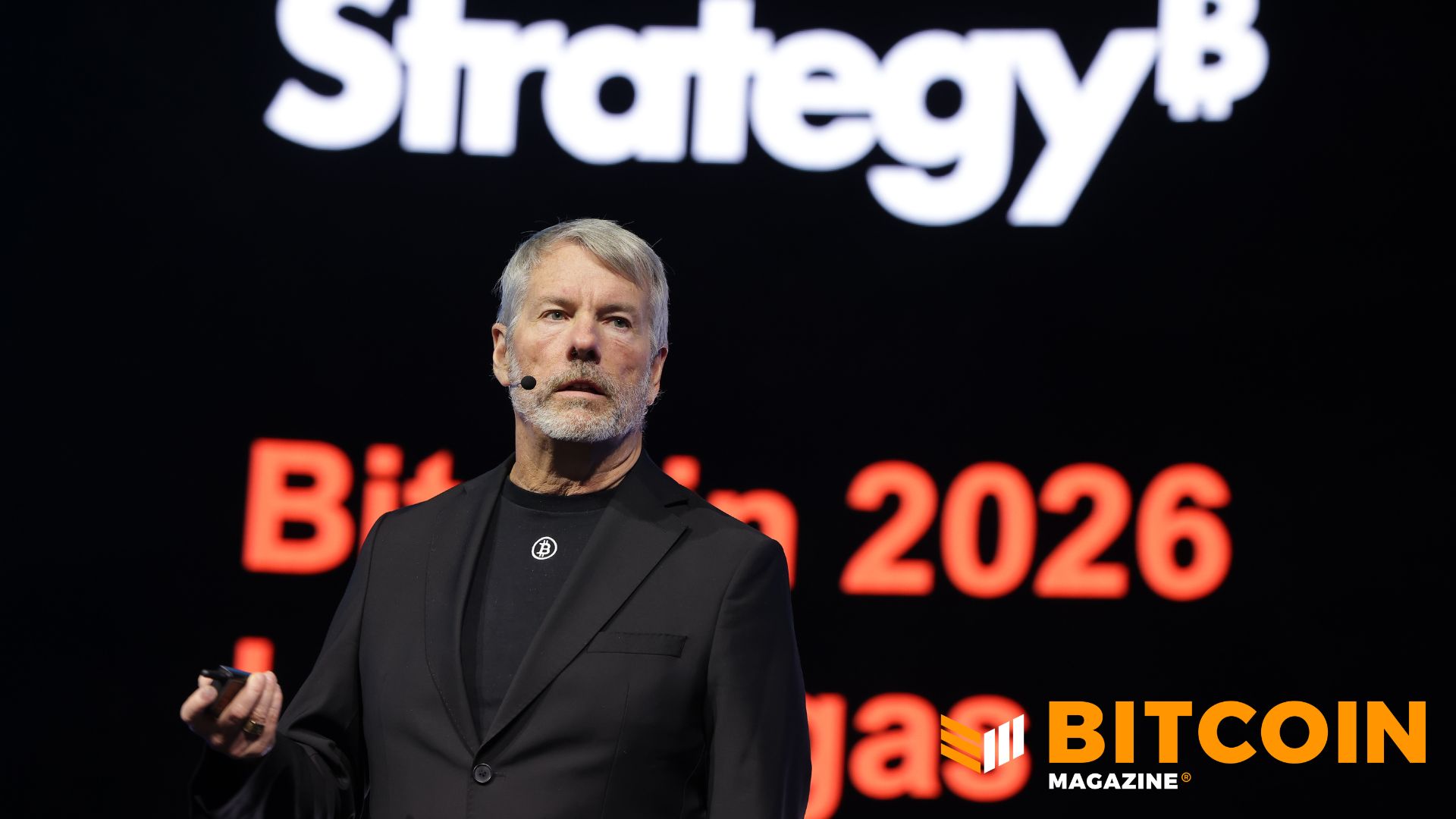
Compliant-centralized track. The +$154 million weekly BTC ETF total (Mon-Fri inclusive [4][5]) and -$82.45 million weekly ETH ETF total [11][12] document the channel-level reversal described in Section 2. Total spot BTC ETF AUM at $100.5 billion places the category in the top tier of all U.S.-listed ETFs by assets [6]. IBIT’s holdings are reported at approximately 809,000–812,000 BTC valued at ~$62 billion, representing 49–62% category share. Strategy purchased 3,273 BTC for $255 million during the week ending April 26 (disclosed in the April 27 8-K) at an average price of $77,906, bringing total holdings to 818,334 BTC at $61.81 billion aggregate cost [21]. The purchase was a notable deceleration from the prior week’s 34,164 BTC for $2.54 billion, and the funding switch back to common-stock issuance (away from the prior week’s preferred-stock-heavy mix) was widely interpreted as a defensive posture [21]. Strategy reports Q1 earnings May 5.
On-chain native track. Hyperliquid’s HIP-3 sub-segment recorded its first cooldown since launch. Aggregate HIP-3 open interest peaked at $2.38 billion in the week ending April 9 and fell to approximately $2.10 billion by April 22 — a -12% retracement over two weeks per The Block dashboards [22]. This is honest documentation of an inflection point: through Issues 2 and 3, the HIP-3 layer had been documented as monotonically rising while broader Perp DEX volume cooled. The April HIP-3 cooldown does not invalidate the broader Deep Dive 1 framework — HIP-3 OI remains approximately 100x its October 2025 activation level — but it does shift the Issue 5 question from “how fast is HIP-3 growing” to “what determines the HIP-3 cycle.” Trade[XYZ] continues to account for >90% of HIP-3 OI; XYZ100-USDC (the licensed S&P 500 perpetual) leads all HIP-3 markets at approximately $213 million in OI; Felix Protocol’s CL-USDC crude oil contract continues to operate in the post-March wind-down profile (~$5.17M OI per Beacon Trade snapshot) [23]. HYPE token continued to outperform; Bitwise’s BHYP HYPE ETF filing added a fee structure (0.67%) and ticker via Amendment №2 on April 10 [24]; Grayscale’s GHYP added Amendment №1 on April 20 [25].
TradFi-perpetual & tokenized-RWA layer. No new independent third-party report covering the April 27–May 3 week was published. The BitMEX Q1 2026 baseline holds: $30.7 billion weekly TradFi perpetual volume, $25 billion weekly commodity perp volume, $4.9 billion weekly equity perp volume [16]. BitMEX’s April 29 launch of six FX perpetual swap contracts opens a fourth asset class to the category — the first time a major TradFi asset class has been added since equity perps in late Q1 [20]. Tokenized U.S. Treasuries crossed both the symbolic $14 billion threshold and reached $15.07 billion by April 29 [26], an extraordinary +$1.5 billion in seven days. Circle’s USYC at approximately $2.9 billion continues to lead BlackRock’s BUIDL at approximately $2.58 billion — the first sustained position rotation at the top of the tokenized Treasury rankings since BUIDL’s March 2024 launch [26]. The tokenized RWA category remains broad-based across Models 1, 3, and 4 in our Deep Dive 3 taxonomy; no architectural model has crossed the 70% concentration threshold.
4. On the radar — week of May 4 to May 10
- NYSE Rule 7.50 comments due May 13. SR-NYSE-2026–17 (filed April 9, immediately effective April 22 [27]) closes its public comment window May 13. Material institutional commentary from Citi, BNY, BlackRock/Securitize, FIA, and prediction-market firms is expected in the days immediately before the deadline. The 60-day SEC suspension window expires June 16, 2026.
- NYSE Texas SR-NYSETEX-2026–13 parallel filing. NYSE Texas filed a parallel tokenized-securities rule on April 29, 2026 — within the period now being closed. The dual-filing strategy broadens the regulatory front and is worth flagging to the Issue 5 narrative.
- Strategy Q1 earnings May 5. First test of how the Mar/Apr deceleration in BTC purchases is communicated to the market and whether Q1 BTC Yield (9.6% YTD) tracks the Q1 framework.
- Coinbase Q1 earnings May 7. First read of Coinbase’s perpetual-style futures revenue impact and prediction-markets exposure following the New York AG lawsuit (April 28).
- Fed Chair confirmation timing. Senate Banking advanced Kevin Warsh 13–11 on April 29 [28]. Full Senate vote pencilled for week of May 11; Powell’s term ends May 15.
- CFTC perpetual-futures framework — eight weeks overdue. Continued silence through Q2 close would represent meaningful delay. Staff letter, no-action position, or formal rulemaking — any of these in early-to-mid May would shift the Signal D status; absence would harden it.
- Iran ceasefire durability and Strait of Hormuz. Trump’s April 22 indefinite ceasefire held through this week but the U.S. naval blockade of Iranian ports continues; the Strait of Hormuz remains effectively shut. Brent ended the week near $108–$111/bbl, WTI near $101–$106/bbl [29]. Pentagon briefings to Congress reference up to six months to clear Iranian-laid mines.
5. Signal tracking update
Five Deep Dive 1 signals plus three Deep Dive 3 reverse signals remain under continuous audit. Two signals shift state this issue.
SIGNAL — Deep Dive 1 Part 1: “MMF asset scale inflection point.” STATUS: Sustained confirmation (structural threshold breached). Three consecutive weekly readings below the $7.75 trillion diagnostic threshold ($7.640T, $7.634T, $7.623T) and three consecutive readings below the $7.70 trillion structural confirmation level [7]. Approximate four-week rolling average is now $7.629 trillion, well below $7.70 trillion. The decline rate has stabilized (-$175.8B → -$5.56B → -$10.98B), suggesting the cohort has found a new equilibrium below threshold rather than continuing to free-fall. The Deep Dive 1 Part 1.4 hypothesis, set forward in our Inaugural Edition, is now empirically supported across three independent weekly observations. The next status update will follow the May 7 ICI release.
SIGNAL — Deep Dive 1 Part 6: “Whether CME crypto derivatives OI persistently holds above $30B by 2027.” STATUS: On track. No new CME quarterly data this week. The expansion of the spot ETF complex (BTC, ETH, XRP, SOL all having had recent positive monthly flows) continues to add institutional distribution nodes that did not exist at Deep Dive 1 cutoff. Signal will be evaluated against full-year 2026 and 2027 CME data when published.
SIGNAL — Deep Dive 1 Parts 3 and 6: “Tokenized RWA as common collateral infrastructure.” STATUS: Ahead of trajectory. Tokenized U.S. Treasuries at $15.07 billion as of April 29 [26], crossing the symbolic $14 billion threshold during the week. USYC ($2.9B) sustaining its lead over BUIDL ($2.58B) is the first prolonged top-of-category rotation since BUIDL’s March 2024 launch [26]. Stablecoin total market cap approximately $320–322 billion [30]. The category is functioning materially ahead of the Deep Dive 1 framework’s pace.
SIGNAL — Deep Dive 1 Part 6: “Whether the U.S. CFTC approves more licensed entities to offer perpetual-contract-style products by 2027.” STATUS: Commitment overdue + private-sector self-certifying. Chairman Selig’s March 3 commitment “in the next month or so” [14] is now approximately one month overdue [15]. Critically, on April 27, Kalshi launched cryptocurrency perpetual futures via CFTC self-certification [19] — the second U.S.-domiciled platform to do so after Bitnomial (April 2025). Polymarket opened a perpetual-futures waitlist on April 21 [18]. Kraken’s $550 million acquisition of Bitnomial (April 17 [17]) brings a second self-certified perpetuals platform under unified ownership. The signal direction has shifted: the underlying licensed-entity expansion is occurring via self-certification rather than via the affirmative framework Selig promised. We classify this as evidence that the long-wave forecast in Deep Dive 1 Part 6 is being met, but through a regulatory mechanism the Deep Dive did not anticipate. The CFTC continues to operate with one Senate-confirmed commissioner.
SIGNAL — Deep Dive 1 Part 6: “Whether perpetual DEX annual trading volume holds above $5 trillion in 2026.” STATUS: On track at headline; mixed underneath. March 2026 broader Perp DEX volume of $699 billion annualizes to approximately $8.4 trillion. The HIP-3 cooldown (-12% in two weeks per The Block [22]) is the first inflection in this layer since launch and warrants attention but does not threaten the $5 trillion aggregate threshold. The composition continues to shift toward HIP-3 deployers and away from generalist Perp DEX venues at the margin.
SIGNAL (Deep Dive 3 Reverse Signal A) — Market-share concentration above 70%. STATUS: No model concentration breach. Per BitMEX Q1 2026 attribution, Binance (Model 1) holds 62.7% of TradFi-perpetual weekly volume; Hyperliquid (Model 4) holds 29.7%; BitMEX self, Bitget (Model 2), and others hold the remainder [16]. No single architectural model exceeds 70%. The five-model coexistence thesis from Deep Dive 3 holds. BitMEX’s April 29 FX expansion does not change this attribution.
SIGNAL (Deep Dive 3 Reverse Signal B) — Cross-architecture unified regulatory framework. STATUS: No unified framework published. CFTC perpetual-futures guidance pending (see Signal D1-Part 6 above). ESMA, FCA, MAS, JFSA: no unified statement on USDT-settled vs. CFD vs. licensed-overlay DEX perpetual classification. The Kalshi self-certification pathway (April 27) reinforces the divergence rather than the convergence of architectural treatment. Signal remains in non-confirmation; the five-model regulatory divergence remains the documented state.
SIGNAL (Deep Dive 3 Reverse Signal C) — Model 5 regulatory failure. STATUS: No regulatory failure event. ICE-OKX investment closed March 5, 2026 — no regulatory unwind action; closing of the broader joint venture remains targeted for the latter half of 2026 [31]. NYSE Rule 7.50 entered the SEC 60-day suspension window April 17, comments due May 13, suspension expiry June 16 — we will report status at the 60-day mark [27]. NYSE Texas SR-NYSETEX-2026–13 filed April 29 in parallel. Kraken-Bitnomial $550 million acquisition pending close in H1 2026 [17]. None of the named transactions has been blocked, unwound, or restructured. Signal in non-confirmation.
We will continue tracking each signal against weekly data arrival and publish the first consolidated Signal Tracking report in Q4 2026.
References
[1] 24/7 Wall St., “Bitcoin (BTC) Spot ETFs Pulled $3.7B Over 8 Weeks After 4 Months of Outflows,” April 25, 2026. Weekly inflow trajectory: week ending April 10 +$786M. https://247wallst.com/investing/2026/04/25/bitcoin-btc-spot-etfs-pulled-3-7b-over-8-weeks-after-4-months-of-outflows/
[2] CoinDesk, “Bitcoin ETFs Just Pulled $2 Billion in 8 Days While Short-Term Holders Quietly Started Selling,” April 24, 2026. SoSoValue data: weekly inflows for April 13–17 totaled $996M. https://www.coindesk.com/markets/2026/04/24/bitcoin-etfs-just-pulled-usd2-billion-in-8-days-while-short-term-holders-quietly-started-selling
[3] The Coin Republic, “Bitcoin ETF Weekly Inflows Hit $823M As Investors Book $5.46B Profits,” April 26, 2026. Farside Investors data: weekly net inflows for April 20–24 totaled $823.7M. https://www.thecoinrepublic.com/2026/04/26/bitcoin-etf-weekly-inflows-hit-823m-as-investors-book-5-46b-profits/
[4] The Market Periodical, “Bitcoin ETFs See $138M Outflows as Ethereum ETFs Lose $87.7M,” April 30, 2026. SoSoValue daily flows for April 27–30: -$263.18M / -$89.68M / -$137.77M / +$14.76M. https://themarketperiodical.com/2026/04/30/bitcoin-etfs-see-138m-outflows-as-ethereum-etfs-lose-87-7m/
[5] Coinalertnews, “Bitcoin and Ethereum ETFs See Record Inflows in April 2026,” May 2, 2026. May 1 preliminary +$630M reading. https://coinalertnews.com/news/2026/05/02/bitcoin-ethereum-etf-inflows-april-2026
[6] SoSoValue spot Bitcoin ETF tracker, accessed April 30 and May 1, 2026. Total category AUM $100.53 billion as of April 30; cumulative net inflows since January 2024 launch approximately $58.5–58.6 billion. https://sosovalue.com/assets/etf/us-btc-spot
[7] ICI, “Money Market Fund Assets,” release dated April 30, 2026 (data for week ended April 29). Total assets $7.623 trillion, down $10.98 billion from prior week. https://www.ici.org/research/stats/mmf
[8] CNBC, “Fed interest rate decision April 2026: Fed holds rates steady amid dissent,” April 29, 2026. 8–4 vote held funds rate at 3.50–3.75%; largest number of dissents since October 1992. https://www.cnbc.com/2026/04/29/fed-interest-rate-decision-april-2026.html
[9] Fox Business, “Fed holds rates steady as Powell’s chairmanship winds down: April FOMC,” April 29, 2026; CNBC, “Fed meeting recap: Powell to stay on board,” April 29, 2026. Powell’s term as Chair ends May 15; he will remain on Board of Governors through January 31, 2028. https://www.foxbusiness.com/economy/federal-reserve-interest-rate-decision-april-29-2026
[10] 24/7 Wall St., “Bitcoin (BTC) Price Prediction for May,” May 1, 2026. Weekly low $74,973; high ~$79,400; failed to break $80K resistance for second consecutive week. https://247wallst.com/investing/2026/05/01/bitcoin-btc-price-prediction-for-may/
[11] The Market Periodical, “Bitcoin ETFs See $138M Outflows as Ethereum ETFs Lose $87.7M,” April 30, 2026. ETH ETF daily flows for April 27–30. https://themarketperiodical.com/2026/04/30/bitcoin-etfs-see-138m-outflows-as-ethereum-etfs-lose-87-7m/
[12] Coinfomania, “Wall Street Is Buying Ethereum — Are Retail Investors Late?,” May 2, 2026. May 1 ETH ETF +$101.2M; ETHA +$43.2M, FETH +$49.4M. https://coinfomania.com/ethereum-spot-etfs-101m-inflows-blackrock-etha-may-2026/
[13] Coinalertnews, “Bitcoin and Ethereum ETFs See Record Inflows in April 2026,” May 2, 2026. ETH ETFs +$356M April monthly total — first positive month after five-month negative streak. https://coinalertnews.com/news/2026/05/02/bitcoin-ethereum-etf-inflows-april-2026
[14] CoinDesk, “CFTC Chief Selig to Clear Path for U.S. Perpetual Futures in Coming Weeks,” March 3, 2026. Selig’s “next month or so” commitment at Milken Institute Future of Finance conference. https://www.coindesk.com/policy/2026/03/03/cftc-chief-selig-to-clear-path-for-u-s-perpetual-futures-in-coming-weeks
[15] CFTC press releases and homepage announcements, accessed May 4, 2026. No perpetual-futures framework, staff letter, or rulemaking notice published as of May 1, 2026. https://www.cftc.gov/
[16] BitMEX (Shang Wu), “Q1 2026 Derivatives Report: The TradFi Perpetual Swap Revolution,” April 9, 2026. TradFi perpetual weekly volume from $525.8M to $30.7B (+5,756.8%); commodity perps $25B weekly; equity perps $4.9B weekly; Binance 62.7%, Hyperliquid 29.7% market share. https://www.bitmex.com/blog/2026q1-derivatives-report
[17] Kraken Blog, “Payward to acquire Bitnomial, creating a fully CFTC-licensed derivatives platform,” April 17, 2026. $550 million consideration; closing pending CFTC notices and customary closing conditions in H1 2026. https://blog.kraken.com/news/payward-acquires-bitnomial
[18] Benzinga, “Kalshi, Polymarket Announce Plans To Launch Crypto Perpetual Futures: Report,” April 22, 2026. Polymarket waitlist opened April 21 at polymarket.com/perps. https://www.benzinga.com/markets/prediction-markets/26/04/51953861/kalshi-polymarket-announce-plans-to-launch-crypto-perpetual-futures-report
[19] DEADSPIN, “Kalshi and Polymarket to Launch Perpetual Futures Markets,” April 27, 2026. Kalshi launched cryptocurrency perpetual futures (“Timeless”) via CFTC self-certification on Monday April 27. https://deadspin.com/prediction-markets/legal-news/perpetual-futures-markets-coming-soon-to-kalshi-polymarket/
[20] BitMEX press release, “BitMEX Launches Six FX Perpetual Swap Contracts,” April 29, 2026. Contracts: EURUSD, GBPUSD, AUDUSD, USDCAD, USDJPY, USDCHF, USDCNH. Reported in BitMEX Q1 2026 outlook and confirmed via press release.
[21] CoinDesk, “Strategy (MSTR) adds $255 million more bitcoin to its treasury which now holds 818,334,” April 27, 2026. 3,273 BTC at $77,906 average; SEC 8-K filing dated April 27, 2026. Bloomberg headline: “Strategy Slows Bitcoin Buying, Switches Back to Common Sales.” https://www.coindesk.com/markets/2026/04/27/michael-saylor-s-strategy-buys-3-273-bitcoin-as-it-inches-closer-to-its-1-million-target
[22] The Block, “HIP-3 open interest tops $2 billion as demand for 24/7 tokenized equity exposure surges,” April 2026. HIP-3 OI peaked at $2.38B (week ending Apr 9), fell to ~$2.10B by April 22. https://www.theblock.co/post/397276/hip-3-open-interest-2-billion-demand-24-7-tokenized-equity-exposure
[23] Beacon Trade, “Oil (Felix) (OIL) Perpetuals — Live Data & Analysis.” Felix Protocol CL-USDC contract: ~$5.17M open interest. https://beacontrade.io/coins/flx-oil
[24] Bitcoin News, “Bitwise Hyperliquid ETF Filing Updated — Launch Could Be Near, Analyst Says.” Bitwise BHYP S-1 Amendment №2 filed April 10, 2026: ticker BHYP, 0.67% management fee, 85% staking-rewards pass-through, Anchorage Digital custodian. https://news.bitcoin.com/bitwise-hyperliquid-etf-filing-updated-launch-could-be-near-analyst-says/
[25] SEC EDGAR, Grayscale HYPE ETF (GHYP), Form S-1 Amendment №1, filed April 20, 2026, Filing №333–294493. Coinbase Custody, CoinDesk Benchmark pricing.
[26] Crypto Times, “Circle vs BlackRock: $15B Tokenized Treasury Market Enters New Phase,” May 2, 2026. RWA.xyz data: tokenized U.S. Treasuries reached $15.07 billion by April 29; Circle USYC at $2.9 billion leads BlackRock BUIDL at $2.58 billion. https://www.cryptotimes.io/2026/05/02/circle-vs-blackrock-15b-tokenized-treasury-market-enters-new-phase/
[27] SEC.gov, File No. SR-NYSE-2026–17, Self-Regulatory Organizations notice. Filed April 9, 2026; Federal Register publication April 22, 2026; comments due May 13, 2026; SEC 60-day suspension window expires June 16, 2026. https://www.sec.gov/files/rules/sro/nyse/2026/34-105260.pdf
[28] CNBC, “Fed interest rate decision April 2026: Fed holds rates steady amid dissent,” April 29, 2026. Senate Banking Committee advanced Kevin Warsh 13–11 along party lines. https://www.cnbc.com/2026/04/29/fed-interest-rate-decision-april-2026.html
[29] FX Leaders, “WTI Crude Oil Price Today — May 1, 2026: Trading Near $106 — Hormuz Supply Shock,” May 1, 2026; TRADING ECONOMICS Brent crude oil chart, accessed May 3, 2026. WTI ~$101–106; Brent ~$108–114. https://www.fxleaders.com/news/2026/05/01/wti-crude-oil-price-today-may-1-2026-trading-near-106-hormuz-supply-shock/
[30] TheStreet, “JPMorgan casts doubt on stablecoin market cap growth,” accessed May 1, 2026. Total stablecoin market cap ~$320–322 billion; USDT ~$189B, USDC ~$77B. https://www.thestreet.com/crypto/markets/jpmorgan-casts-doubt-on-stablecoin-market-cap-growth
[31] Bloomberg, “Crypto Exchange OKX Valued at $25 Billion After ICE Strategic Investment,” March 5, 2026. ICE strategic investment in OKX at $25 billion valuation; broader joint venture (NYSE tokenized equities distribution + OKX U.S. futures licensing) targeted for the latter half of 2026. https://www.bloomberg.com/news/articles/2026-03-05/nyse-owner-invests-in-crypto-exchange-at-25-billion-valuation
The next Market Insights issue covers the week of May 4 to May 10, 2026. Market Insights is published by Bitbase Research alongside our Deep Dive flagship series.