Leverage Guide: Gatrix Capital Margin Trading for Informed Traders
 Gatrix Capital11 min read·Just now
--
Leverage represents the single most powerful and most dangerous tool available to CFD traders whose understanding of its mechanics, appropriate calibration, and risk management integration separates the traders who harness its return amplification productively from those who discover its consequences before developing the foundational competency that responsible leverage use demands.
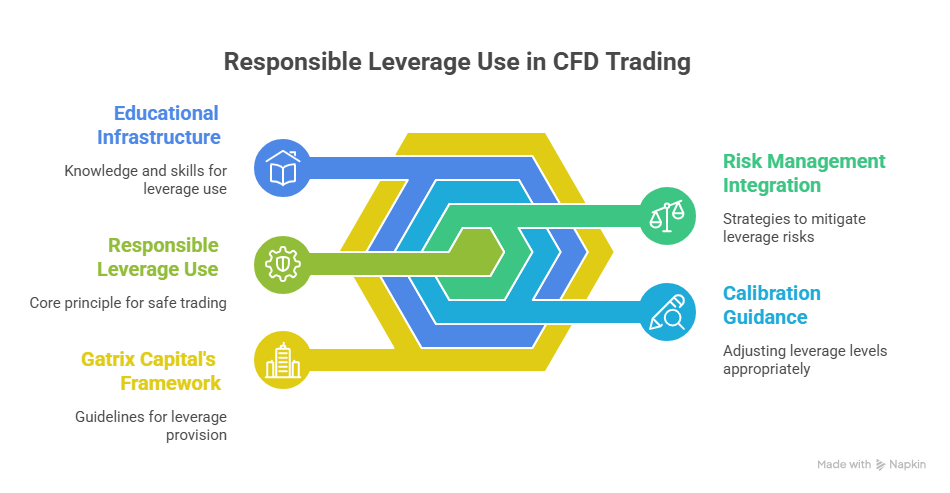
Gatrix Capital approaches margin trading not as a feature whose maximum availability represents a competitive advantage to be promoted but as a sophisticated trading tool whose responsible provision requires the educational infrastructure, risk management integration, and calibration guidance that transforms leverage from a capital destruction mechanism into the strategic performance enhancer that disciplined application creates. Understanding how Gatrix Capital structures its leverage offering, what principles guide responsible margin trading within its framework, and how to integrate leveraged positions into a coherent risk management approach provides the foundational knowledge that every serious Gatrix Capital trader requires before deploying the amplified exposure that margin trading creates.
Understanding Leverage Mechanics on Gatrix Capital
The mechanical foundation of leverage on Gatrix Capital creates the amplified exposure that margin trading provides through a straightforward relationship whose implications for both favorable and adverse outcomes deserve the thorough understanding that selective focus on upside amplification without equivalent attention to downside reality fails to create in traders whose leverage education emphasizes opportunity over risk.
Leverage on Gatrix Capital works by allowing traders to control positions whose total notional value exceeds the margin deposited to support them by the leverage ratio the position employs. A leverage ratio of fifty to one means that two thousand dollars of deposited margin controls a one hundred thousand dollar position, with price movements applied to the full notional value rather than the deposited margin to calculate profit and loss. A one percent favorable price movement generates a one thousand dollar profit on the one hundred thousand dollar position, representing a fifty percent return on the two thousand dollar margin. The identical one percent adverse movement generates a one thousand dollar loss representing the same fifty percent reduction of the margin supporting the position.
Gatrix Capital presents this leverage arithmetic with the complete transparency that both sides of the amplification equation deserve, ensuring that traders who understand leverage’s profit potential understand with equal clarity its loss implications before deploying leveraged exposure whose consequences the one sided presentation of upside potential without equivalent downside emphasis systematically underrepresents. This balanced presentation reflects Gatrix Capital’s understanding that traders whose leverage education is complete rather than selectively positive make better leverage decisions whose outcomes serve both their interests and the platform relationship that their long term trading success creates.
Margin requirements on Gatrix Capital specify the minimum capital that must be maintained in the account to support open leveraged positions, with the margin percentage whose inverse determines the maximum leverage ratio creating the capital requirement that position sizing calculations must account for. Initial margin requirements that govern position entry and maintenance margin requirements that govern position continuation create the two threshold system whose understanding prevents the margin call surprises that traders who monitor only entry requirements without awareness of maintenance thresholds encounter when adverse price movements reduce account equity below the maintenance level that forces position closure.
Margin Call Mechanics on Gatrix Capital
The margin call represents the risk management mechanism through which Gatrix Capital protects the integrity of the trading system when adverse price movements reduce account equity below the minimum levels that continuing to support open leveraged positions requires. Understanding how margin calls work, what triggers them, and how to manage positions to prevent their occurrence creates the operational awareness that informed margin trading demands.
Margin call triggers on Gatrix Capital occur when the relationship between account equity and the margin required to support open positions falls below the maintenance margin threshold that the platform’s risk management parameters define. Account equity that declines through adverse price movements toward this threshold creates the margin call warning that Gatrix Capital’s monitoring systems generate in advance of the actual threshold breach, providing the early warning that allows proactive position management before forced closure at potentially adverse prices that the margin call execution implements.
The forced position closure that margin calls on Gatrix Capital trigger when account equity reaches the stop out level represents the platform’s protection against the negative account balances that leveraged positions without automatic closure could create when adverse price movements exceed deposited capital. This protection mechanism serves trader interests by limiting losses to deposited capital rather than allowing the theoretical unlimited loss potential that leveraged short positions carry to exceed the account balance that the trader has committed to the trading relationship.
Margin call prevention through Gatrix Capital requires the combination of adequate account funding, appropriate position sizing relative to available capital, and continuous monitoring of the margin level that open positions create. Maintaining the buffer between current account equity and margin call thresholds that normal market volatility can reduce without triggering the forced closure that threshold breaches create represents the operational discipline that responsible margin trading on Gatrix Capital demands as a continuous position management priority rather than an occasional consideration.
Gatrix Capital Leverage Across Asset Classes
Gatrix Capital applies differentiated leverage parameters across the asset classes whose distinct volatility profiles, liquidity characteristics, and price behavior create fundamentally different risk environments for identical leverage ratios. This differentiation reflects the genuine risk differences that apply uniform maximum leverage regardless of asset class ignores, creating the calibrated approach that responsible leverage provision requires rather than the undifferentiated maximum availability that ignores risk profile variation across the instruments it applies to.
Forex leverage on Gatrix Capital reflects the relative stability and deep liquidity that major currency pairs provide compared to other asset classes whose volatility characteristics justify more conservative leverage parameters. The major forex pairs including EURUSD, GBPUSD, and USDJPY whose daily volatility ranges and deep liquidity create the most manageable leverage environment in the Gatrix Capital offering support higher leverage ratios than the more volatile instruments whose risk profiles justify greater conservatism. Gatrix Capital’s forex leverage guidance develops the currency pair specific calibration that accounts for the meaningful volatility differences between major, minor, and exotic pairs that uniform forex leverage application ignores at the cost of the risk management precision that differentiated calibration provides.
Equity index leverage on Gatrix Capital reflects the moderate volatility and deep liquidity that major global indices provide, with the intraday volatility ranges and overnight gap risk characteristics that indices exhibit during different market condition types informing the leverage calibration that Gatrix Capital’s index trading framework develops. The elevated volatility that major economic releases, central bank decisions, and geopolitical developments create in equity indices justifies the leverage conservatism during high impact event periods that Gatrix Capital’s event aware risk management guidance addresses as a systematic position management consideration.
Commodity leverage on Gatrix Capital reflects the distinct volatility characteristics that energy, precious metals, and agricultural commodities exhibit relative to financial asset classes whose price behavior differs from the supply demand, weather, and geopolitical factors that drive commodity price movements. The volatility spikes that unexpected supply disruptions, weather events, and geopolitical developments create in commodity markets justify the leverage conservatism that Gatrix Capital’s commodity leverage framework applies to positions whose exposure to these binary outcome risk factors creates loss potential that leveraged commodity positions can realize rapidly when the relevant risk events materialize.
Cryptocurrency leverage on Gatrix Capital reflects the structurally higher volatility that digital asset markets exhibit compared to all other asset classes whose price behavior creates more manageable leverage risk profiles. Daily price movements that represent extreme outlier events in equity and forex markets occur with regularity in cryptocurrency markets whose volatility characteristics transform leverage ratios that create manageable risk in traditional financial markets into the liquidation risks that inappropriate crypto leverage creates during the normal volatility events that digital asset markets generate without the exceptional circumstances that equivalent traditional asset movements would require.
Position Sizing Within Gatrix Capital Leverage Framework
Position sizing represents the leverage management dimension whose decisions determine whether the amplified exposure that margin trading creates operates within the risk management parameters that sustainable trading demands or creates the excessive exposure that transforms leverage from a performance enhancing tool into the capital destruction mechanism that undisciplined position sizing produces. Gatrix Capital’s position sizing framework provides the methodology and tools that responsible leveraged position construction requires.
The risk percentage approach to position sizing within Gatrix Capital’s leverage framework begins with the maximum acceptable loss on each trade expressed as a percentage of total trading capital, establishing the risk budget that position sizing must respect regardless of the leverage available to exceed it. Defining acceptable risk per trade as one to two percent of total capital creates the statistical foundation that prevents the large individual losses that higher risk percentages create from producing the severe drawdowns that recovery requires the outsized subsequent gains that consistent execution rarely produces.
Stop distance integration within Gatrix Capital’s position sizing calculation determines the position size whose maximum loss at the analytically identified stop level equals the predetermined risk amount that the risk percentage calculation establishes. The calculation divides the maximum acceptable loss amount by the stop distance in price terms to determine the position size whose stop execution produces exactly the predetermined loss amount rather than the larger loss that oversized positions create when stops execute at intended levels. This calculation produces the leverage ratio that the sound position sizing logic requires rather than applying maximum available leverage to the full risk budget that leverage availability encourages without the position sizing discipline that Gatrix Capital’s framework provides.
Capital allocation across multiple Gatrix Capital positions requires the portfolio level discipline that prevents the aggregate risk of simultaneously open positions from exceeding the total portfolio risk budget that sustainable drawdown management demands. Limiting total open position risk to a defined percentage of trading capital creates the portfolio level risk ceiling that prevents the correlated loss scenarios where multiple simultaneously adverse positions create combined losses that exceed the individual position risk that per trade limits are designed to control.
Strategic Leverage Application on Gatrix Capital
Gatrix Capital develops strategic approaches to leverage application that exploit the return amplification that margin trading provides while maintaining the risk management integrity that sustainable leveraged trading requires. These strategic frameworks treat leverage as a precision instrument whose calibration reflects specific strategy characteristics rather than a uniform amplifier to maximize across all trading activity.
Momentum strategy leverage on Gatrix Capital exploits the amplification that leverage provides for the directional moves that momentum strategies position for, with the strong directional conviction that genuine momentum signals create justifying the leverage application that amplifying returns from high probability directional moves produces. Gatrix Capital’s momentum leverage framework calibrates the leverage ratios that momentum strategies employ according to the signal quality, market conditions, and volatility context that determine the risk adjusted return potential that momentum positioning creates in specific market environments.
Breakout strategy leverage on Gatrix Capital positions for the directional resolution of consolidation phases whose accumulated pressure creates the explosive moves that leveraged breakout exposure amplifies most effectively. The tight stop placement that breakout strategies employ relative to the potential move magnitude creates the favorable risk reward profiles that justify the leverage application that amplifying breakout returns produces without the disproportionate risk that excessive leverage creates when breakout failures trigger stop execution at the tight levels that breakout risk management defines.
Carry strategy leverage on Gatrix Capital exploits the interest rate differential returns that currency carry positions generate through the overnight financing receipts that favorable rate differential positioning creates, with leverage amplifying the modest per period returns that interest rate differentials produce into the meaningful return profiles that justify carry strategy deployment. Gatrix Capital’s carry leverage framework develops the specific calibration that balances carry return amplification against the exchange rate risk that leveraged carry positions create during the volatility events whose directional impact can rapidly eliminate the accumulated carry returns that patient positioning has built.
Developing Leverage Competency Progressively on Gatrix Capital
Gatrix Capital structures leverage competency development as a deliberate progression whose pace reflects genuine skill acquisition rather than arbitrary time passage or trade count accumulation. This progression recognizes that the competencies required for effective leverage management at progressively higher ratios are qualitatively different rather than simply quantitatively greater, requiring specific skill development at each level before the next level’s demands can be met with the consistency that responsible leverage escalation requires.
Beginning Gatrix Capital traders develop leverage competency through exposure to minimal leverage ratios that create genuine market experience without the disproportionate consequences that higher leverage creates during the inevitable learning phase whose cost minimal leverage limits to levels that preserve the capital required for continued development. The experience that minimal leverage live trading creates in developing the operational reflexes, emotional management competencies, and risk management habits that leveraged trading requires cannot be replicated in simulation environments whose absence of genuine financial consequences fails to develop the specific skills that real money exposure creates.
Progression criteria within Gatrix Capital’s leverage development framework evaluate the demonstrated competencies that justify advancement to higher leverage levels, including consistent stop loss execution without emotional override, disciplined position sizing according to risk percentage rules across varying conviction levels and market conditions, and emotional stability during adverse position development that maintains strategy adherence without the reactive responses that underdeveloped emotional management creates. These objective criteria replace the subjective confidence assessments that traders whose recent success generates overconfidence in their leverage management readiness apply without the demonstrated competency that Gatrix Capital’s progression framework requires.
Risk Management Integration for Gatrix Capital Leverage
The risk management integration that responsible Gatrix Capital leverage trading requires extends across the pre trade planning, active position management, and portfolio level monitoring dimensions that comprehensive leveraged trading risk management encompasses. Gatrix Capital’s risk management infrastructure provides the tools and frameworks that integrating leverage with sound risk management demands across each of these dimensions.
Pre trade risk assessment on Gatrix Capital examines the specific risk characteristics that each potential leveraged position creates before entry commitment, including the stop distance that the identified invalidation level creates, the position size that the risk percentage calculation produces at that stop distance, the leverage ratio that the calculated position size implies, and the margin requirement that the planned position generates relative to available account equity. This pre trade assessment creates the risk visibility that informed position entry decisions require rather than the post entry risk discovery that entering positions without systematic pre trade risk evaluation produces.
Active position monitoring for Gatrix Capital leveraged trades maintains continuous awareness of the developing risk profile that price movement creates relative to entry prices, stop levels, and margin thresholds across all open positions. The dynamic risk environment that leveraged position management creates through the continuously changing relationship between current prices and risk management levels requires the monitoring discipline that Gatrix Capital’s position management tools support through the real time visibility and alert capabilities that continuous risk awareness demands.
Conclusion
Gatrix Capital’s leverage and margin trading framework across mechanical understanding, asset class specific calibration, position sizing methodology, strategic application frameworks, progressive competency development, and comprehensive risk management integration creates the leveraged trading infrastructure that serious traders require to harness margin trading’s return amplification without the capital destruction that undisciplined leverage application produces. Each component of Gatrix Capital’s leverage framework addresses a specific vulnerability whose inadequate management transforms the strategic performance enhancer that disciplined leverage creates into the systematic capital erosion that undisciplined margin trading generates.
No leverage framework eliminates the inherent risk amplification that margin trading creates for all leveraged positions regardless of the analytical quality and risk management discipline their management employs. Gatrix Capital’s leverage infrastructure reduces the probability and potential impact of adverse leveraged trading outcomes without claiming the risk elimination that honest leverage education cannot promise.
Traders whose performance ambitions include the return amplification that disciplined leverage creates will find in Gatrix Capital a margin trading framework whose quality reflects genuine commitment to the responsible leverage provision that trader success and platform integrity simultaneously demand.