Photo: Andrew Harnik
Kevin Warsh wins Senate approval, moves closer to Fed chair role as Powell prepares Friday exit
Warsh’s confirmation clears a key hurdle in Trump’s push to reshape the Fed as Powell prepares to leave the chair role.
Share
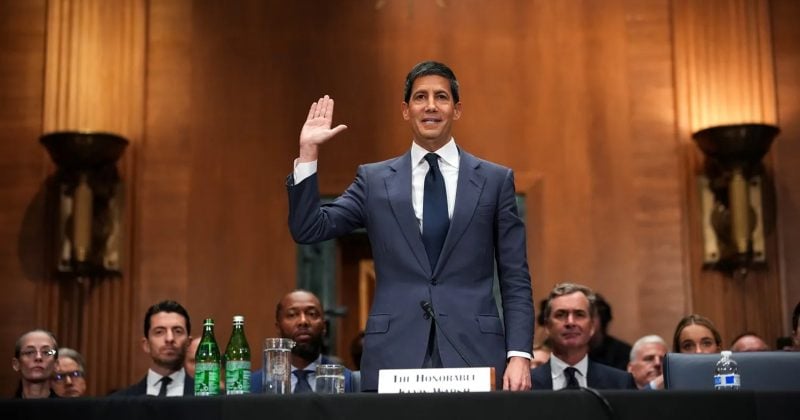
Add us on Google by Estefano Gomez May. 12, 2026Kevin Warsh won Senate confirmation Tuesday to serve a 14 year term on the Federal Reserve Board of Governors, clearing a major step toward becoming the next leader of the US central bank.
The Senate voted 51 to 45 to confirm Warsh as a governor, with a separate vote on his nomination as Fed chair expected later this week.
Warsh is expected to replace Jerome Powell, whose four year term as Fed chair ends Friday. Powell has said he plans to remain on the Fed board after leaving the chair role, an unusual move that comes after legal and political pressure on the central bank. His term as governor runs through January 2028.
The confirmation gives President Donald Trump a clearer path to reshaping the Fed after repeatedly pressing for lower interest rates and criticizing Powell’s refusal to move more aggressively. Warsh has promised to act independently, saying during confirmation hearings that Trump had not asked him to predetermine any rate decision.
Warsh previously served as a Fed governor from 2006 to 2011, including during the global financial crisis. Since leaving the central bank, he has worked as a Hoover Institution fellow and has advised billionaire investor Stanley Druckenmiller. He has been a frequent critic of the Fed’s balance sheet, communication strategy, and regulatory approach.
His return comes at a difficult moment for monetary policy. Reuters reported that Warsh has called for what he described as regime change at the Fed, including closer coordination with the Treasury Department on non monetary policy issues and a smaller balance sheet, which he argues could allow for lower interest rates.
The Fed is also facing a more complicated inflation backdrop. A surge in oil prices tied to the Iran war has pushed inflation pressures higher and reduced investor expectations for rate cuts this year. Financial markets are now pricing roughly a one in three chance of a rate hike by December, while the Fed’s target range stands at 3.50% to 3.75%.
Warsh’s confirmation had been delayed by the criminal probe into Powell’s testimony over the Fed’s headquarters renovation. The Justice Department dropped the investigation last month, clearing a path for Warsh’s nomination to advance, though the lead prosecutor said the probe could be reopened if warranted.
The Fed’s next policy meeting is scheduled for June 16 and 17, and could be the first chaired by Warsh if the Senate confirms him for the leadership post. The chair holds one of 12 votes on the Federal Open Market Committee, but the role carries outsized influence over the central bank’s policy direction, public messaging, and institutional independence.
Disclosure: This article was edited by Estefano Gomez. For more information on how we create and review content, see our Editorial Policy.