Kevin Warsh, Oil, and US Debt: The Four‑Year Cycle Is Not Dead — It Just Has New Drivers
 Farzadmehrdadi5 min read·Just now
--
For over a decade, the crypto market marched to a reliable beat: the four‑year halving cycle. Every 210,000 blocks, Bitcoin’s supply growth is cut in half, historically triggering a bull run, then a correction, then accumulation, then a new all‑time high. That clock has not stopped ticking — but its volume has been turned down.
The 2025 post‑halving year marked the first time Bitcoin recorded a negative return in that phase, shattering the priors of many cycle purists. This has led some to declare the four‑year cycle dead. That conclusion is premature. The halving still matters, but it no longer acts alone. It now operates inside a new macro environment dominated by three powerful forces: a potential pro‑crypto Fed chair, a staggering U.S. debt refinancing, and a geopolitical oil shock from the Iran war.
Understanding how these forces interact with — rather than replace — the halving cycle is the key to navigating the market’s next major move.
Kevin Warsh: The “Crypto Fed” Chair and Cycle Amplifier
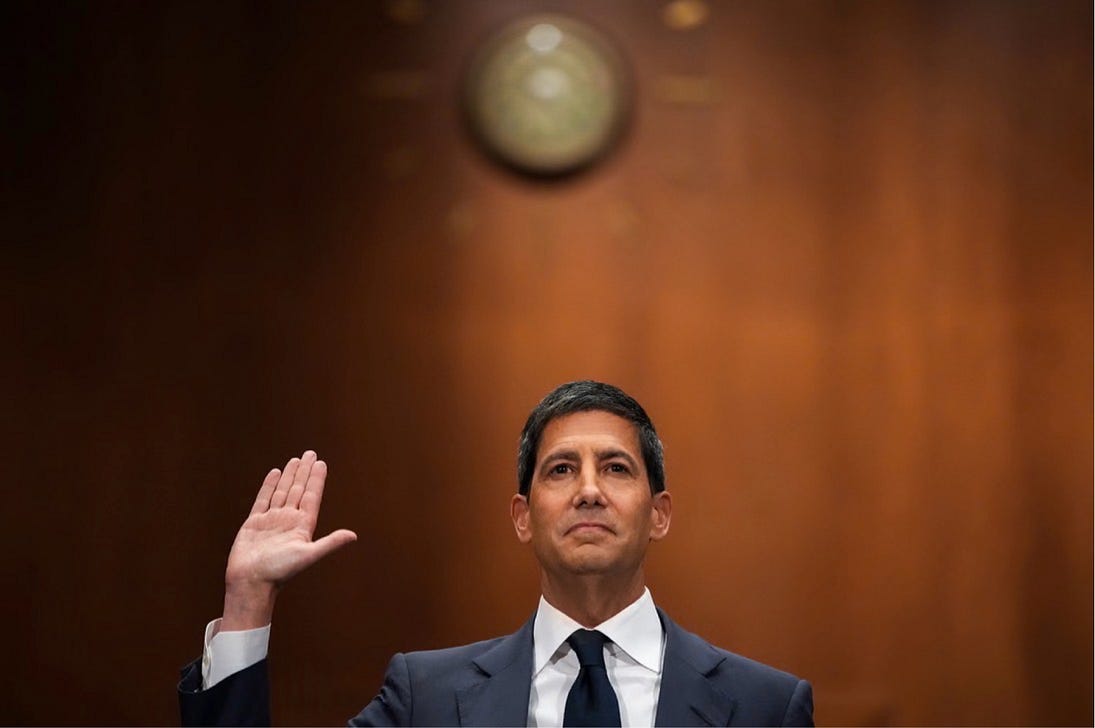
Kevin Warsh, nominated to succeed Jerome Powell as Federal Reserve chair, represents an unprecedented moment. For the first time, a Fed nominee has disclosed a large personal portfolio of crypto and blockchain assets — over 30 positions including Solana, Optimism, Compound, dYdX, and Lightning Network investments. His net worth is at least $192 million.
Warsh has called Bitcoin “the new gold for people under 40” and a legitimate store of value. While his hawkish interest rate comments can cause short‑term dips, his balanced, pro‑innovation regulatory vision has fueled institutional optimism. He has committed to divesting much of his crypto holdings within six months of confirmation.
How this interacts with the four‑year cycle: A Warsh Fed does not break the halving cycle. Instead, it could amplify the upside of the next post‑halving phase (2029 and beyond) by creating a clearer, friendlier regulatory framework. For the current cycle (2025 — 2029), his presence reduces the risk of a hostile crackdown, allowing the supply‑side scarcity from the 2024 halving to play out more cleanly.
The $38 Trillion Question — Liquidity as the Cycle’s Partner
By the end of 2025, U.S. national debt exceeded $38 trillion, with annual interest payments surpassing $1 trillion. The critical catalyst is the $8 trillion in pandemic‑era debt scheduled for rollover in 2026. Refinancing at today’s interest rates is extremely expensive, increasing pressure on the Fed to inject liquidity to prevent market rupture.
The correlation between debt dynamics and Bitcoin has grown strikingly: since 2021, T‑bill issuance correlates with Bitcoin’s price at roughly 80% (eight‑month lag). Every 1% drop in real Treasury yields correlated with an 8.2% average monthly Bitcoin return between 2020 and 2023.
How this interacts with the four‑year cycle: The halving cycle is not broken by debt — it is supercharged or suppressed by liquidity conditions. A debt‑driven Fed pivot to easing could turn the typical post‑halving year (historically strong) into an even larger rally. Conversely, if the Fed stays tight due to inflation, the halving’s supply shock may be muted but not erased. The cycle still exists; its magnitude is amplified or dampened by the liquidity backdrop.
The Iran War and Oil Prices — A Temporary Cycle Disrupter
The outbreak of direct U.S. — Iran conflict in early 2026 introduced a powerful negative force. Correlation analysis shows a strengthening inverse relationship: when oil spikes, Bitcoin tends to fall (correlation reaching -0.65 in some measures).
In June 2025, an earlier flare‑up sent oil from the mid‑$60s to low‑$70s, and Bitcoin dropped from above $105,000 to the mid‑$90,000s. More recently, as conflict escalated, Bitcoin fell from near $77,000 to approximately $75,000 alongside surging crude prices due to Strait of Hormuz risks. Analysts warn that a prolonged war could send oil above $100, revive stagflation, and push Bitcoin toward $40,000 — 50,000.
How this interacts with the four‑year cycle: The halving cycle does not break — it pauses or bends. Geopolitical oil shocks act as temporary override switches. They can delay the typical post‑halving rally by forcing the Fed to keep rates high, but once the conflict resolves or oil stabilizes, the underlying supply scarcity from the halving reasserts itself. The cycle remains intact; its timing can be shifted by quarters, not eliminated.
Why the Four‑Year Cycle Is Not Broken
Several factors explain why the halving still matters:
· Diminishing but real supply shock: With annual Bitcoin issuance now below 1% of total supply, each halving has a smaller marginal impact — but a smaller impact is not zero. Scarcity still accumulates over time.
· Institutional capital doesn’t erase cycles — it smooths them: ETFs, corporate treasuries, and sovereign funds dampen volatility but do not override the supply‑demand math of the halving.
· Historical precedent of external shocks: In 2013, the Cypriot banking crisis; in 2020, COVID‑19. Major events disrupted cycle timing temporarily, but the cycle resumed its pattern. The Iran war is similar.
As Bitfinex analysts note, the four‑year cycle is undergoing a “structural evolution” — not death. The market is now dominated by long‑term macro‑aware capital, but those same players still price in the halving as a fundamental bullish signal.
Two Scenarios for 2026 (Cycle Still Intact)
- Scenario One: Liquidity‑Boosted Rally — The $8 trillion debt refinancing forces Fed easing. Oil stabilizes or drops. The halving’s supply scarcity, delayed by early‑2026 turmoil, expresses itself in a powerful rally starting in Q2 — Q3 2026. The cycle’s post‑halving year arrives late, but it arrives.
- Scenario Two: Geopolitical Delay — The Iran war escalates, oil stays above $100, and the Fed remains tight through 2026. Bitcoin corrects toward $50,000. The halving’s effect is postponed, not cancelled. When the conflict de‑escalates (likely 2027), the supply shock reasserts itself, pushing the cycle’s peak into 2028 — 2029.
These scenarios are not mutually exclusive. The most probable path is a delayed but intact cycle.
Conclusion
The four‑year halving cycle is not broken. It has simply been joined by new, powerful co‑drivers. The old clock still ticks — but now it competes with the deafening noise of U.S. debt auctions, Middle Eastern geopolitics, and the potential Fed chair who called Bitcoin “the new gold for people under 40.”
For crypto investors, the adjustment is not abandoning the cycle. It is learning to read multiple instruments at once: watch the halving countdown, but also watch Treasury issuance, oil futures, and Kevin Warsh’s testimony. The cycle hasn’t ended. It has been recalculated — and it is still very much alive.