Is Your Payment Gateway Quantum-Ready? Why Post-Quantum Cryptography (PQC) Matters in 2026
 Chloe Johnson4 min read·Just now
--
As we navigate the midpoint of 2026, the global financial landscape is undergoing a silent but monumental shift. The discussion around quantum computing has moved from the laboratory to the boardroom. For years, the fintech industry relied on the assumption that breaking RSA or Elliptic Curve Cryptography (ECC) would take a classical computer billions of years. However, the rapid maturation of quantum processors has forced a reality check: “Q-Day” — the day quantum computers can crack modern encryption — is no longer a distant myth. For payment gateways, the transition to Post-Quantum Cryptography (PQC) is now a matter of immediate operational integrity.
The Looming Threat: Why 2026 is a Turning Point
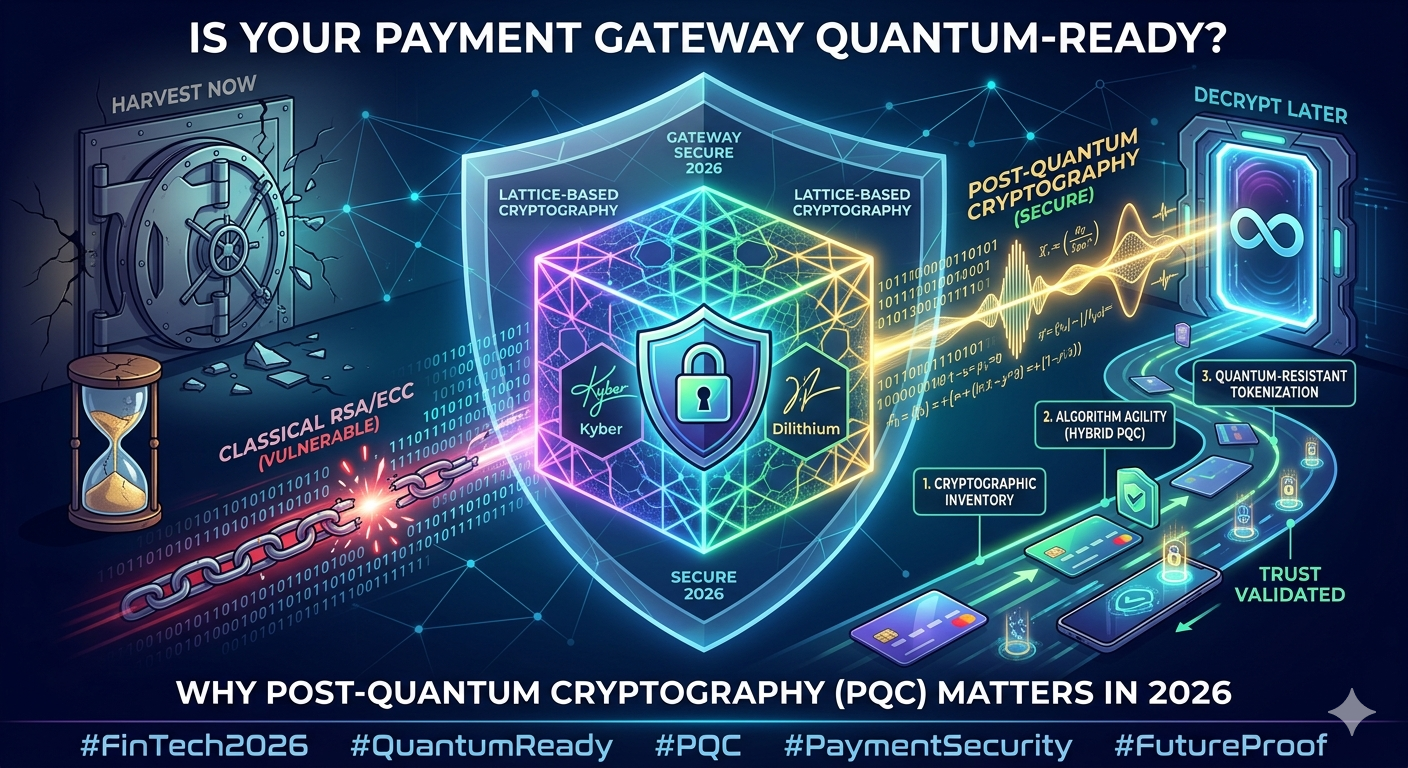
The urgency we feel today stems from a strategy known as “Harvest Now, Decrypt Later.” Sophisticated cyber adversaries have been intercepting and storing encrypted financial data for years, waiting for the moment quantum computing power is sufficient to unlock it. In 2026, as quantum advantage becomes more accessible via cloud-based quantum services, the window to protect that data is closing.
Traditional encryption relies on mathematical problems like integer factorization or discrete logarithms. While these are nearly impossible for classical bits to solve, a quantum computer utilizing Shor’s Algorithm can find these factors with startling efficiency. If a payment gateway is not “Quantum-Ready,” every transaction, merchant record, and stored credential becomes a ticking time bomb of exposure.
The Shift to Lattice-Based Cryptography
To counter the quantum threat, the industry is pivoting toward new mathematical foundations that even a quantum computer cannot easily solve. The most promising of these is Lattice-Based Cryptography.
Instead of factoring large numbers, lattice-based systems involve finding the shortest vector in a high-dimensional grid of points (a lattice). This problem remains “NP-hard,” meaning it is computationally exhausting for both classical and quantum architectures. In 2026, we are seeing the widespread integration of NIST-standardized algorithms such as CRYSTALS-Kyber for general encryption and CRYSTALS-Dilithium for digital signatures. These aren’t just technical upgrades; they are the new “handshakes” of secure global commerce.
Payment Orchestration as a Protective Layer
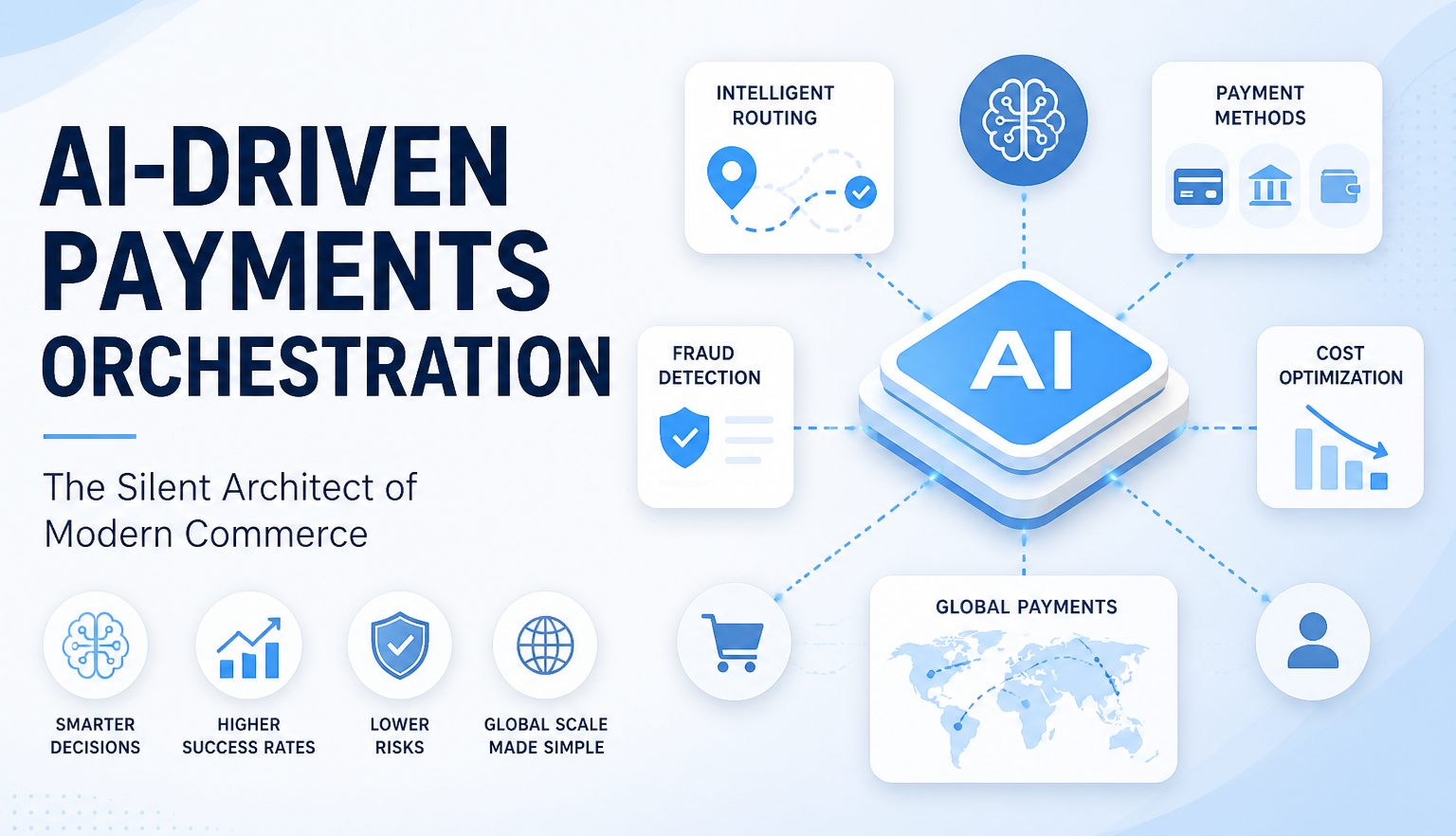
For businesses managing high-risk merchant accounts or complex international flows, Payment Orchestration Platforms (POPs) have become the front line of defense. Because orchestration layers sit between the merchant and multiple acquirers, they can implement “Quantum-Agile” protocols more rapidly than a legacy banking system.
In 2026, advanced orchestrators are using Hybrid Cryptography. This approach wraps transactions in two layers: a traditional classical layer for immediate compatibility and a PQC layer for long-term security. If one layer is compromised, the other remains intact. Furthermore, “Security-Aware Routing” now allows orchestrators to bypass regional processors that haven’t yet updated their hardware security modules (HSMs) to support quantum-resistant standards, ensuring high-value data only travels through the safest pipes.
Compliance and the Regulatory Push
The regulatory environment has caught up with the technology. In 2026, frameworks like PSD3 and evolving ISO 20022 standards are increasingly emphasizing “cryptographic agility.” Regulators are no longer satisfied with static security; they want to see that a firm can swap out algorithms as soon as a vulnerability is discovered.
The GENIUS Act and other international mandates are now requiring critical financial infrastructure to provide a clear roadmap for PQC migration. For fintech companies, being quantum-ready is no longer just a security checkbox — it is a competitive advantage. In a consultative sales environment, being able to prove to a merchant that their data is protected against the threats of the 2030s is the ultimate builder of trust.
Practical Steps for a Quantum-Resistant Future
To remain resilient in this new era, businesses should focus on three key pillars:
- Cryptographic Inventory: Audit every point where sensitive data is encrypted. You cannot protect what you haven’t mapped.
- Algorithm Agility: Ensure your payment providers use APIs that can support multiple encryption standards simultaneously.
- Enhanced Tokenization: Shift away from storing raw data. Use quantum-resistant tokenization to ensure that even if a database is breached, the “tokens” retrieved are mathematically useless to a quantum attacker.
Conclusion: Future-Proofing the Currency of Trust
The transition to Post-Quantum Cryptography is perhaps the most significant security overhaul since the dawn of the internet. It requires a fundamental rethinking of how we protect digital value. In 2026, the goal is clear: we must build systems that are not just secure for today’s challenges, but resilient against the computational power of tomorrow. By investing in PQC now, the fintech industry is ensuring that the “trust” underlying every transaction remains unbreakable, regardless of how many qubits an attacker has.
#FinTech2026 #QuantumSecurity #PQC #CyberSecurity #PaymentGateways #DigitalFinance #LatticeBasedCryptography #FutureOfPayments #PaymentOrchestration #TechTrends