Is Trading Really “Easy Money”? (Truth)
 Kiraruz5 min read·Just now
--
The image is etched in your mind. You’ve seen it on every social media platform. A person sitting on a white sandy beach, their laptop open, sipping a cocktail. The caption suggests they earned a month’s salary in ten minutes. It promises freedom. It promises a life without bosses, commutes, or restrictions. It suggests wealth is simply a matter of pressing the right buttons.
This image is pure fiction. It’s a sophisticated marketing tool.
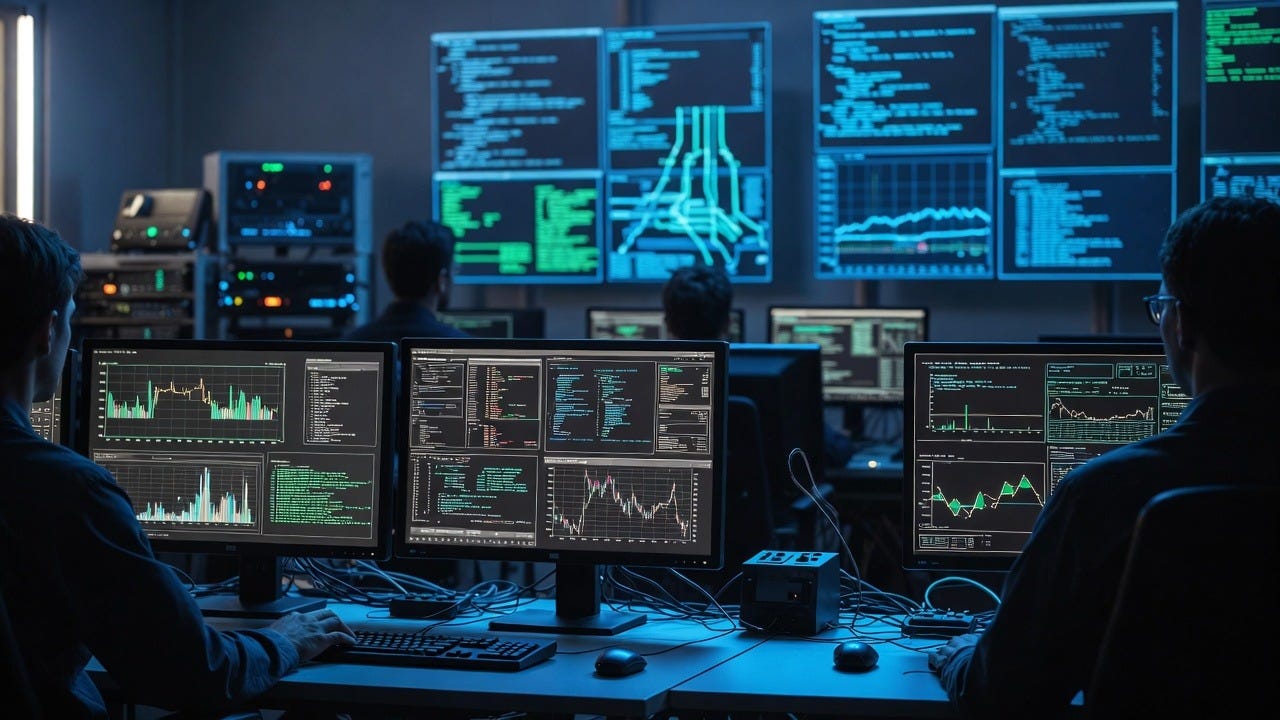
The reality of trading isn’t on a beach. It’s in a quiet, dark room. It’s in the dim light of computer screens. It’s in that cold anxiety that gnaws at your gut when the trading platform moves against you. You’re not fighting for freedom. You’re fighting against the smartest, fastest, and most ruthless algorithms on Earth.
The Hidden Opponent
Most people think they’re trading against other people. They imagine a man in a suit somewhere in the world, sweating and losing money in front of them. This is wrong. You’re trading against machines.
High-frequency trading firms dominate the market. These are banks and hedge funds with supercomputers just meters away from the stock exchange servers. They can access data before you even see a candle move on your screen. They have models that calculate probabilities in fractions of a second. They have no feelings. They don’t have bad days. They don’t get angry or greedy.
But you are a living being. You have hormones. You have bills to pay. You have a social life. You have a fragile ego. When you trade, you are a human being trying to outmaneuver a global network of cold, calculated programs. This isn’t fair competition. It’s a massacre.
The Psychological Cost
Trading isn’t just a financial test. It’s a severe psychological stress test.
Most people are programmed to fail at trading. Our minds seek safety. When we lose, we want to hold on, hoping things will improve. When we win, we want to grab the money and withdraw, afraid of losing the gains. This is basic human survival logic applied to the wrong field.
Winners in this field do the exact opposite. They cut their losses as soon as the hypothesis is proven wrong. They hold onto profits until the data indicates the trend is ending. They have to constantly fight their biological instincts. This drains their mental energy, leaving them exhausted, nervous, and detached from reality.
If you’re looking for easy money, you’re looking in the wrong place. Trading is probably the hardest way to make a living.
Failure Accounts
There’s a concept called “bankruptcy risk.” It may sound theoretical, but it’s the reason most accounts end up with zero.
Individual traders often treat their account balances as “play money.” They take huge positions, chase market fluctuations, and ignore accumulating losses. If you lose half your account, you don’t need a 50% return to make up for it; you need a 100% return.
Most people never recover from one bad month. They bankrupt their accounts, deposit more money, and repeat the cycle. This isn’t trading; it’s gambling with an attractive facade. This is what the trading industry loves. Brokers make money from your trading volume, not your success. Influencers make money from your subscriptions to their expensive “advanced” courses. They want you to believe it’s easy. If you knew the truth, you’d never sign up.
The Strategy Myth: You can buy the best software. You can study every technical indicator. You can watch every expert analyst on YouTube. None of that will save you.
Strategy is the least important part of the process. Anyone can read a chart. Anyone can learn support and resistance levels. These are basic skills. The real work is execution.
A professional trader can use a moderate strategy and make a fortune. An amateur might use a perfect strategy and lose everything. Why? Because the professional manages risk, while the amateur manages their emotions.
When you see someone claiming to have discovered a “secret” system that guarantees profits, run. They’re lying to you to sell you a product. If the system were truly effective and effortless, they would have used it to build a fortune in secret and wouldn’t need your money.
The Reality of Trading
If you still want to trade, you have to treat it like a business.
It requires meticulous record-keeping. You have to write down every single move you make. You have to review your behavior. Why did you enter that trade? Was it because the conditions were perfect, or because you were bored? Did you follow your risk management rules, or did you adjust your stop-loss order because you felt “lucky”?
You have to treat your mistakes as data, not personal flaws. You have to let go of your ego when calculating profits and losses. If you lose, you’re not a failure; you’re just a trader who misjudged the odds. If you win, you’re not a genius; you’re just a trader who misjudged the odds.
This is a brutal profession. You have no one to blame but yourself.f. There is no HR department to complain to when the market moves against you. There is only you, the screen, and the numbers.
The Final Reality
Trading is not a path to quick riches. It is a path to high-stress, low-probability, self-improvement. It will strip away your illusions about yourself. It will show you exactly how greedy, fearful, and undisciplined you are.
If you can survive that, if you can build the discipline to treat the market as a cold, indifferent machine, you might eventually make a profit. But do not expect it to be easy. Do not expect it to be fast.
The market has a way of finding the weakest link in your psychology and attacking it. If you have any holes in your armor, it will find them. If you cannot handle the boredom, the stress, and the constant threat of failure, walk away. There is no shame in realizing that this is not for you. The real shame is in losing your capital while chasing a dream that was never yours to begin with.