
Is Trading Gambling? I Used to Teach English. Here’s How I Actually Think About This. -
 Diva3 min read·Just now
--
I spent years teaching English and selling educational books. Before that, I worked in business
supply, coordinating with companies, sourcing raw materials, and managing sales cycles. I
came to trading from a background that had nothing to do with financial markets, and everything
to do with understanding how processes work and what makes people succeed or fail at things
they set out to do.
So when the question comes up, "Is trading gambling?" I have a specific reaction.
The question itself is the problem.
Why the gambling framing is misleading
Gambling is structurally random. The outcome of a roulette spin or a slot pull cannot be
improved by studying harder, managing your emotions better, or developing a more rigorous
entry strategy. The randomness is the product. You are not a participant in price discovery; you
are a bettor against a fixed house edge.
Trading is not structured that way.
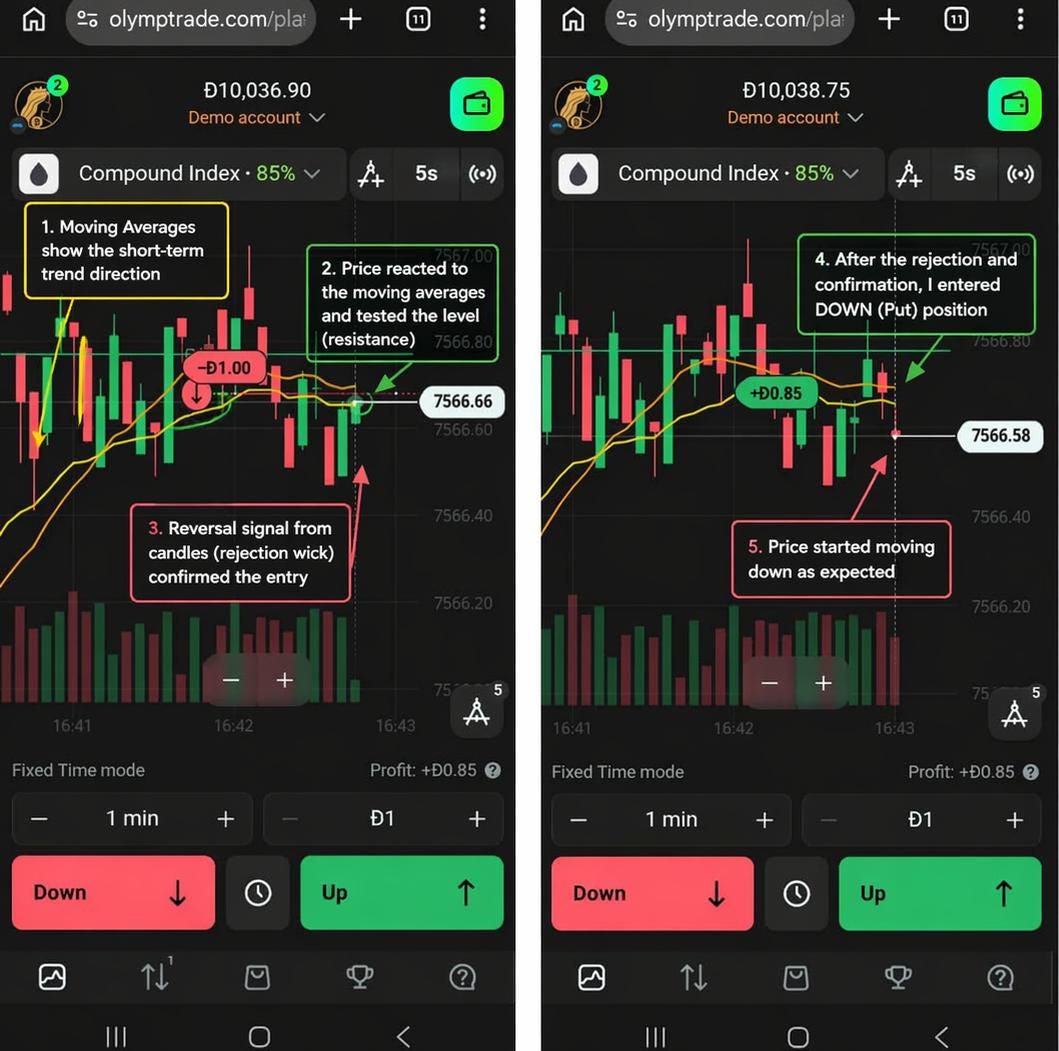
The outcome of a trade is influenced by analysis, timing, risk management, and discipline. Not
guaranteed, nothing in markets is guaranteed, but genuinely influenced by factors within the
trader’s control. That’s a fundamental structural diference. A gambler cannot change their odds
through preparation. A trader can.
This doesn’t mean trading is easy. It means the dificulty is in the right place. The gap between a
consistently losing trader and a consistently improving one is not luck; it’s the quality of their
process.
Where the gambling label actually comes from
Most people who end up calling trading gambling arrived at that conclusion the same way: they
treated it like a click-up-or-down game.They entered positions without proper analysis. They traded on emotion — chasing losses,
oversizing positions when confident, and revenge-trading after drawdowns. They lost money
and concluded either the market was random or the platform was working against them.
The market wasn’t random. The platform wasn’t the problem. The approach was underprepared.
I understand why that experience produces the gambling label. When you don’t know what
you’re doing and the losses feel arbitrary, randomness is the most logical explanation. But it’s
the wrong one. And accepting it closes the door on actually learning what went wrong.
What trading actually requires
I wish someone had told me this clearly before I started: trading is not about clicking buy and
sell and collecting profits. There is a real study involved. Not a one-time course, ongoing,
continuous learning that evolves as markets change and your strategy develops.
Emotional control is non-negotiable. A losing trade is not evidence that something external
failed you. It’s usually a precise signal about where your analysis or risk management needs
work. The traders who improve are the ones who read that signal and adjust. The ones who
don’t improve are the ones who blame the candle, the platform, or the market.
You have to be genuinely prepared for losses. And you should never risk money you cannot
aford to lose, not because the market is against you, but because capital pressure destroys
decision-making.
On Olymptrade specifically
People ask whether the platform is legitimate. My honest answer: it depends more on you than
on the platform.
I have used the account normally. Logged in, operated the platform, and experienced no issues
with access or functionality. The platform worked as it should.
But whether trading on it is a legitimate path for you depends entirely on your mindset, your
discipline, and how seriously you commit to the learning process. A serious trader with a poor
platform will figure it out. An undisciplined trader with a perfect platform will still lose.
The platform is a tool. The real variable is what you bring to it.
What I’d tell someone starting today
Treat it like a professional skill, not a side hustle. Study before you fund. Demo before you go
live. Accept that the first phase is almost entirely about learning, not earning. Build a process
before you build a position.
And stop asking whether trading is gambling. Start asking whether your approach is serious
enough to make a diference.
Trading involves risk. This is not financial advice.