If You Can’t Explain Yield, You Are the Yield
 Mila-arty2 min read·Just now
--
Yield looks simple — that’s the problem
Open any DeFi app.
You see: 12% APY, 25% APY, sometimes even higher
There’s a deposit button. The flow is clear. It feels like a product.
Put assets in → get more assets out.
That simplicity is misleading. Because the number is shown. The mechanics are not.
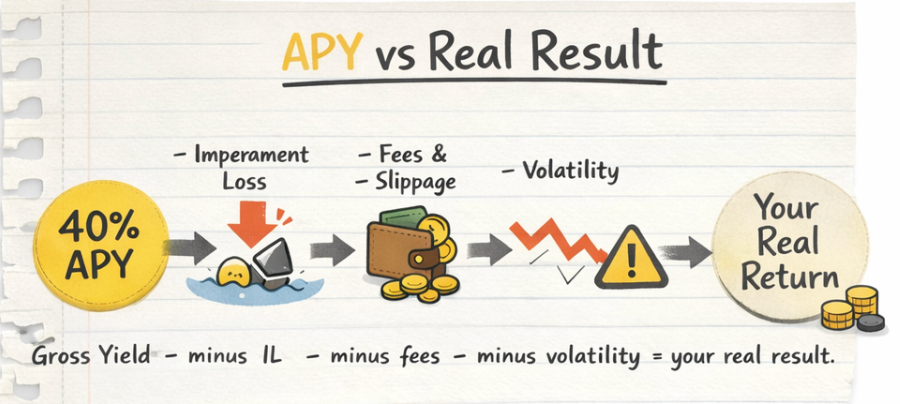
APY is not your real return
The first mistake is taking APY at face value.
That number is usually gross yield, not what you keep.
What eats into it:
- impermanent loss
- rebalancing
- fees and slippage
- volatility
Example
You enter an ETH/USDC pool with ~30% APY.
ETH drops.
Your position shifts toward USDC. You earn fees, but lose on price exposure.
Nothing “broke”. You just saw the full picture too late.
Where does yield actually come from
Before looking at the number, it makes sense to ask:
Who is paying for this yield?
Common sources:
- trading fees
- lending demand
- arbitrage / liquidations
- incentives (token emissions)
They behave differently.
- Fees depend on real usage
- Lending depends on borrowers
- Incentives depend on the protocol
Example
A protocol shows 18% APY.
Breakdown:
- 5% from real activity
- 13% from token rewards
When rewards drop → yield drops.
The system didn’t change. The subsidy did.
Hidden value transfer
This is the part people usually ignore.
If you don’t understand the system, you can end up supporting it instead of benefiting from it.
Example
You provide liquidity in a new pool with high incentives.
What happens under the hood:
- traders use your liquidity
- arbitrageurs rebalance the pool
- price moves against your position
You earn rewards. But you also absorb risk others avoid.
Part of “your yield” is actually compensation for that risk.
From chasing yield → to managing it
The approach is slowly changing.
Less focus on:
- highest APY
More focus on:
- net return
- risk taken
- consistency
Yield stops being a number. It becomes something you manage.
Where vaults fit in
This is where tools like Concrete Vaults come in.
They don’t create “free yield”.
They help with:
- allocation
- rebalancing
- strategy execution
Example
Instead of manually moving funds between pools, a vault adjusts positions based on conditions.
It won’t remove risk. But it reduces:
- missed rebalances
- slow reactions
- manual errors
Yield is not what you see on the dashboard.
It’s what remains after:
- costs
- market moves
- risk
If you can’t explain where it comes from, there’s a good chance you’re the one paying for it.
Learn more here: https://concrete.xyz/
App: https://app.concrete.xyz/