Hyperliquid traders in Tokyo get 200-millisecond edge, Glassnode research shows
Hyperliquid’s validators cluster in AWS Tokyo alongside Binance, BitMEX and KuCoin, giving nearby traders a latency advantage, Glassnode data shows
By Sam Reynolds|Edited by Omkar Godbole Mar 30, 2026, 5:09 a.m. Make preferred on
What to know:
- Hyperliquid’s validator cluster in AWS’s Tokyo region gives traders located in or near Tokyo a latency advantage of roughly 200 milliseconds over U.S. and European participants, improving their queue position and fill quality.
- Major crypto exchanges including Hyperliquid, Binance and KuCoin increasingly concentrate critical infrastructure in AWS’s ap-northeast-1 region, making Tokyo a de facto hub for digital asset trading and heightening dependence on Amazon’s cloud.
- Unlike traditional markets, where venues such as NYSE, Deutsche Börse and IEX use cable equalization and speed bumps to neutralize geographic edge, decentralized finance lacks comparable safeguards, allowing a latency arms race to emerge as institutional capital moves into DeFi.
Hyperliquid is decentralized, but geography still matters, as new research by Glassnode shows traders closer to its infrastructure have a clear speed advantage.
Trades from Tokyo-based users can reach the protocol’s validators in as little as 2 to 3 milliseconds. That’s far better latency than European users, who face delays exceeding 200 milliseconds.
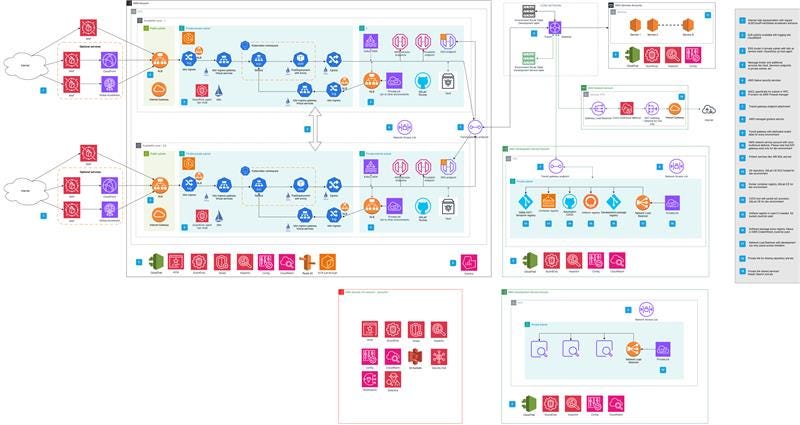
That's because Hyperliquid's 24 validators are clustered in Tokyo, deployed across multiple availability zones in Amazon Web Services' ap-northeast-1 region. The API layer routes through AWS CloudFront, but the validators sit in a single Japanese cloud region.
This shows that while decentralized platforms like Hyperliquid preserve core principles of open access, transparency, and the absence of centralized oversight to remove control asymmetries, speed and execution asymmetries still exist. So, while the market remains structurally fair and permissionless, traders with better proximity to infrastructure can still have an edge, highlighting an inherent tension between decentralization and equal participation in practice.

In a time-ordered system, geography determines queue priority. A trading desk in Tokyo can reach the matching layer hundreds of milliseconds ahead of competitors in Hong Kong, Singapore, or the U.S., securing a better position, tighter spreads, and higher fill probability.
Hyperlatency's order-to-fill measurements put numbers on the gap. From AWS Tokyo, the median round-trip to place and confirm an order is 884 milliseconds, of which roughly 879 milliseconds is server-side processing and just 5 milliseconds is network transit.
From Ashburn, Virginia, the total rises to roughly 1,079 milliseconds. The edge is about 200 milliseconds on a one-second fill, a margin that compounds across an exchange regularly handling more than $4 billion in daily perpetuals volume.
This research, however, isn't without its critics. One person on X pointed out that more complicated order instructions submitted from the Tokyo region can hit a roundtrip latency time of 400ms.
Tokyo's role as crypto's infrastructure capital is not new. Centralized exchanges have clustered deployments around the city's AWS region for years, drawn first by proximity to Asian trading flow and then by a regulatory framework Japan built after the collapse of Mt. Gox.
At Token2049 in Singapore last year, crypto executives described Tokyo as the center of gravity for digital asset infrastructure in Asia.
"Japan had no regulation for a long time, don't forget, that's where crypto basically happened, and then it went super stringent, and nothing happened for a long time," Konstantin Richter, the CEO of Blockdaemon, told CoinDesk during Token2049. "But people kept on chiming away, and now they actually have a regulatory infrastructure that's institutionally scalable and about ready to pop."
Richter said his company's clients in Japan are willing to pay for institutional-grade infrastructure.
BitMEX CEO Stephan Lutz put it more directly. "We were in Ireland before … but it became more and more difficult because basically everyone except the U.S. players are in the Tokyo data centers," he said.
The switch boosted liquidity by roughly 180% in BitMEX's main contracts and up to 400% in some altcoin markets, gains Lutz attributed to the latency reduction from being in Tokyo, not market-maker recruitment.
AWS Tokyo: crypto's Mahwah
Hyperliquid is not unique in this regard. Binance and KuCoin also run significant infrastructure on AWS ap-northeast-1.
An April 2025 AWS outage caused service degradation across multiple platforms, underscoring how much of crypto's plumbing runs through a single cloud region and Amazon itself (data shows that around 36% of all Ethereum nodes are powered by AWS).
In traditional finance, exchanges neutralize this kind of geographic advantage by design.
NYSE uses optical backscatter reflectometry in its Mahwah data center to equalize cable lengths to the nanosecond.
Deutsche Börse normalizes cross-connects to within 2.5 nanoseconds. IEX routes every order through a 350-microsecond speed bump, 38 miles of coiled fiber, to eliminate proximity advantage.
Europe's MiFID II mandates clock synchronization to 100 microseconds and externally audited cable-length equalization. Those safeguards took decades to develop. Nothing equivalent exists in decentralized markets.
For now, crypto traders appear comfortable with that asymmetry. Hyperliquid has seen sustained growth despite its centralized infrastructure concentration. But as processing times compress and institutional capital enters DeFi, the dynamics are clear: speed determines position, and position determines liquidity.
The latency arms race that reshaped Wall Street is arriving in decentralized finance. It runs through Tokyo.
More For You
The Definitive Stablecoin Landscape Series: North America
By CoinDesk ResearchMar 26, 2026 Commissioned byRipple
As stablecoins evolve into core financial infrastructure, North America leads. This report maps the regulation, market shifts, and players driving adoption.
Why it matters:
Stablecoins are entering their third phase of evolution - the institutionalization era - becoming increasingly embedded into core financial infrastructure. As institutions prioritize transparency and compliance, regulated issuers like USDC, RLUSD, and PYUSD are steadily gaining share with RLUSD surpassing $1B in market cap within its first year. North America, leading in regulatory frameworks and institutional distribution, is at the center of it all.
View Full ReportMore For You
Bitcoin recovers to $67,400 after dipping below $65,200 as Houthis enter Iran war
By Shaurya Malwa|Edited by Sam Reynolds33 minutes ago
The conflict's fifth week brought its widest expansion yet, with Iran-backed forces opening a new front and U.S. ground troops arriving in the region.
What to know:
- Bitcoin briefly fell to $65,112, its lowest level since the war-related February crash, before rebounding above $67,000 as Asian markets opened.
- The latest escalation in the conflict, including Houthi involvement, new U.S. troop deployments and Iranian attacks on aluminum facilities, rattled global markets and pushed Brent crude to about $115...

Bitcoin recovers to $67,400 after dipping below $65,200 as Houthis enter Iran war
33 minutes ago
Stablecoin payments go 'invisible' in Southeast Asia as crypto card business surges
11 hours ago
Strategy may have paused bitcoin accumulation last week, ending a thirteen week buying streak
11 hours ago
No one is 100% happy with the stablecoin yield agreement: State of Crypto
12 hours ago
Bitcoin bullish bets hit a 28-month high on Bitfinex, and that's music to bears' ears
12 hours ago
Crypto's CLARITY Act could be a headwind for DeFi tokens ring-fencing yield, analyst says
14 hours agoTop Stories
Bitcoin miners are becoming AI companies and selling their BTC to fund the transition
Mar 28, 2026
Crypto stocks battered as Nasdaq enters correction in $17 trillion market rout
Mar 27, 2026
Canada moves to ban crypto donations for election campaigns following UK
Mar 28, 2026
Bittensor ecosystem tokens' value hit $1.5 billion as Jensen Huang endorsement supports TAO rally
16 hours ago
New Ethereum project aims to fix network fragmentation and improve user experience
15 hours ago