Humanizing Digital Payments: A P2P UX Case Study
 Nathan4 min read·Just now
--
Digital payments have become frictionless, fast, and almost invisible, yet somewhere along the way they also became cold and transactional. In most peer-to-peer payment apps, sending money feels no different than completing a utility bill, even when the intent is deeply human, like splitting dinner with friends or sending support to family. This gap between functionality and emotion is where UX design has an opportunity to step in. Humanizing P2P payments is not about adding decoration, but about restoring context, trust, and meaning to financial interactions.
The Problem with Current P2P Experiences
Most digital payment platforms optimize for speed and efficiency, which is understandable, but they often ignore the emotional layer of money exchange. When users send money, they are not just transferring value, they are communicating intent, gratitude, urgency, or trust. However, the current experience reduces everything to numbers and confirmation screens. This creates a subtle disconnect where users complete tasks efficiently but without emotional clarity or reassurance. According to research on financial behavior, users associate transparency and personalization with higher trust in digital finance products.
Designing for Trust in Fintech — https://www.nngroup.com/articles/trust-in-user-experience/
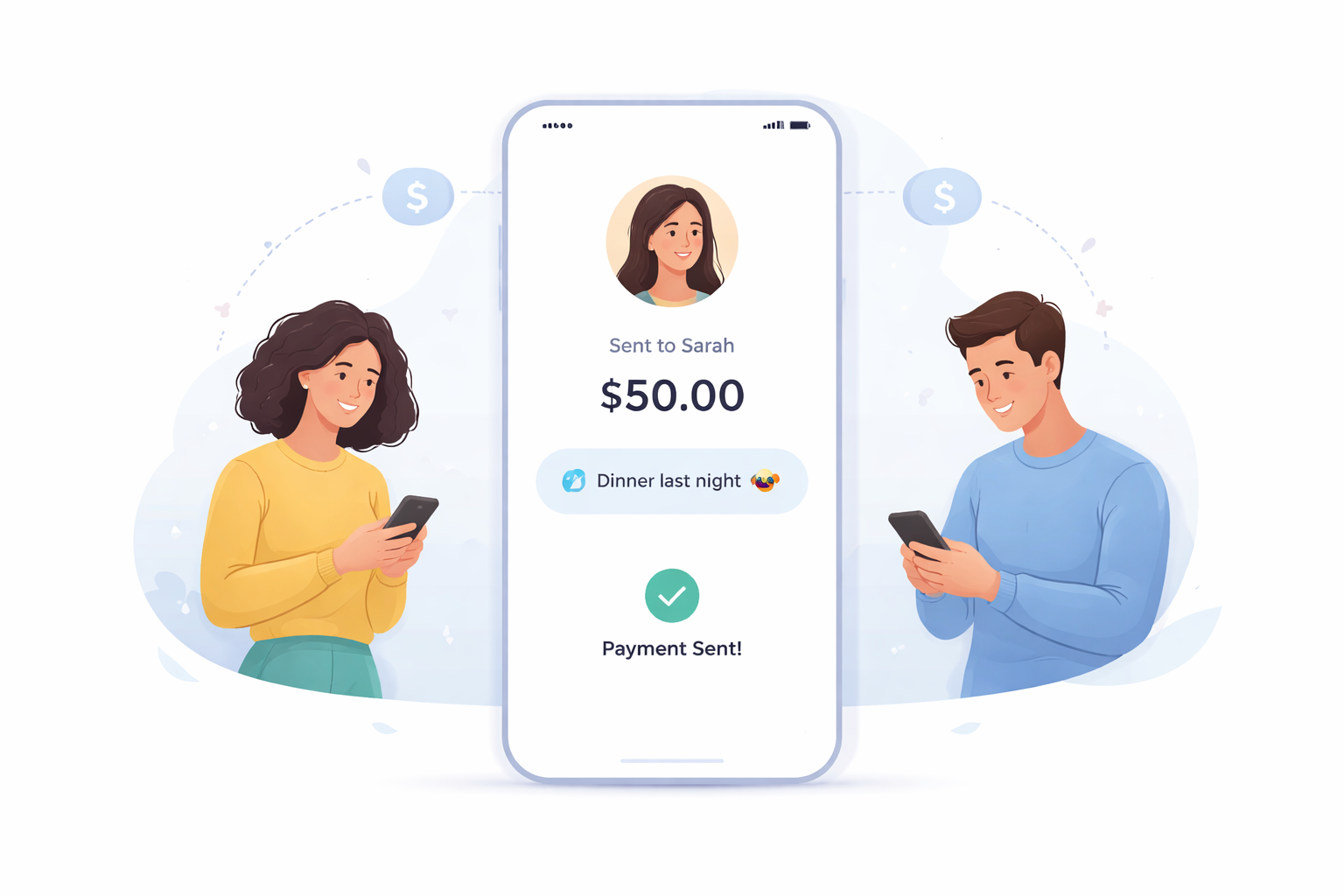
The issue becomes more apparent in real-world scenarios. Imagine splitting a bill after dinner. The interaction should feel social and lightweight, yet many apps force users through rigid flows with little room for personalization. The absence of context leads to confusion, such as unclear payment reasons or difficulty tracking shared expenses, ultimately reducing the perceived reliability of the product.
Designing for Human Context
To make payments feel more human, designers must focus on embedding context directly into the transaction flow. This starts with identity. Seeing a recognizable profile, recent interactions, or shared history immediately makes the experience more personal and reduces cognitive load. Contextual clarity transforms a transaction into a conversation.
Beyond identity, micro-interactions play a crucial role. Subtle feedback, confirmation messages, and meaningful states can reassure users that their action is complete and understood. Instead of a generic success screen, a contextual confirmation like “You paid Alex for dinner” reinforces both clarity and emotional connection. Research in behavioral design suggests that small feedback loops significantly improve user confidence and reduce anxiety in financial interactions.
Behavioral Design in Fintech https://www.behavioraldesign.org/resources/fintech-behavioral-insights
Another important layer is flexibility in communication. Allowing users to add notes, emojis, or quick tags might seem trivial, but it introduces personality into the system. These small touches enable users to express intent, turning a sterile transfer into a meaningful exchange.
Trust as a Design Outcome
Trust is not a feature that can be added at the end of a design process. It is the result of consistent, transparent, and predictable interactions. In P2P payments, trust emerges when users clearly understand who they are paying, why they are paying, and what happens next. This means reducing ambiguity at every step, from input fields to confirmation states.
Security indicators should be visible but not overwhelming. Instead of aggressive warnings, subtle cues like verified badges, transaction summaries, and clear timestamps can build confidence without interrupting flow. When users feel in control and informed, trust becomes a natural outcome rather than a forced reassurance. Studies on fintech usability show that clarity and predictability directly influence user retention and satisfaction.
Fintech UX and User Trust https://www.mckinsey.com/industries/financial-services/our-insights/the-future-of-digital-banking
Bringing Emotion into Financial Interactions
Humanizing payments is ultimately about acknowledging that money is emotional. Whether it is paying rent, gifting money, or settling debts, every transaction carries intent. Designers should treat these moments with the same care as messaging or social interactions.
This can be achieved through thoughtful tone, visual hierarchy, and timing. For instance, a delayed confirmation or unclear status can create unnecessary anxiety, while a well-timed notification can reinforce trust and satisfaction. The goal is not to over-design but to remove friction while preserving meaning.
Conclusion
The future of P2P payments lies beyond speed and convenience. Those are already solved problems. The real opportunity is in designing experiences that feel intuitive, trustworthy, and human. By embedding context, improving communication, and prioritizing emotional clarity, designers can transform simple transactions into meaningful interactions. In a space driven by numbers, the real differentiation comes from understanding people.
If this perspective resonated with you, follow for more deep dives into UX, product thinking, and real-world design insights that go beyond surface-level trends.